Cerma
Cerma Ceramic Heavy Duty Gear Oil 75W-90 EP SiC | Cerma
Cerma Ceramic Heavy Duty Gear Oil 75W-90 EP SiC | Cerma
Couldn't load pickup availability
Cerma Ceramic Heavy Duty Gear Oil 75W-90 — STM-3 Nano Silicon Carbide Technology | Triple-Layer Defense for Differentials & Gear Sets
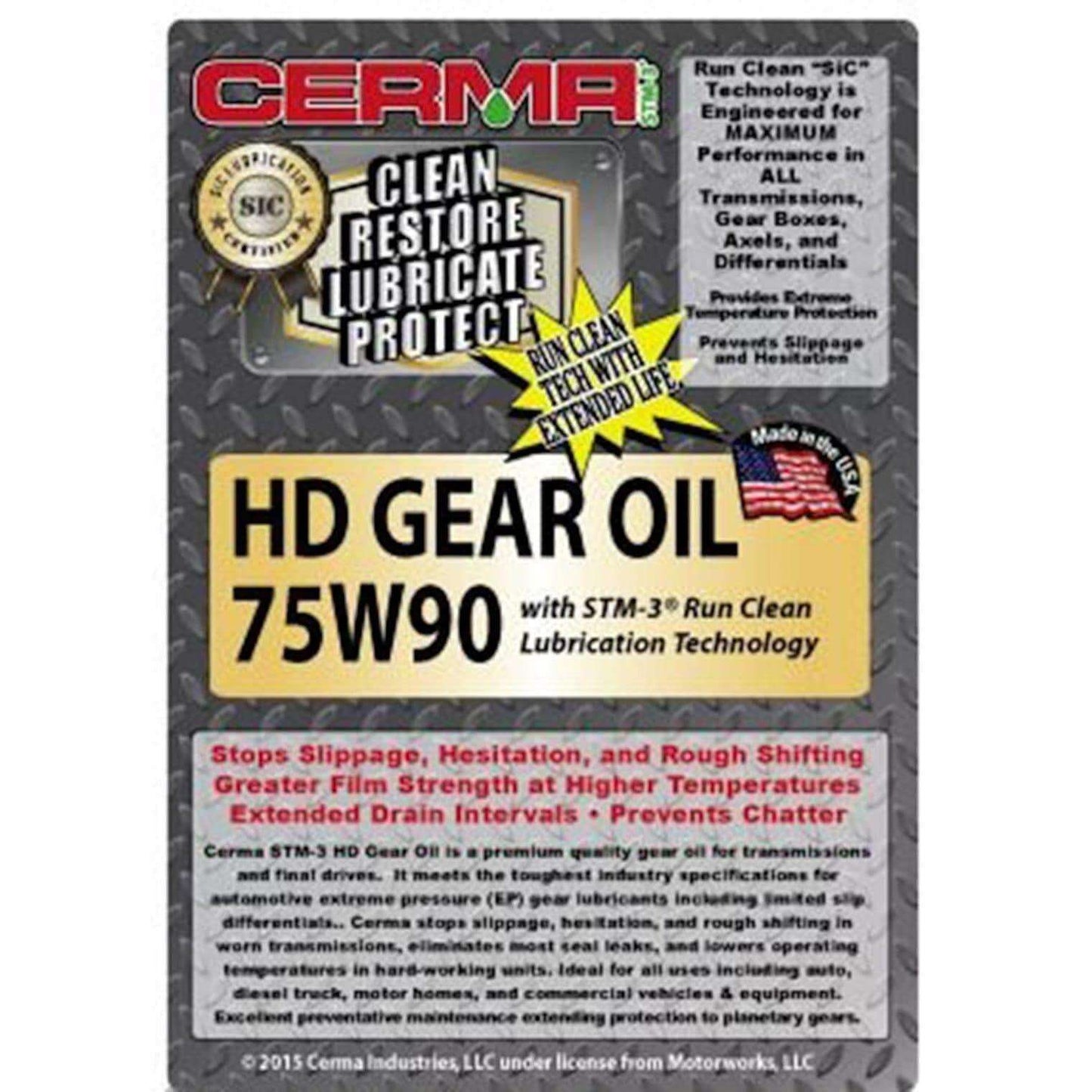
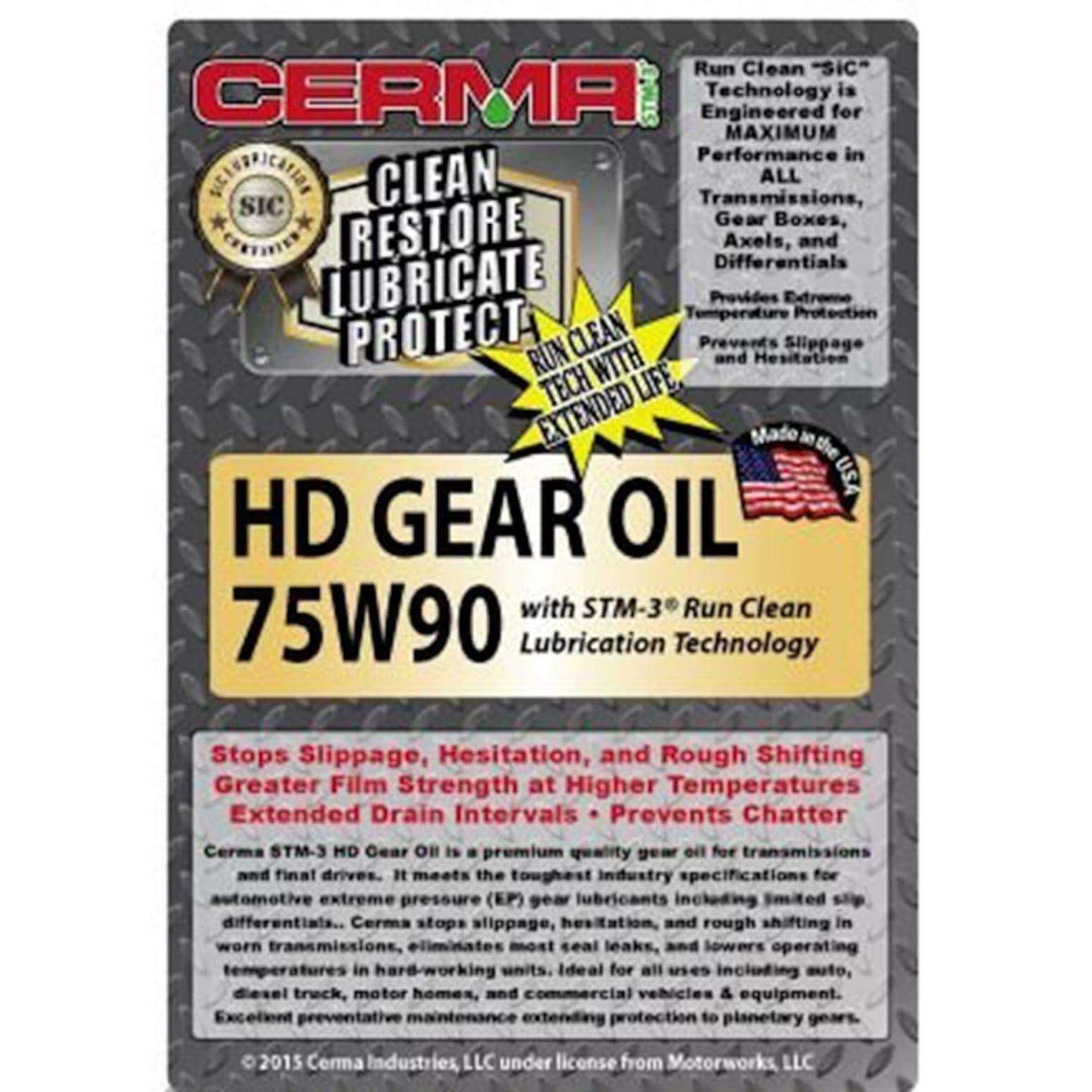
Built for the hardest-working gear sets on earth. Cerma Ceramic Heavy Duty Gear Oil 75W-90 is a full synthetic GL-5 extreme pressure gear oil engineered with STM-3 Nano Silicon Carbide (SiC) ceramic technology. Standard gear oils rely on sulfur-phosphorus EP additives that deplete under sustained load. Cerma adds a permanent ceramic barrier (Mohs 9.5) that bonds directly to gear tooth surfaces — delivering extreme pressure protection for differentials, transfer cases, manual transmissions, and hypoid gear sets in trucks, tractors, construction equipment, and performance vehicles.
SAE 75W-90 viscosity, GL-5 service classification, LSD-compatible. Ready-to-use full synthetic gear oil available in 6 sizes from quart to 55-gallon drum for DIY service, shop installation, and fleet maintenance.
✅ Triple-Layer Defense Technology
Premium gear oil protection comes from three independent mechanisms working together. Cerma 75W-90 engineers all three into a single formulation:
| Protection Layer | How It Protects Your Gears |
|---|---|
| Layer 1: SiC Ceramic Bond | Nano Silicon Carbide particles permanently bond to gear tooth surfaces, creating a diamond-hard barrier (Mohs 9.5) that doesn't deplete and survives subsequent oil changes |
| Layer 2: GL-5 Extreme Pressure Additives | Sulfur-phosphorus EP package provides the shock-load and sliding-contact protection hypoid gear sets require — meeting API GL-5 specification |
| Layer 3: Thermal-Stable Base Stocks | Premium full synthetic base resists oxidation, thermal breakdown, and viscosity loss — the foundation of extended drain interval capability |
🔬 Advanced Features
- STM-3 Nano Silicon Carbide ceramic technology — Mohs 9.5 hardness, 2,730°C melting point, permanent bond to gear tooth surfaces
- API GL-5 service classification — meets the extreme pressure specification required for hypoid and spiral bevel gear sets
- Limited Slip Differential (LSD) compatible — correct friction characteristics for clutch-type LSD units, no additional friction modifier needed
- SAE 75W-90 multi-grade viscosity — flows properly in cold starts, maintains film strength at operating temperature
- Quiets noisy differentials — SiC ceramic bond smooths gear tooth surfaces, reducing gear whine and harmonic noise
- Lower operating temperatures — friction reduction helps reduce running temperatures in hard-working gear sets
- Chemical stability to 800°C — SiC resists acids, alkalies, and molten salts, providing stability beyond conventional EP additive packages*
- Extended drain interval capability — up to 4× longer service intervals than conventional gear oils under normal conditions*
- PTFE-Free, Solvent-Free, Environmentally Safe formulation — made in the USA
🧪 Why SiC Technology Matters for Gear Oil: Hypoid and spiral bevel gears operate under some of the most severe conditions in any vehicle — intense sliding contact, extreme tooth-to-tooth pressures, and heat generated by heavy load transfer. Conventional EP gear oils protect through sulfur-phosphorus additive chemistry, which reacts with metal surfaces under heat and pressure to form a sacrificial protective layer — a layer that is continuously consumed and must be chemically replenished. Cerma's SiC ceramic works differently: nano-scale particles physically bond to metal surfaces under friction and heat, becoming part of the gear tooth itself. Once bonded, the ceramic layer doesn't deplete, doesn't wash out with fluid changes, and continues protecting even after the oil has been changed.
⚙️ Gear & Differential Problems Cerma 75W-90 Solves
| Problem | How Cerma 75W-90 Addresses It |
|---|---|
| Noisy differentials & gear whine | SiC ceramic bond smooths gear tooth surfaces, reducing the micro-imperfections that cause noise and harmonics |
| Rough shifting in manual transmissions | Fills micro-imperfections on synchronizer and gear surfaces, restoring smoother shift feel |
| Seal leaks at pinion & axle seals | Seal conditioners + lower operating temperatures reduce seal degradation and shrinkage over time |
| Overheating under heavy loads | SiC friction reduction lowers operating temperatures in towing, hauling, and sustained heavy-duty operation |
| Gear tooth pitting & progressive wear | Permanent SiC ceramic barrier (Mohs 9.5) provides additional protection against metal-on-metal contact |
| Frequent gear oil changes | Full synthetic base with SiC protection extends fluid life up to 4× vs conventional gear oil* |
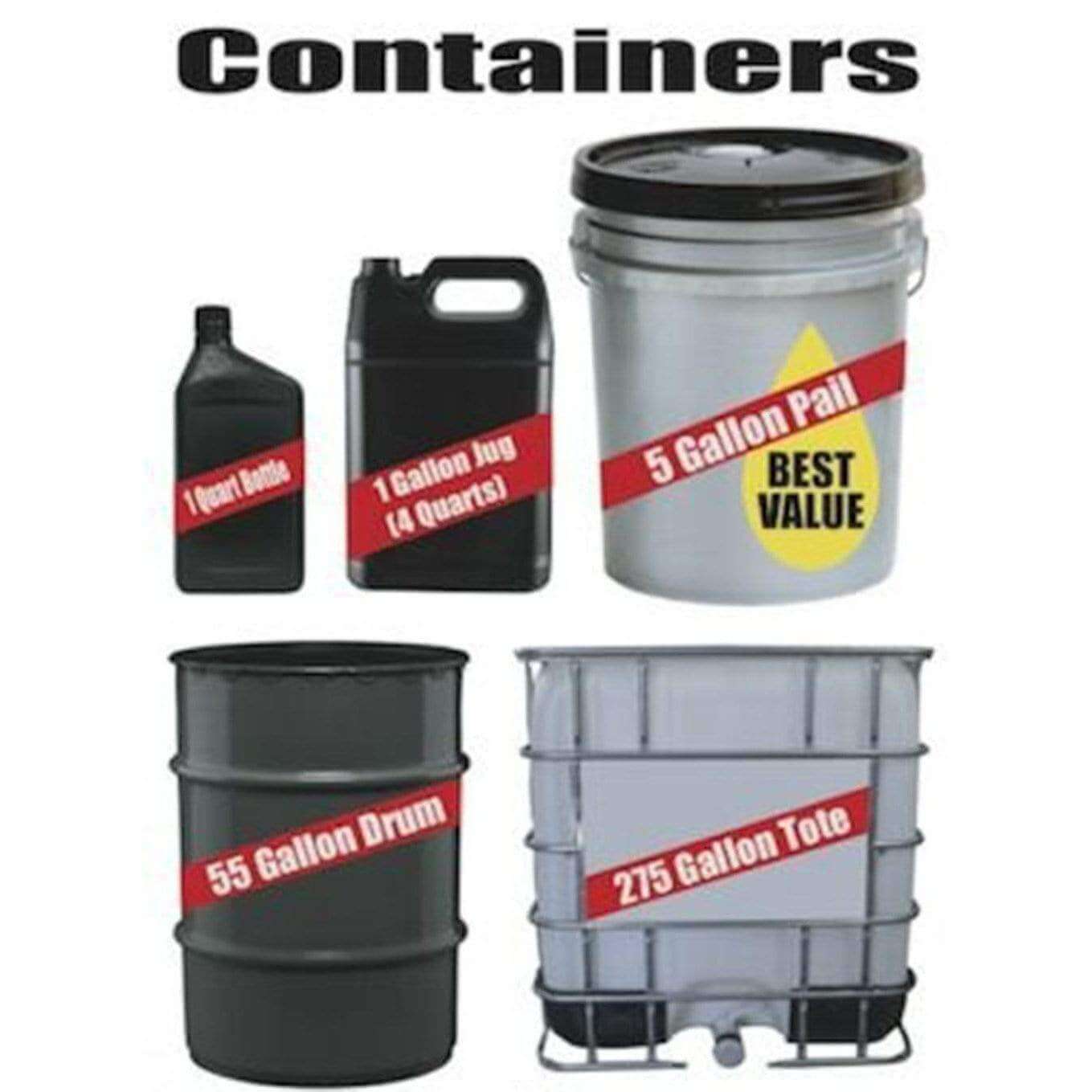
📦 Choose Your Size — 6 Variants Available
| Size | Best For |
|---|---|
| Quart (32 fl oz) | Single differential fill (many passenger cars hold 1.5–2 qt), manual transmission top-off |
| 12 Quart Case | Front & rear diff service on multiple vehicles, shop inventory, fleet supply |
| 1 Gallon (128 fl oz) | Full differential service on trucks and SUVs, transfer case refills, manual transmission fills |
| 4 Gallon Case | Equipment fleets, farm shops, construction yards — stocks multiple service jobs |
| 5 Gallon Pail | Heavy equipment, commercial service operations, RV & motor home diffs, fleet vehicles |
| 55 Gallon Drum | Large fleets, dealerships, logging/agricultural operations, industrial gearbox service |
See variant dropdown above for current pricing. Bundle & Save discounts apply on multi-unit orders. For fleet or commercial volume pricing beyond listed sizes, call 239-344-9861.
📋 How to Use Cerma 75W-90 Gear Oil
- Verify specification — confirm your differential, transfer case, or manual transmission specifies 75W-90 viscosity and GL-5 service classification. For heavy-duty trucks or performance applications that specify 75W-140 or 85W-140, use a matching heavier-viscosity product instead.
- Warm the unit — drive 10–15 minutes before draining so old fluid flows freely and carries contaminants. Park on level ground and allow to cool briefly before working underneath.
- Remove the fill plug first — always break the fill plug loose before draining. A seized fill plug on a drained differential leaves you stranded. Inspect the plug magnet (if equipped) — heavy metal shavings indicate internal damage that fluid alone can't address.
- Drain existing fluid — remove drain plug and allow complete drainage. Wipe the plug magnet clean of fine metal particles. Reinstall the drain plug with a new gasket/washer if required, torqued to manufacturer spec.
- Fill with Cerma 75W-90 — use a pump or squeeze bottle through the fill hole until fluid reaches the bottom of the fill hole opening (standard fill level for most differentials and gear cases).
- Check the breather/vent — verify the differential or gearbox breather is clear. A clogged breather causes pressure buildup that forces fluid past seals and creates leaks that look like a seal problem but are actually ventilation.
- Reinstall fill plug to torque spec — most differential fill plugs torque between 18–30 ft-lbs; consult your service manual for exact specification.
- Drive and inspect — after 50–100 miles, check for leaks at the drain and fill plugs, pinion seal, and axle seals. The SiC ceramic bond builds over the first hundred miles of use.
⚠️ Viscosity Warning: Cerma 75W-90 is formulated for applications that specify 75W-90 gear oil. Do NOT substitute 75W-90 in applications that specifically require heavier viscosities such as 75W-140 (many Ford Super Duty rear axles, some Dana/Spicer heavy-duty applications) or 85W-140 (some older heavy-duty trucks, certain performance/racing applications). Using too-light viscosity in a heavy-duty application can accelerate wear under extreme loads. When in doubt, consult your vehicle service manual or call 239-344-9861 with your vehicle's year/make/model.
📊 Technical Specifications
| Specification | Details |
|---|---|
| Type | Full synthetic heavy-duty gear oil with STM-3 Nano SiC ceramic technology |
| SAE Viscosity Grade | 75W-90 (multi-grade — cold flow of SAE 75W, warm film strength of SAE 90) |
| API Service Classification | GL-5 (extreme pressure for hypoid and spiral bevel gears) |
| Limited Slip Compatible | Yes — suitable for clutch-type LSD units (no additional friction modifier required) |
| Ceramic Technology | STM-3 Nano Silicon Carbide (SiC) — Mohs 9.5 hardness, 2,730°C melting point |
| Chemical Resistance | SiC ceramic layer resists acids, alkalies, and molten salts up to 800°C* |
| Drain Interval | Up to 4× longer than conventional gear oils under normal service conditions* |
| Base Stock | Full synthetic — high oxidation stability for extended service life |
| Additive Properties | PTFE-Free, Solvent-Free, Environmentally Safe |
| Made In | USA — Fort Myers, FL (Bijou Inc.) |
⚙️ Ideal Applications
- Rear differentials — open and clutch-type limited slip (LSD), cars, SUVs, pickups
- Front differentials and final drives on 4WD trucks and all-wheel-drive vehicles
- Transfer cases that specify gear oil (check owner's manual — some require ATF instead)
- Manual transmissions specifying 75W-90 (many truck and heavy-duty manual units)
- Heavy-duty trucks and semi-truck axles calling for 75W-90 viscosity
- Farm tractors, combines, and agricultural equipment differentials and final drives
- Construction equipment — excavators, loaders, skid steers, backhoes
- Logging equipment — skidders, forwarders, feller bunchers
- Motor homes and RVs — Class A, B, C rear differentials and drive axles
- Hypoid and spiral bevel gear sets requiring GL-5 extreme pressure protection
- Industrial gearboxes specifying GL-5 75W-90 (verify manufacturer requirements)
🛡️ Cerma 75W-90 vs Conventional Gear Oil
| Feature | Cerma 75W-90 | Conventional 75W-90 |
|---|---|---|
| Ceramic SiC Technology | ✅ Permanent ceramic bond | ❌ None |
| EP Protection Mechanism | ✅ GL-5 EP + SiC barrier | GL-5 EP only (depletes) |
| Quiets Noisy Differentials | ✅ SiC smooths gear surfaces | ❌ No |
| Chemical Stability | ✅ 800°C acid/alkali resistance* | Standard EP additive life |
| Operating Temperature | ✅ Lower under heavy load | Standard |
| Drain Interval | Up to 4× longer* | Standard intervals |
| Protection After Oil Change | ✅ Bonded SiC remains on gears | ❌ Additives leave with fluid |
| Limited Slip Compatible | ✅ Yes — no additive needed | ⚠️ Varies by brand |
🔗 Complete Your Cerma Drivetrain Protection
Pair Cerma 75W-90 Gear Oil with other Cerma ceramic products for total drivetrain coverage:
- Cerma Ceramic Gear Box & Axle Treatment — one-time ceramic additive for deeper initial gear protection (applied before first Cerma gear oil fill)
- Cerma Transmission Treatments — automatic and manual transmission ceramic protection
- Cermax Ceramic ATF — ceramic full synthetic automatic transmission fluid
- Cerma STM-3 Engine Treatments — permanent ceramic protection for gas and diesel engines
- Cermax Motor Oils — ceramic synthetic oils up to 30,000-mile intervals
- Cerma Gas Fuel Treatment — clean injectors and improve fuel economy
- Cerma Diesel Fuel Treatment — for diesel truck and equipment fuel systems
- Cermax Hydraulic Oil AW46 — ceramic hydraulic fluid for equipment systems
🔬 Technical & Application FAQs
In most cases, yes — significantly. Differential noise and gear whine typically come from three sources: (1) normal gear-contact harmonics amplified by worn gear tooth surfaces; (2) incorrect gear backlash or pinion preload (a setup issue); or (3) actual gear damage such as chipped teeth or worn bearings. Cerma addresses the first category directly — the SiC ceramic bond fills micro-imperfections on gear tooth surfaces, creating a smoother contact pattern that reduces the high-frequency harmonics that cause whine. Most users notice noticeable noise reduction within the first 50–200 miles of switching to Cerma 75W-90. What Cerma cannot fix: setup problems (backlash, preload) require mechanical adjustment by a drivetrain shop, and severely damaged gears with chipped teeth or worn bearings need physical replacement. If the noise changes character, gets worse under load, or comes with vibration, have the differential inspected — no gear oil will fix a mechanical failure.
Yes — Cerma 75W-90 is formulated for limited slip differentials and includes the correct friction modifier package as part of the base formulation. No additional friction modifier additive is required. This matters because clutch-type LSD units (common in trucks, performance cars, and 4WD vehicles — GM Eaton G80, Ford Traction-Lok, Mopar Sure-Grip, Dana Trac-Lok, Torsen variants) require specific friction characteristics for the clutch packs to engage smoothly. Using a standard gear oil without an LSD additive in these applications typically causes chatter, grabbing, or shuddering during low-speed cornering (parking lot maneuvers). With Cerma 75W-90, the LSD additive package is built in — you pour it in and it's ready. For Torsen (gear-type) LSDs and helical LSDs, no friction modifier is needed regardless of oil choice; Cerma works in these units as well. For electronic-locking differentials (ELockers, G80 auto-lockers), also compatible — these don't use friction clutches for their locking action.
Only if your manual transmission specifies 75W-90 gear oil. This is a critical check. Manual transmission fluid requirements vary widely: some use GL-4 75W-90 gear oil (older trucks, many Mopar/Chrysler manuals), some use ATF (Dexron or Mercon, common on newer Hondas, some GM, some Ford manuals), some use proprietary MTL fluid (Honda MTF, Ford XT-M5-QS, Nissan MT-XZ), and only certain heavy-duty units use GL-5 75W-90 like Cerma. Installing 75W-90 GL-5 gear oil in a manual transmission that specifies ATF or GL-4 MTL fluid can cause hard shifting, synchro damage, or yellow metal (brass/bronze) corrosion — GL-5's sulfur-phosphorus additives can attack brass synchronizers in some designs. Always consult your owner's manual or service manual for the specified fluid before installing Cerma 75W-90 in a manual transmission. If 75W-90 GL-5 is specified, Cerma works beautifully — the SiC ceramic technology helps eliminate the rough shifting, synchro hesitation, and grinding that develops in high-mileage manual transmissions.
These are two complementary products that work together. Cerma 75W-90 Gear Oil (this product) is the gear oil itself — a full synthetic 75W-90 GL-5 gear lubricant with SiC ceramic technology built into the fluid. It replaces your existing gear oil entirely. Cerma Ceramic Gear Box & Axle Treatment is a one-time concentrated ceramic additive that's added to your existing gear oil to deliver a high-dose SiC application. The treatment is added once; its ceramic bond survives subsequent gear oil changes. Which should you use? For maximum SiC protection, many customers use both: add the Treatment first for peak SiC concentration, then use Cerma 75W-90 Gear Oil for ongoing service fills. If you're only choosing one, the Treatment gives the highest protection-per-dollar for established differentials and gear sets; Cerma 75W-90 is the right choice when you need a full gear oil change regardless. On heavily worn or high-mileage gear sets, using both delivers the deepest ceramic bond.
GL-5 is an American Petroleum Institute (API) service classification that defines the extreme pressure (EP) performance level required for hypoid gear sets — the gear geometry used in nearly all automotive rear differentials and many final drives. Hypoid gears have their pinion offset below the centerline of the ring gear, which creates intense sliding contact (in addition to rolling contact) and requires more EP protection than standard parallel-axis or spiral-bevel gears. The API gear oil classifications in practical use are: GL-4 — moderate EP, used in most manual transmissions and older light-duty differentials; GL-5 — high EP, used in modern automotive rear differentials and hypoid applications (most common automotive spec); GL-6 — obsolete high-EP spec; MT-1 — heavy-duty non-synchronized manual transmissions (big trucks). For most cars, pickups, and SUVs with rear-wheel drive or 4WD, your differential specifies GL-5 75W-90 — which is exactly what Cerma 75W-90 delivers. Important caveat: some manual transmissions explicitly require GL-4, not GL-5, because GL-5's sulfur-phosphorus additives can attack brass synchronizers. Always verify your owner's manual before installation.
This depends on which direction you're substituting. For applications specifying 80W-90 (common in older light-duty trucks and many farm equipment differentials): Cerma 75W-90 is generally safe and typically improves performance — it has the same hot viscosity (90) as 80W-90 but better cold-flow characteristics (75W is more fluid at cold start). Many modern gear oils have moved from 80W-90 to 75W-90 for exactly this reason. For applications specifying 75W-140 or 85W-140 (Ford Super Duty rear axles, some Dana/Spicer heavy-duty applications, performance vehicles, heavy towing applications): do NOT substitute 75W-90. The heavier 140 hot viscosity is specified because these applications generate extreme heat under load (towing, high GVWR, performance driving) and need the thicker oil to maintain protective film strength at elevated temperatures. Using 75W-90 in a 75W-140 application can accelerate gear wear under heavy-duty conditions. For Super Duty trucks, Raptor, heavy-towing applications, or anything specifying 75W-140 or 85W-140, consult Cerma customer service or your Cerma retailer for appropriate heavier-viscosity gear oil options — or call 239-344-9861.
Yes — Cerma 75W-90 is fully compatible with standard GL-5 75W-90 gear oils from major brands (Valvoline, Mobil 1, Royal Purple, Amsoil, Red Line, Lucas, Pennzoil, etc.). For emergency top-off during long trips or when running low, mixing is safe. However, for full SiC ceramic benefit, a complete fluid change is strongly recommended — not a mixed top-off. The SiC technology works best when running at full concentration, and the ceramic bond builds faster when old conventional oil is drained and replaced entirely with Cerma. Best practice sequence: (1) drain existing gear oil while warm; (2) optionally add Cerma Gear Box Treatment for deepest initial SiC dose; (3) fill with Cerma 75W-90 to proper level; (4) drive normally — the SiC bond develops over the first 50–200 miles. One exception: if you've been running a gear oil with unusual additive packages (some specialty track/racing gear oils, certain LSD break-in fluids), drain fully rather than mixing to avoid additive interaction.
Premium synthetic gear oils from major brands generally share a similar formulation approach: full synthetic base stock (PAO or ester-based, sometimes Group III+), GL-5 EP additive package (sulfur-phosphorus chemistry for hypoid protection), and friction modifier for LSD compatibility. This formulation is mature and performs well — premium synthetics typically offer extended drain intervals (2–4× conventional), better cold flow, and more stable viscosity than conventional gear oils. Where Cerma differs: the addition of STM-3 Nano Silicon Carbide ceramic technology — a protection mechanism that premium synthetics don't have. While premium synthetic gear oils protect through depleting chemistry (the EP additives react with metal and gradually consume), Cerma adds a non-depleting ceramic layer that bonds permanently to gear surfaces. Practical implications: (1) Cerma continues protecting even after the oil itself has degraded; (2) the SiC bond survives into the next fluid change, giving cumulative long-term protection; (3) the ceramic layer provides additional noise dampening benefit that chemistry-only additives cannot deliver; and (4) chemical stability to 800°C exceeds what sulfur-phosphorus EP additives can maintain in extreme service. For standard daily-driver service, premium synthetics are adequate. For heavy-duty, high-mileage, noisy, or performance-critical applications, Cerma's SiC technology delivers a protection mechanism not available in any other gear oil.
Made in the USA by Cerma Treatment (Bijou Inc.), Fort Myers, FL. 30-day return policy. Free shipping on orders over $150. Ships to US & Canada. Fleet and commercial volume pricing available beyond listed sizes. Questions? Call 239-344-9861 or email info@cermatreatment.com.
*Performance claims including "up to 4× longer drain intervals," "800°C chemical stability," noise reduction, and temperature reduction represent typical results under normal service conditions and formulation targets. Individual gear set performance varies based on gear condition, age, wear level, maintenance history, load profile, operating environment, and vehicle application. Extended drain interval claims assume normal operating conditions — severe-duty operation (heavy towing, off-road, high ambient temperature, short-trip service) requires shorter intervals per manufacturer guidance. Cerma 75W-90 is formulated to SAE 75W-90 viscosity and API GL-5 service classification — verify your application requires these specifications before installation. Third-party brand references (Valvoline, Mobil 1, Royal Purple, Amsoil, Red Line, Lucas, Pennzoil, Eaton, Traction-Lok, Sure-Grip, Trac-Lok, Torsen, Dana, Spicer, etc.) are property of their respective owners and are used here for compatibility identification and comparison only. Cerma 75W-90 is not appropriate for applications specifying 75W-140, 85W-140, or other heavier viscosities — consult your vehicle service manual or call 239-344-9861 for the correct product. Always follow your vehicle or equipment manufacturer's specified gear oil change intervals and procedures.
Share