

Cerma
Cerma Ceramic Marine Engine Treatment
Cerma Ceramic Marine Engine Treatment
Couldn't load pickup availability
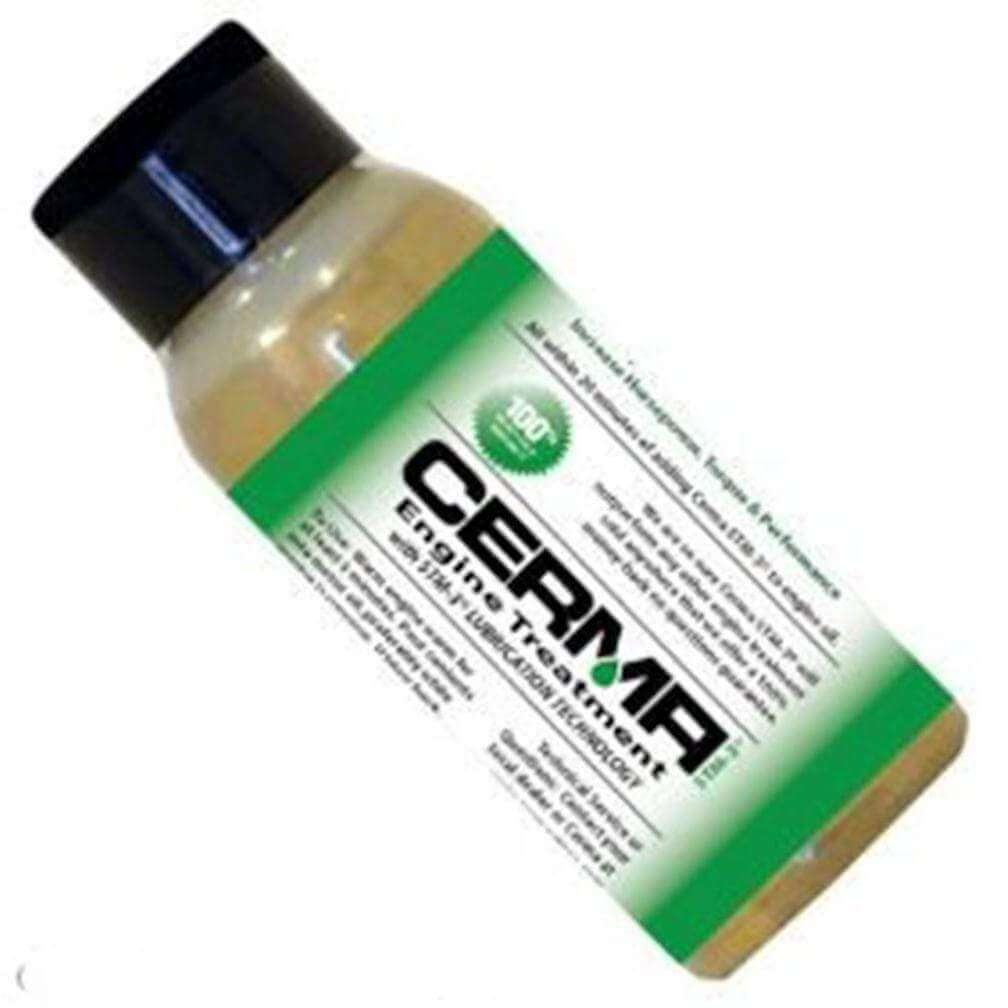
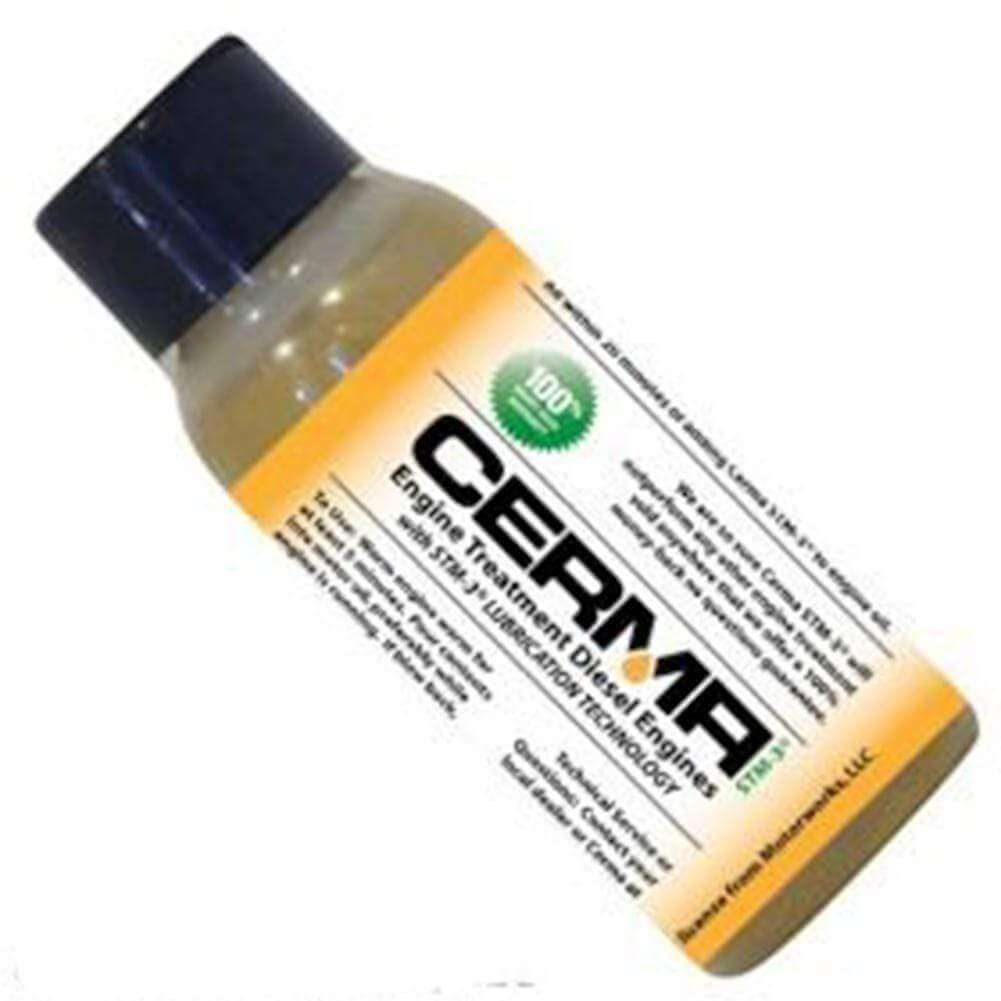
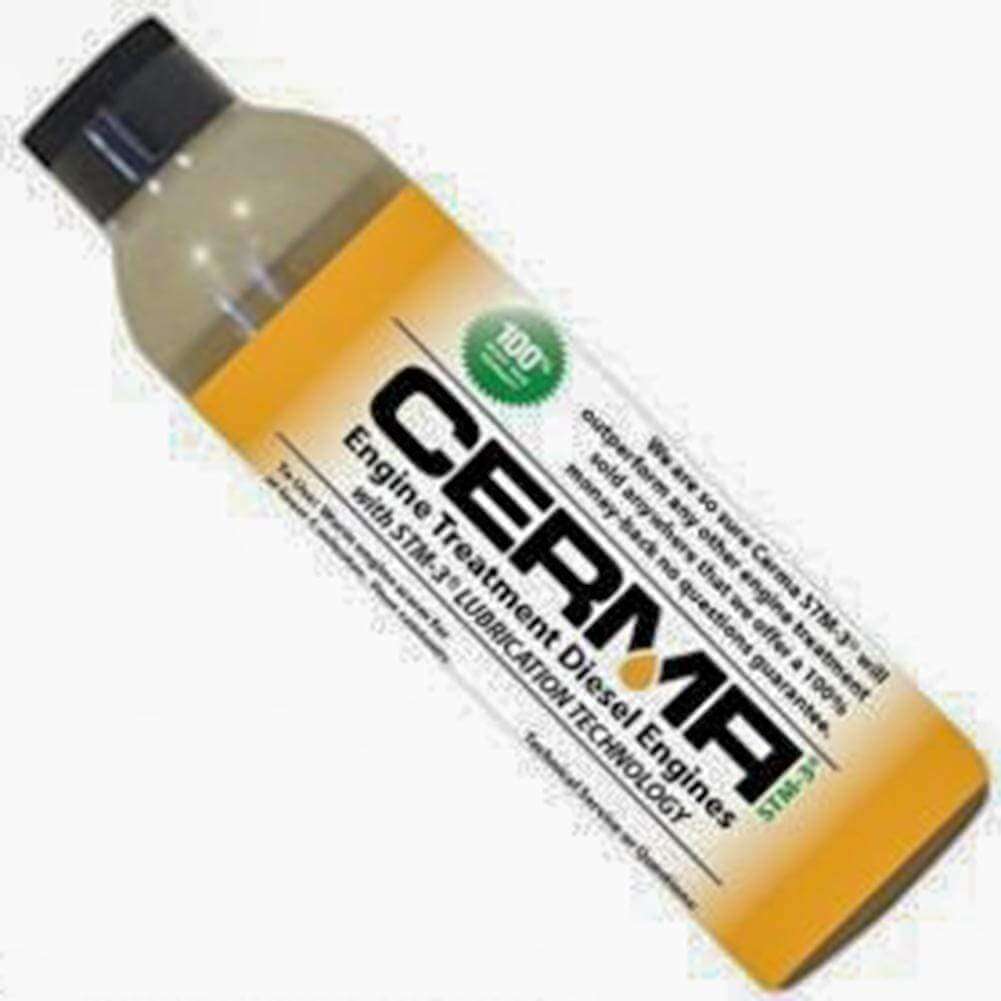
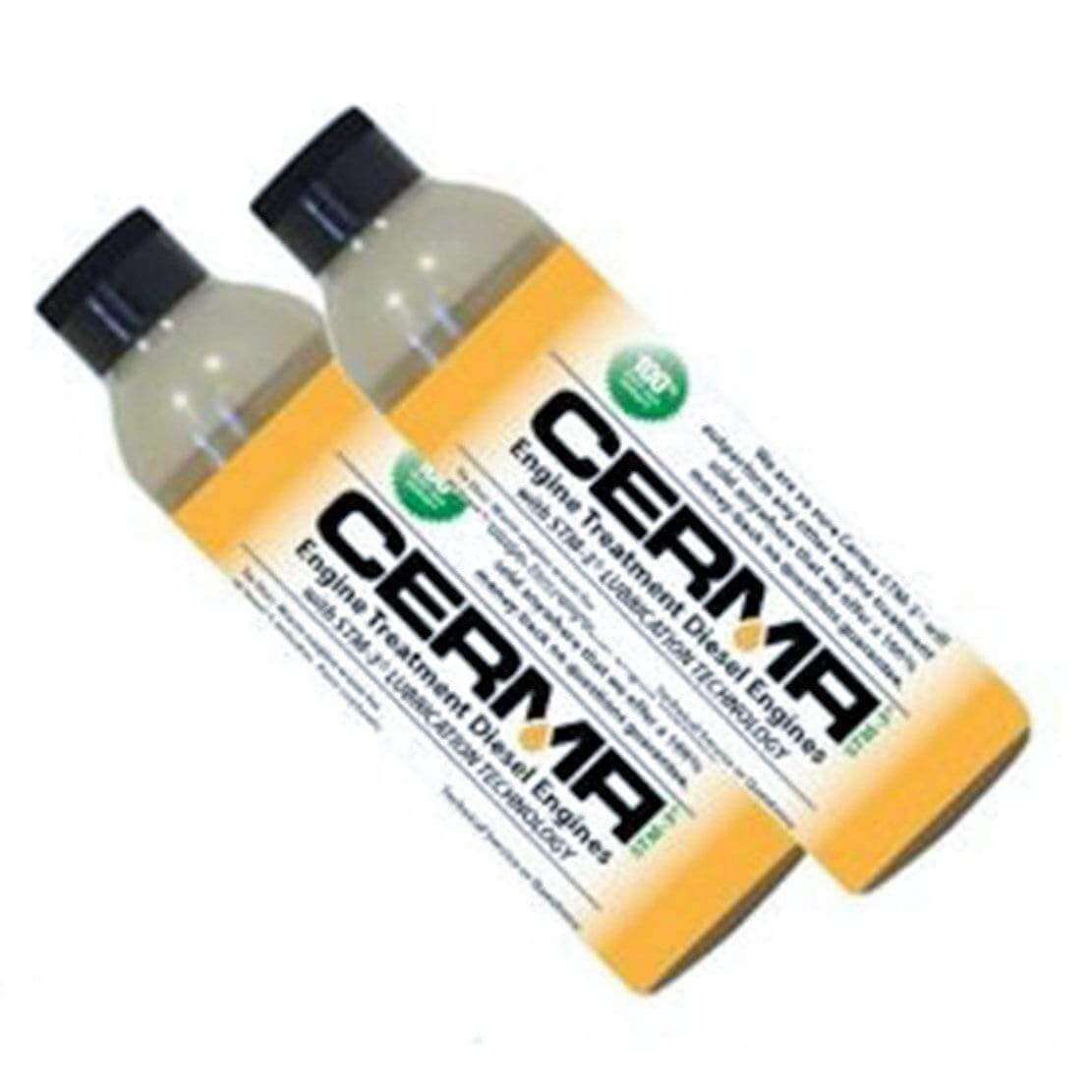
Cerma Ceramic Marine Engine Treatment — STM-3 Nano Silicon Carbide Protection for Boat Engines
Protect and revitalize your boat's engine with Cerma STM-3® Marine Engine Treatment — a one-time ceramic application that cleans, restores, lubricates, and permanently protects marine engines. Powered by Nano Silicon Carbide (SiC) technology, Cerma penetrates deep into your engine's metal surfaces to create a ceramic matrix seal that no conventional additive can match.
Works with both gasoline and diesel marine engines — inboards, outboards, and stern drives. One application. Permanent protection.
✅ What Cerma Marine Treatment Does
Cerma STM-3® is not a traditional oil additive — it's a ceramic engine treatment. The Nano Silicon Carbide particles bond to metal surfaces at the molecular level, creating a permanent ceramic-like barrier. This delivers measurable results:
- Protects and revives engines — restores compression in older marine engines
- Increases horsepower and torque — less friction means more power to the prop
- Improves fuel economy — reduced friction lowers fuel consumption
- Reduces emissions — cleaner combustion from optimized surfaces
- Stops carbon deposits — SiC prevents buildup on internal surfaces
- Minimizes vibration and noise — smoother engine operation on the water
- Eliminates cold start problems — ceramic protection present from first crank
- Lowers operating temperatures — critical for marine engines under sustained load
🚤 Why Marine Engines Need Ceramic Protection
Marine engines work harder than automotive engines. Boats operate at sustained high RPM, often in saltwater environments, with heavy loads and extreme temperature variation. Conventional oil protects, but it can't permanently change the surface structure of your engine's metal components. Cerma STM-3® does — creating a Nano Silicon Carbide matrix seal within the sub-surfaces that reduces friction, optimizes performance, and minimizes wear permanently.
📋 How to Apply
Application is simple — one-time treatment added directly to your engine oil:
- Add Cerma STM-3® Marine Treatment to your engine oil at your next oil change
- Run the engine for a minimum of 30 minutes at normal operating RPM
- Drive normally — the SiC particles will bond to metal surfaces over the first few hours of operation
- That's it — the ceramic matrix is permanent. No reapplication needed
Cerma STM-3® does not modify the oil itself. It enhances the surface structure of your engine's metal components to create a permanent ceramic-like finish. Safe for plastics, rubber, and all seals.
📦 Dosage Guide — Choose Your Engine Size
| Size | Engine Type | Best For |
|---|---|---|
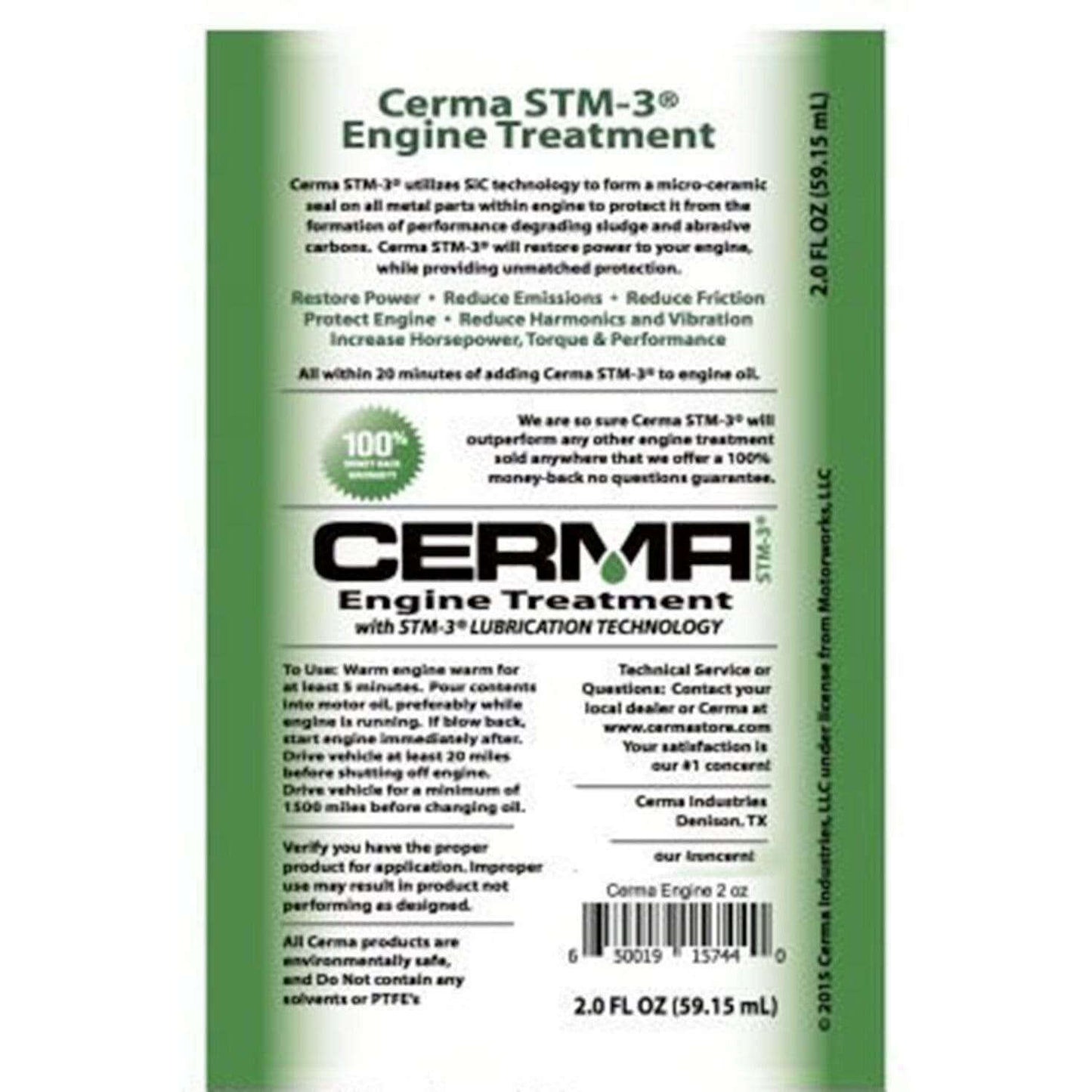
| 2 oz | Gas marine engines (all 4-8 cyl) | Outboards, stern drives, small inboards |
| 2 oz | Diesel marine 1–2.8L | Small diesel outboards & auxiliaries |
| 4 oz | Diesel marine 3–4.8L | Mid-size diesel inboards |
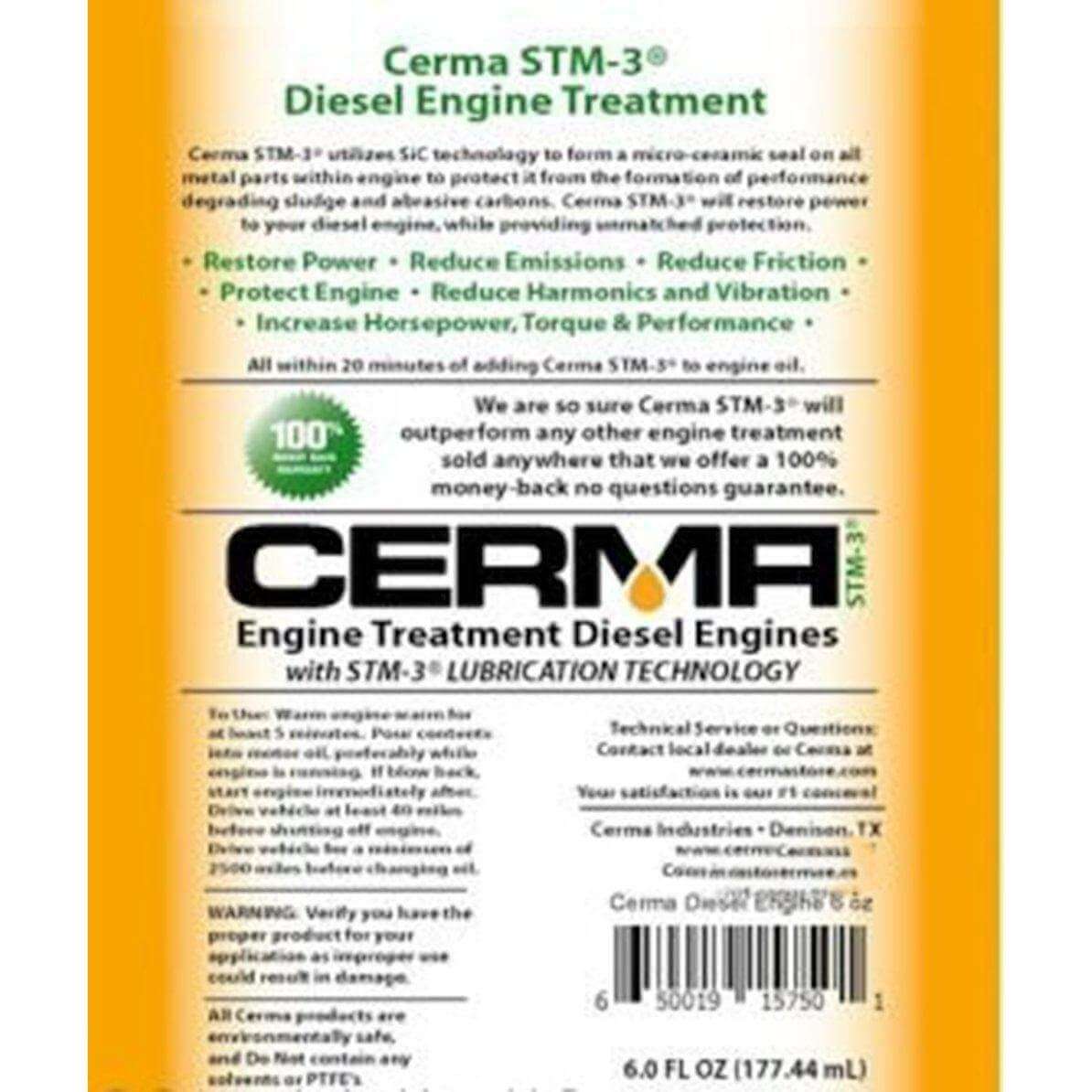
| 6 oz | Diesel marine 5–8L | Large diesel cruisers & sport fishers |
| 12 oz | Large diesel marine engines | Commercial vessels & yachts |
🛡️ Cerma Marine vs Conventional Marine Additives
| Feature | Cerma STM-3® | Traditional Additives |
|---|---|---|
| Technology | Nano Silicon Carbide (SiC) | Petroleum-based chemicals |
| Permanent Protection | ✅ Yes — bonds to metal | ❌ No — washes out with oil |
| Application Frequency | ✅ One-time | ❌ Every oil change |
| Restores Compression | ✅ Yes | ❌ No |
| Reduces Operating Temperature | ✅ Yes | ⚠️ Minimal |
| Safe for Seals & Rubber | ✅ Yes | ✅ Most |
🔬 The Science: Nano Silicon Carbide (SiC)
Silicon Carbide is one of the hardest compounds on earth — Mohs hardness 9.5 (just below diamond) with a melting point of 2,730°C. Cerma STM-3® uses SiC at the nanoscale to penetrate and bond within the sub-surfaces of your engine's metal components. The result is a permanent ceramic matrix that reduces friction coefficient by up to 90%*, extends engine life, and maintains optimal performance in the harsh marine operating environment.
Cerma STM-3® contains 100% active ingredient — no fillers, no carrier chemicals, no petroleum solvents. Backed by over a decade of research and development. Fully insured.
🔗 Complete Marine Protection
For total marine engine and drivetrain protection, pair with:
- Cerma Transmission Treatment — protect your marine transmission
- Cerma Diesel Fuel Treatment — clean and protect fuel system
- Cerma Gas Fuel Treatment — for gasoline marine engines
- Cerma Synthetic Motor Oil — SiC-enhanced oil for ongoing protection
🔬 Technical & Compatibility FAQs
Cerma's Nano Silicon Carbide ceramic matrix bonds to internal engine metal surfaces — cylinders, pistons, rings, bearings, cams — providing a permanent barrier against the chemical and thermal stresses saltwater operation creates. While Cerma does not waterproof your engine or prevent external corrosion on exhaust manifolds, risers, or outdrive components (which require proper flushing, sacrificial anodes, and anti-corrosion maintenance), internal metal surfaces treated with SiC are significantly more resistant to the accelerated wear that saltwater use typically causes.
Cerma Marine Engine Treatment is designed for 4-stroke marine engines (the vast majority of modern outboards, inboards, and stern drives). For 2-stroke outboards that use a separate oil injection system or pre-mixed fuel, Cerma treats the engine's metal surfaces — in pre-mix 2-strokes, it's added at the oil change point. If you have a 2-stroke outboard, call 239-344-9861 for application guidance specific to your engine configuration.
Yes. Cerma STM-3® is compatible with all major marine engine brands including Mercury MerCruiser and outboards, Yamaha outboards (F-series), Yanmar marine diesels, Volvo Penta (gas and diesel inboards + sterndrives), Cummins Marine (6BT, 6CT, QSB, QSC, QSM), Caterpillar marine diesels, and John Deere marine diesels. Select size based on engine displacement from the dosage guide above. Cerma treats internal metal surfaces regardless of the manufacturer's design.
Cerma STM-3® does not modify your engine oil — it treats the metal surfaces. Under the Magnuson-Moss Warranty Act, aftermarket products cannot void a manufacturer's warranty unless the product itself causes the damage. We recommend consulting your engine manufacturer or marine dealer if you have specific warranty concerns — some marine warranties have stricter requirements than automotive warranties.
Once the SiC ceramic matrix is bonded to your engine's internal metal surfaces, it's permanent — winter layup, dry storage, fogging oil, or extended off-season downtime does not affect it. In fact, Cerma-treated engines often start more easily after winterization because the ceramic barrier remains in place on metal surfaces during storage, reducing the cold-start wear that's common when oil has drained down over months of inactivity.
Yes. Cerma Marine Engine Treatment is widely used by commercial fishing operators, charter captains, and tug/workboat operators where engine reliability and fuel costs directly affect profitability. Cerma is not a regulated additive — it does not alter fuel chemistry or interact with emissions systems — so it does not affect USCG inspection compliance. For fleet or commercial volume pricing, contact 239-344-9861.
No — this product is for the main engine oil only. The lower unit (outboards) and outdrive (sterndrives) use a separate gear oil and are not treated by Cerma Marine Engine Treatment. For gear protection in marine drivetrain components, see Cerma Gear Box Treatment. Do not add this marine engine product to your lower unit.
Yes. Cerma STM-3® is completely safe for plastics, rubber, seals, and gaskets. The SiC particles only bond to metal surfaces — they do not interact with or damage non-metal components. This includes impeller housings, water pump seals, valve cover gaskets, and all elastomer components found in marine engines.
Made in the USA by Cerma Treatment (Bijou Inc.), Fort Myers, FL. 30-day return policy. Free shipping on orders over $150. Ships to US & Canada. Questions? Call 239-344-9861 or email info@cermatreatment.com.
*Friction coefficient reduction up to 90% is based on Cerma internal laboratory testing. Real-world performance results — including horsepower gains, fuel economy improvements, and emission reductions — vary based on engine condition, age, operating environment, maintenance practices, and load profile. Claims are representative and not guaranteed for every application.
Share