


Cerma
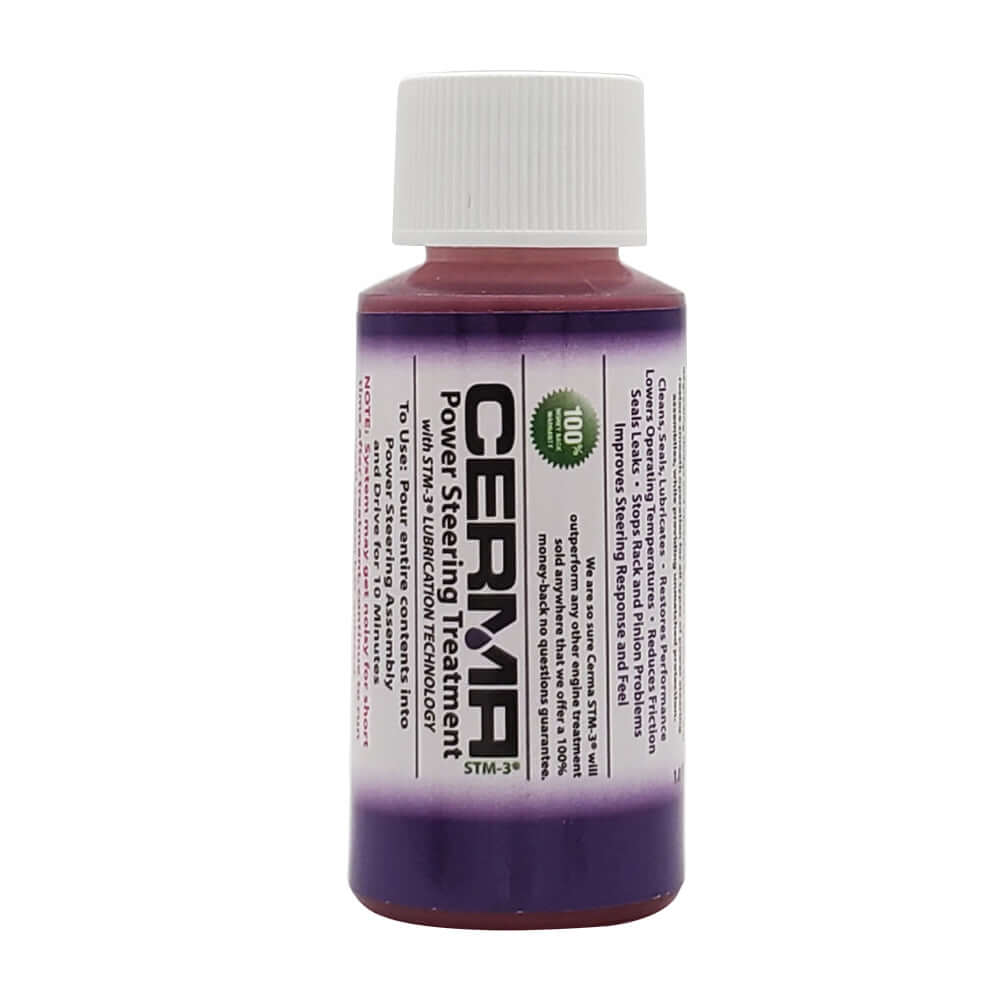
Cerma Ceramic Power Steering Treatment
Cerma Ceramic Power Steering Treatment
Couldn't load pickup availability
Cerma Ceramic Power Steering Treatment — STM-3 Nano Silicon Carbide for Smoother, Quieter Steering
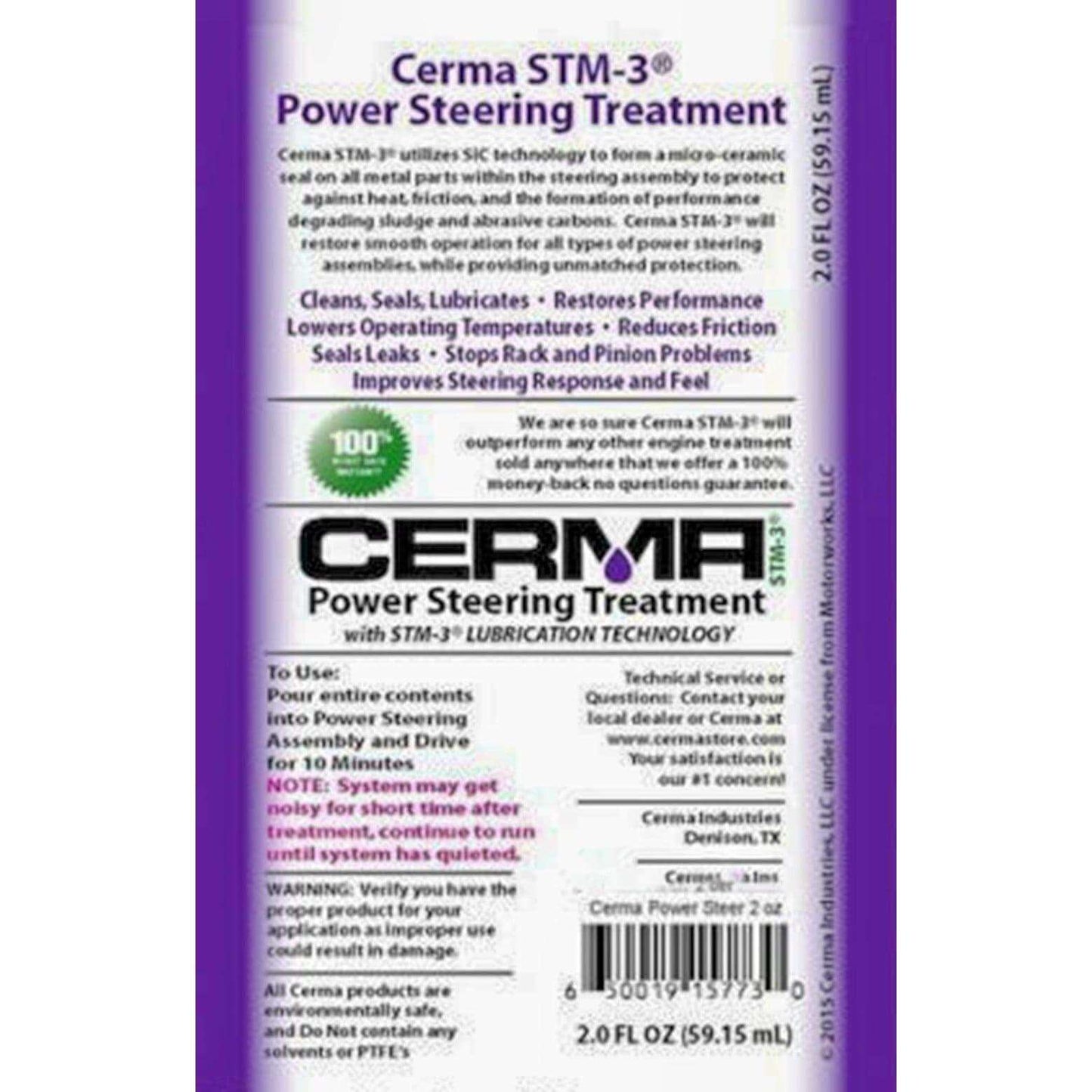
Cerma STM-3® Power Steering Treatment is a one-time ceramic application that permanently bonds Nano Silicon Carbide (SiC) to the internal metal surfaces of your power steering system. Helps reduce stiffness, quiets strange noises, and helps restore smooth and responsive steering — all without disassembly or expensive repairs.
Simply add it to your power steering fluid. Drive. The SiC particles bond to the pump, rack, and valve body metal surfaces permanently.
✅ What Cerma Power Steering Treatment Does
- Helps reduce steering stiffness — ceramic coating reduces friction on all internal metal surfaces
- Helps quiet power steering noise — reduces whining, groaning, and squealing sounds
- Helps restore smooth, responsive steering — more precise steering feel returns
- Reduces damaging harmonics and vibration — smoother pump operation
- Protects against wear and corrosion — SiC ceramic barrier helps prevent metal degradation
- Helps prevent carbon and rust buildup — micro seal on all metal parts reduces abrasive deposit formation
- Extends power steering fluid life — cleaner internals keep fluid cleaner longer
- Conditions seals — helps stop minor power steering seepage
💡 Why it works: Power steering pumps operate at high pressure and high RPM, creating constant friction and heat on internal metal surfaces. Over time, this causes the stiffness, noise, and poor response that drivers notice. Cerma's SiC ceramic matrix permanently reduces friction on the pump, rack, and valve body — addressing the root cause, not just masking symptoms like fluid additives do.
🔬 How STM-3 Technology Works in Power Steering
Cerma STM-3® is not a fluid conditioner — it's a ceramic surface treatment. The Nano Silicon Carbide particles penetrate into the sub-surfaces of your power steering system's metal components and create a permanent Silicon Carbide ceramic matrix.
SiC has a Mohs hardness of 9.5 (just below diamond) and a melting point of 2,730°C. Once bonded, this ceramic matrix creates ultra-smooth surfaces on the pump gears/vanes, steering rack, valve body, and all internal contact surfaces — dramatically reducing friction, heat, and wear.
The coating survives fluid changes because it's bonded to the metal, not suspended in the fluid. Contains no solvents and no PTFE (Teflon). Environmentally safe.
📋 How to Apply
- Locate your power steering fluid reservoir — check your owner's manual for location (usually near the front of the engine, marked with a steering wheel icon)
- Add Cerma STM-3 Power Steering Treatment — pour directly into the reservoir
- Drive normally — turn the wheel fully lock-to-lock several times to circulate
- Enjoy permanent protection — the ceramic matrix bonds during normal driving. No reapplication needed
No fluid drain required — add directly to existing power steering fluid. Compatible with all power steering fluid types. Safe for seals, hoses, and all non-metal components.
📦 Sizing & Pricing
| Size | Application | Price |
|---|---|---|
| 1 oz | Cars, SUVs, vans, light trucks, watercraft, golf carts | $37.40 |
| 2 oz | Semi trucks, commercial vehicles, heavy equipment | $70.40 |
🚗 Works on All Vehicles with Hydraulic Power Steering
- Cars (sedan, coupe, hatchback)
- Trucks (light duty, heavy duty, semi — F-150/F-250/F-350, Silverado/Sierra, Ram 1500/2500/3500)
- SUVs and crossovers
- Vans and minivans
- Classic and vintage vehicles with hydraulic steering
- Watercraft with hydraulic steering
- Golf carts
- Commercial and fleet vehicles
- Heavy equipment with hydraulic power steering (tractors, backhoes, skid steers)
⚠️ Important: This product is for hydraulic power steering systems only — systems with a power steering fluid reservoir and pump. If your vehicle has electric power steering (EPS/EPAS), there is no fluid to treat. Most vehicles from 2013 and newer have switched to EPS — check your owner's manual or look for a power steering fluid reservoir under the hood before purchase.
🛡️ Cerma vs Traditional Power Steering Additives
| Feature | Cerma STM-3® | Traditional Additives |
|---|---|---|
| Technology | Nano Silicon Carbide (SiC) | Fluid conditioners / seal swellers |
| How It Works | Bonds ceramic to metal surfaces | Temporarily improves fluid |
| Application | ✅ One-time (permanent) | ❌ Reapply with fluid changes |
| Survives Fluid Changes | ✅ Yes — bonded to metal | ❌ No — drains out |
| Helps Reduce Noise | ✅ Permanently bonded solution | ⚠️ Temporary effect |
| Contains PTFE/Teflon | ✅ No — PTFE-free | ❌ Many contain PTFE |
🔗 Complete Vehicle Protection
Protect every system in your vehicle with Cerma's SiC ceramic technology:
- Cerma STM-3 Engine Treatment — one-time ceramic protection for your engine ($105.60 for gas engines)
- Cerma Transmission Treatment — ceramic protection for automatic or manual transmissions ($70.40)
- Cerma Ceramic Fuel Treatment — continuous 6-in-1 fuel system protection (from $10.95)
- Cerma Gear Box / Axle Treatment — ceramic protection for differentials
- Cerma Blue Ice A/C Treatment — ceramic compressor protection ($57.20)
🔬 Technical & Compatibility FAQs
In most cases, yes. Power steering pump whine is typically caused by internal friction and wear on the pump vanes, gears, or bearings. Cerma's SiC ceramic coating reduces friction on these surfaces, which helps quiet the pump. Best results on pumps with normal wear-related noise. If the pump has structural mechanical failure (broken vanes, seized bearings, failed reservoir screens), the treatment cannot repair physical damage — but for friction-related noise, it is very effective. Cold-morning startup squeal often shows the most dramatic improvement.
Yes. The SiC particles permanently bond to the metal surfaces inside your power steering pump, rack, and valve body. The ceramic coating survives fluid changes — when you flush or replace power steering fluid, the protection stays on the metal. No reapplication needed for the life of the steering system.
Yes — the treatment coats the rack, valve body, and spool valve surfaces, not just the pump. Common rack-and-pinion symptoms include stiffness at rest (hard to turn while parked), uneven assist (easier to turn one direction than the other), jerky or "notchy" feel during cornering, and light knocking noise when going over bumps. Cerma's SiC ceramic coating addresses friction and wear on all internal rack surfaces. For structural rack damage (leaking tie rod seals, worn bushings, bent rack shaft), the treatment cannot repair mechanical failure — but friction and wear-related rack symptoms often improve significantly.
Yes. Cerma STM-3® is compatible with all power steering fluid types: universal Dexron/Mercon ATF, Chrysler ATF+4, Ford Mercon V, GM Dexron-VI, Pentosin CHF 11S (BMW/Mercedes/Audi/VW), Honda PSF-S/Acura PSF-II, Toyota PSF, Mopar PS+4, and all OEM-specific synthetic power steering fluids. The treatment bonds to metal surfaces, not the fluid — so your fluid choice doesn't affect ceramic protection. Always use the fluid type specified by your vehicle manufacturer.
Cerma STM-3® conditions power steering seals and may help stop minor seepage from dried-out or shrinking seals. However, it is not a dedicated leak-stop product. If you have an active leak (visible dripping, fluid level dropping, requires frequent topping off, puddles on the ground), the seal, hose, or fitting needs physical replacement — no treatment can repair hard leaks from torn seals, split hoses, or pump shaft seal failure. Cerma works best as a wear-reduction treatment, not a leak fix.
Look under your hood for a power steering fluid reservoir (usually a small capped container near the front of the engine with a steering wheel icon on the cap). If you find one, you have hydraulic power steering and Cerma will work. If there's no reservoir, your vehicle has electric power steering (EPS/EPAS), which doesn't use fluid — Cerma cannot treat electric systems. Most vehicles from 2012 and older have hydraulic power steering. Many newer vehicles (2013+) have switched to EPS. If you have an older truck, classic car, or heavy-duty vehicle (F-250, Silverado 2500, Ram 2500, Super Duty), you almost certainly still have hydraulic power steering.
Yes — Cerma STM-3® works on all major power steering pump manufacturers. Saginaw (GM/Chevy/GMC/Cadillac/Buick). Ford Motorcraft (all Ford/Lincoln/Mercury). ZF Friedrichshafen (BMW, Mercedes, Audi, VW, Porsche, Jaguar, Land Rover). Koyo Seiko / JTEKT (Toyota, Honda, Acura, Lexus, Subaru). Hitachi (Nissan, Infiniti, some GM). TRW (Chrysler, Dodge, Jeep, Ram, heavy-duty truck applications). The SiC particles bond to ferrous metal surfaces regardless of pump brand or design — vane pumps, gear-type pumps, and piston pumps are all compatible.
Possibly — it depends on the cause. Foamy or aerated (milkshake-looking) power steering fluid usually indicates air getting into the system, which can be caused by: (1) low fluid level — top off first; (2) loose hose clamps or worn return hose — inspect and tighten/replace; (3) failing pump shaft seal — mechanical repair needed; (4) wrong fluid type or mixed fluid types — flush and refill with correct fluid. If the foaming is caused by internal pump wear creating cavitation, Cerma's ceramic coating on pump internals can help reduce cavitation and smooth fluid flow. But if foaming comes from air ingress or wrong fluid, fix the root cause first — then Cerma will help protect the repaired system going forward.
Made in the USA by Cerma Treatment (Bijou Inc.), Fort Myers, FL. Environmentally safe. Solvent-free. PTFE-free. 30-day return policy. Free shipping on orders over $150. Ships to US & Canada. Questions? Call 239-344-9861 or email info@cermatreatment.com.
Share


Frequently Asked Questions
Customers report this treatment delivers smoother steering and quieter pump operation. Many noted "it really quieted down the power steering pump." Most reviews praise effectiveness, though results may take several days. One customer experienced increased squealing, suggesting inconsistent results for some vehicles.
- 5 stars: 6 (100%)
- 4 stars: 0 (0%)
- 3 stars: 0 (0%)
- 2 stars: 0 (0%)
- 1 star: 0 (0%)
Good product! Really works!!! Thanks!
I treated my Duramax engine over 20 years ago and it’s still going strong. Decided to treat our new Subaru Ascent early on with only a few hundred miles on it. I look forward to 20 years of a smooth running engine on this vehicle also. I will be adding the turbo and trans treatment also.
I did a full power steering flush, added Cerma and took the car for a drive and noticed smoother steering, and a quieter, power steering pump. Smooth😁
Put in power steering fluid steering reservoir quiet and effective
Did not fix my Lincoln pump squeal, if fact, made a more continuous squeal..
The treatment will make the steering pump sound louder at first then the sound should go away. As we stated in the instructions
At first I didn't really think it was doing anything. It took about 4 days and now my truck steers way easier and it really quieted down the power steering pump