


Cerma
Cerma Ceramic Automatic Transmission Fluid SiC ATF | Cerma
Cerma Ceramic Automatic Transmission Fluid SiC ATF | Cerma
Couldn't load pickup availability
Cermax Ceramic Automatic Transmission Fluid — STM-3 Nano Silicon Carbide Technology | Quad Protection Full Synthetic ATF
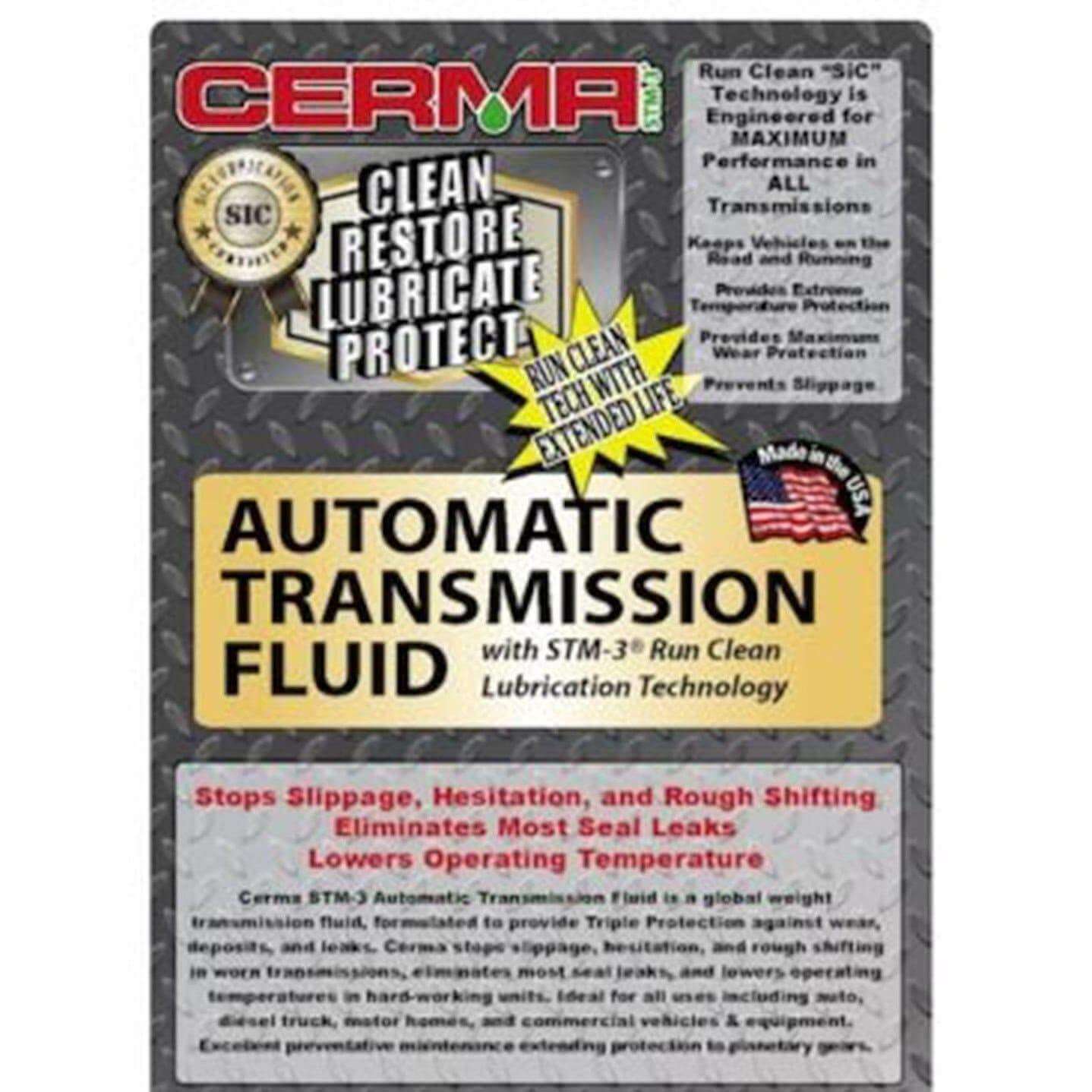
Cermax Ceramic Automatic Transmission Fluid is a full synthetic multi-vehicle ATF engineered with STM-3 Nano Silicon Carbide (SiC) ceramic technology. Standard transmission fluid only lubricates. Cermax goes further: SiC particles permanently bond to clutch pack surfaces, planetary gears, valve body passages, and torque converter internals — creating a micro-ceramic protective layer that helps eliminate slippage, smooth out harsh shifts, and extend transmission life well beyond conventional fluid.
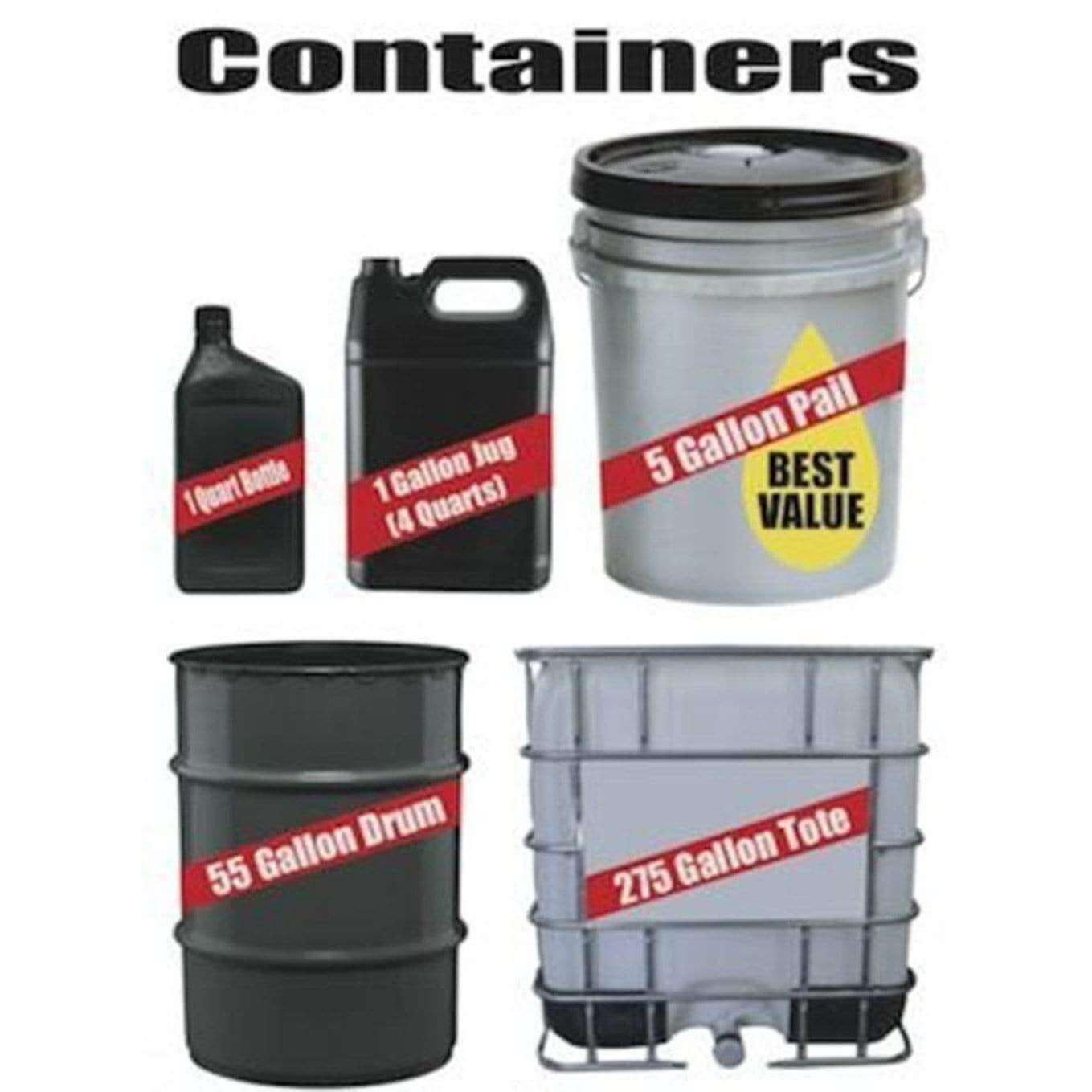
Ready-to-use full synthetic ATF — no mixing required. Available in 6 sizes from quart to 55-gallon drum for single-vehicle service, fleet maintenance, and shop installation.
✅ Quad Protection Technology
| Protection | What It Does |
|---|---|
| Slip Elimination | SiC ceramic particles restore clutch pack friction surfaces, helping eliminate slippage under load and during gear engagement |
| Wear Protection | Ceramic coating reduces metal-on-metal contact on planetary gears, pump gears, and bearing surfaces |
| Deposit Protection | Advanced detergents help prevent sludge and varnish buildup in valve body passages and cooler lines |
| Corrosion Protection | Protects internal steel, aluminum, brass, and bronze components from acid formation and oxidation |
🔬 Advanced Features
- STM-3 Nano Silicon Carbide ceramic technology — Mohs 9.5 hardness, 2,730°C melting point, permanent bond to metal surfaces
- Full synthetic base stock — superior thermal stability and oxidation resistance vs conventional ATF
- Up to 4× longer fluid life under normal service conditions compared to standard ATF*
- Restores slipping transmissions — SiC rebuilds microscopic wear on clutch friction surfaces
- Lower operating temperatures — friction reduction means less heat, extending fluid and component life
- Seal conditioners — help revitalize aging seals to reduce weeping and small leaks
- Anti-shudder additives — proper friction modifier package for torque converter clutch lock-up
- Formulated to meet or exceed key OEM specs — Dexron VI, Mercon LV, ATF+4, Toyota WS, and most other multi-vehicle fluid requirements*
🧪 How STM-3 SiC Technology Works in ATF: Silicon Carbide is one of the hardest materials on earth (Mohs 9.5 — diamonds are 10). Cermax suspends nano-scale SiC particles in a full synthetic ATF base. As fluid circulates, these particles seek out wear sites on clutch discs, gears, and bearings — then bond permanently to form a ceramic protective layer. Unlike PTFE (Teflon) or moly additives that get filtered out over time, SiC becomes part of the metal surface and continues protecting long after conventional ATF additives have depleted.
📦 Choose Your Size — 6 Variants Available
| Size | Best For |
|---|---|
| Quart (32 fl oz) | Top-off, small leak replenishment, single quart add-on to existing service |
| 12 Quart Case | Full fluid exchange on most cars and SUVs (typical capacity 10–12 qt), shop inventory |
| 1 Gallon (128 fl oz) | Drain-and-fill service on cars and light trucks (typically 4–6 qt drain capacity) |
| 4 Gallon Case | Full flush service on trucks, SUVs, and vehicles with higher fluid capacity |
| 5 Gallon Pail | Shop service, multiple vehicles, heavy-duty trucks, RVs and motor homes |
| 55 Gallon Drum | Fleet maintenance, dealerships, commercial transmission shops, high-volume service |
See variant dropdown above for current pricing. Bundle & Save discounts apply on multi-unit orders. For fleet or commercial volume pricing beyond listed sizes, call 239-344-9861.
📋 How to Use — Installation Procedure
Standard Drain-and-Fill (Most Common):
- Warm transmission to operating temperature — drive for 10–15 minutes so fluid flows freely and suspends contaminants
- Position vehicle on level surface — park, set emergency brake, allow to cool briefly before working underneath
- Drain transmission pan — loosen drain plug (if equipped) or remove pan bolts carefully; catch fluid in a drain pan rated for transmission capacity
- Replace transmission filter and pan gasket — recommended at every fluid change for long-term transmission health
- Reinstall pan — torque bolts to manufacturer specification in the correct sequence
- Refill with Cermax ATF — use manufacturer-specified capacity; check dipstick per owner's manual procedure
- Run through gears — with engine running and brake applied, cycle through P-R-N-D-L to fill valve body, then recheck level at operating temperature
Full Flush Service (Preferred for Maximum Benefit):
For severely degraded fluid or high-mileage transmissions, a full flush exchanges all fluid including what's trapped in the torque converter and cooler lines. Most shops use a transmission flush machine that connects to the cooler lines. Discuss with your service center whether flush or drain-and-fill is appropriate for your vehicle's age and condition.
Top-Off (For Minor Loss or Slow Leaks):
Cermax ATF can be safely added to most existing conventional transmission fluids. For best results, perform a full drain-and-fill so Cermax's SiC technology can work at full concentration — but emergency top-off is safe. The SiC protective benefits will accumulate over time as old fluid is replaced.
⚠️ Important: Cermax Automatic Transmission Fluid is formulated for conventional automatic transmissions with planetary gear sets and torque converters. Do NOT use in CVT (Continuously Variable) or DCT (Dual-Clutch) transmissions — these require fluid with entirely different friction characteristics. Warranty is not valid for CVT or SVT applications. Check your owner's manual to confirm transmission type before installation, or call 239-344-9861 with your vehicle's year/make/model.
📊 OEM Specifications Met or Exceeded
| Specification | Vehicle Applications |
|---|---|
| Dexron VI (GM) | GM, Chevrolet, GMC, Cadillac, Buick (2006+), also backward-compatible with Dexron III, II, and earlier |
| Mercon LV / Mercon V (Ford) | Ford, Lincoln, Mercury 6-speed and some 10-speed automatics (2008+) |
| ATF+4 (Chrysler/Mopar) | Chrysler, Dodge, Jeep, Ram — most automatic transmissions (1998+) |
| Toyota WS / Type T-IV | Toyota, Lexus, Scion automatic transmissions (most years) |
| Honda ATF-DW1 / Z1 | Honda, Acura automatic transmissions (not CVT or DCT) |
| Nissan Matic-S / J / K / W | Nissan, Infiniti conventional automatics (not CVT) |
| Hyundai/Kia SP-III / SP-IV | Hyundai, Kia, Genesis automatic transmissions |
| JWS 3309 / JASO 1A | Aisin-built transmissions (Mazda, Volvo, VW Aisin units, Mercedes 722.6) |
🚛 Ideal Applications
- Cars and SUVs with conventional automatic transmissions (4-speed through 10-speed)
- Light trucks and vans (Ford F-150, Chevy Silverado, Ram 1500, Toyota Tundra, Nissan Titan)
- Heavy-duty diesel trucks (Allison 1000/2000/3000, Ford TorqShift, GM 6L/10L series)
- Motor homes, RVs, and tow vehicles — extended protection for heavy loads and hot operation
- High-mileage vehicles (100K+ miles) showing early signs of slippage or harsh shifting
- Fleet vehicles and commercial service vans — reduces downtime between fluid changes
- Performance and towing applications — lower operating temps under sustained load
- Motorcycles with automatic transmissions (check owner's manual for ATF compatibility)
🛡️ Cermax ATF vs Standard Transmission Fluid
| Feature | Cermax Ceramic ATF | Standard ATF |
|---|---|---|
| Protection Level | Quad (slip + wear + deposits + corrosion) | Basic (lubrication only) |
| SiC Ceramic Technology | ✅ Permanent bond to metal | ❌ None |
| Restores Worn Surfaces | ✅ Yes — eliminates slip | ❌ Cannot restore wear |
| Fluid Life | Up to 4× longer* | Standard intervals |
| Multi-Vehicle Compatible | ✅ Dexron/Mercon/ATF+4/Toyota WS | ⚠️ Usually OEM-specific |
| Operating Temperature | ✅ Reduced under load | Standard |
| Works After Oil Change | ✅ SiC bond survives fluid changes | ❌ Additives depleted with fluid |
📊 Technical Specifications
| Specification | Details |
|---|---|
| Type | Full synthetic multi-vehicle automatic transmission fluid with STM-3 Nano SiC ceramic technology |
| Base Stock | Group III/IV full synthetic with premium additive package |
| Ceramic Technology | STM-3 Nano Silicon Carbide (SiC) — Mohs 9.5 hardness, 2,730°C melting point |
| Operating Temp Range | Full synthetic stability across typical automotive range (approximately -40°F to 300°F+) |
| OEM Specs Met/Exceeded | Dexron VI, Mercon LV/V, ATF+4, Toyota WS, Honda DW1/Z1, Nissan Matic-S/J, Hyundai/Kia SP-III/IV, JWS 3309* |
| Transmission Compatibility | Conventional automatics only — NOT for CVT, DCT, or SVT |
| Additive Properties | PTFE-Free, Solvent-Free, Environmentally Safe |
| Made In | USA — Fort Myers, FL (Bijou Inc.) |
🔗 Complete Cerma Vehicle Protection
Pair Cermax ATF with other Cerma ceramic products for total drivetrain coverage:
- Cerma Transmission Treatment — one-time ceramic additive for maximum SiC concentration in your transmission
- Cerma STM-3 Engine Treatment — one-time ceramic engine protection
- Cermax Motor Oils — ceramic synthetic oils up to 30,000-mile intervals
- Cerma Gear Box & Axle Treatment — protect differentials and transfer cases
- Cerma Ceramic Fuel Treatment — continuous 6-in-1 fuel system protection
- Cerma Blue Ice A/C Treatment — ceramic compressor protection
🔬 Technical & Application FAQs
Most drivers notice smoother shifts within the first 50–200 miles of driving, as the SiC particles begin bonding to wear sites on clutch friction surfaces and valve body passages. Full benefits typically develop over the first 500–1,000 miles, during which time slippage under load should noticeably reduce and shift quality should continue improving. For severely degraded transmissions (heavy slipping, harsh 1-2 or 2-3 shifts, long shift flare), a full flush rather than drain-and-fill gives faster and more dramatic results because old contaminated fluid doesn't dilute Cermax's effective concentration. Temperature improvements under towing or sustained load are typically noticeable within the first drive cycle after installation.
Yes — in many cases. Cermax is specifically formulated to address clutch slippage caused by friction surface wear, which is the most common cause of slip in high-mileage conventional automatic transmissions. The SiC particles bond to worn clutch disc material and restore the friction coefficient needed for solid clutch pack engagement. However, Cermax cannot fix mechanical failures: broken bands, failed solenoids, burned clutch packs, shredded torque converter internals, or valve body hydraulic failures require physical repair. If your transmission is slipping because the clutch material itself is gone (metal-on-metal contact, heavy metal shavings on the pan magnet, transmission fluid that smells burnt), rebuild or replacement is the appropriate solution — fluid alone cannot restore missing friction material. Cermax is most effective on slippage caused by gradual wear rather than catastrophic failure.
Using Cermax should not void your warranty as long as it meets or exceeds the specification required by your vehicle manufacturer (Dexron VI, Mercon LV, ATF+4, Toyota WS, etc. — see the OEM Specifications table above). Under the Magnuson-Moss Warranty Act (US federal law), a manufacturer cannot void your warranty simply because you used an aftermarket fluid that meets the required specification — they would have to prove the specific fluid caused a failure. Cermax is formulated to meet the major multi-vehicle OEM specs. That said: if your vehicle is still under factory warranty, keep all purchase receipts and service records documenting the specification claim, and consider discussing with your dealer before switching. For older vehicles outside warranty, this is a non-issue.
Yes — Cermax Ceramic ATF is formulated to meet or exceed the performance requirements of Dexron VI (GM), Mercon LV and Mercon V (Ford), ATF+4 (Chrysler/Mopar), Toyota WS and Type T-IV, Honda DW1 and Z1, Nissan Matic series, Hyundai/Kia SP-III and SP-IV, and JWS 3309 for Aisin-built transmissions. This covers the vast majority of conventional automatic transmissions built from the mid-1990s forward across domestic, European, and Asian vehicles. Multi-vehicle ATF formulations like Cermax are designed to serve as a single-fluid replacement for multiple OEM specs, simplifying inventory for shops and fleet operators while providing OEM-level protection. Exceptions: Cermax does NOT replace CVT fluid (Nissan NS-2/NS-3, Subaru CVTF, Honda HCF-2), DCT fluid (VW/Audi DSG, Ford DPS6), or DEX-CVT — these use entirely different base stocks and friction modifiers.
These are two different products that work together but serve different roles. Cermax Ceramic ATF (this product) is the transmission fluid itself — a full synthetic multi-vehicle ATF with SiC built into the fluid chemistry. It replaces your existing transmission fluid entirely. Cerma Transmission Treatment is a one-time concentrated ceramic additive (2 oz for cars/trucks, 6 oz for semi trucks) that's added to your existing transmission fluid to deliver a high-dose SiC application. The treatment is added once and its ceramic bond survives subsequent fluid changes. Which should you use? For maximum SiC protection, many customers use both: install the Cerma Transmission Treatment first for peak SiC concentration, then use Cermax ATF for ongoing service fluid changes. If you're only choosing one, the Treatment gives the highest protection-per-dollar for established transmissions; Cermax ATF is the right choice when you need a full fluid change regardless.
Yes — high-mileage transmissions are actually one of the best use cases for Cermax. As transmissions accumulate miles, clutch friction surfaces wear, seals harden, and valve body passages develop varnish — all of which Cermax is specifically designed to address. The SiC particles target worn friction surfaces, the full synthetic base stock has superior detergency to help clean varnish, and the seal conditioners help revitalize aging elastomer seals. Best practice for high-mileage application: do a full flush rather than drain-and-fill so Cermax works at full concentration; replace the filter and pan gasket at the same time; and drive at least 200–500 miles before expecting full benefits to develop. If the transmission has been neglected for a long time and has heavy varnish buildup, some shops recommend a pre-flush with standard ATF before installing Cermax to maximize the benefit — discuss with your service center.
Most aftermarket transmission additives use friction modifiers that remain suspended in the fluid — PTFE (Teflon particles), moly (molybdenum disulfide), ZDDP, or proprietary polymer additives. These work while they're present, but they have two limitations: (1) they get filtered out by the transmission filter over time, and (2) they leave with the old fluid at every fluid change, requiring constant replenishment. Silicon Carbide works differently. SiC particles permanently bond to metal surfaces through a process similar to heat-induced ceramic deposition — once bonded, they become part of the metal itself and survive subsequent fluid changes. This is why Cerma ceramic technology is sometimes described as a catalyst rather than an additive. Additional advantages of SiC: Mohs 9.5 hardness (vs PTFE's 2–3), 2,730°C melting point (vs PTFE's 327°C, which can thermally degrade inside hot transmissions), and no risk of filter clogging since bonded SiC is no longer in suspension.
Yes — always replace the filter and pan gasket when performing a full transmission fluid change, regardless of whether you're using Cermax or conventional ATF. The transmission filter captures metal shavings, friction material, and clutch debris that accumulates during normal operation. A clogged or saturated filter restricts fluid flow to the pump and valve body, which can cause low-pressure symptoms that look like slipping or harsh shifts — even with fresh fluid. Filter replacement costs $15–$40 for most vehicles and adds 30–45 minutes to the service, but it's essential for the fluid change to actually solve the problems it's meant to address. Top-off service (adding a quart or two to make up for leaks) does not require filter replacement — but any service that drops the pan should include a new filter and pan gasket. For vehicles with sealed transmissions (no traditional dipstick or pan-accessible filter), Cermax still works, but the filter is typically serviced at much longer intervals per manufacturer specification.
Made in the USA by Cerma Treatment (Bijou Inc.), Fort Myers, FL. 30-day return policy. Free shipping on orders over $150. Ships to US & Canada. Fleet and commercial volume pricing available beyond listed sizes. Questions? Call 239-344-9861 or email info@cermatreatment.com.
*Performance claims including "up to 4× longer fluid life" and OEM specification compliance represent formulation targets and typical results under normal service conditions. Individual transmission performance varies based on transmission condition, age, wear level, maintenance history, operating environment, and service practices. Cermax is formulated to meet or exceed referenced OEM specifications (Dexron, Mercon, ATF+4, Toyota WS, Honda DW1/Z1, Nissan Matic, Hyundai/Kia SP, JWS 3309) — trademark and specification references are property of their respective manufacturers (General Motors, Ford Motor Company, Stellantis/FCA, Toyota Motor Corporation, Honda Motor Co., Nissan Motor Co., Hyundai Motor Group, Aisin Corporation) and are used here for compatibility identification only. Cermax is NOT compatible with CVT, DCT, or SVT transmissions — warranty does not apply to these applications. Consult your vehicle owner's manual to confirm transmission type and required fluid specification before installation. Not for use in manual transmissions (see Cerma Gear Box & Axle Treatment or Cerma Heavy Duty Gear Oil 75W-90 for manual/differential applications).
Share
Frequently Asked Questions
Is the best
Cerma treatment is the best company hands-down ! I spent quite a bit of money buying 5 gallons of transmission fluid and when I arrive home from work after it had been delivered, the side of the pale was cracked and leaked some of the fluid out, and I reached out to the company and they wear polite and prompt and replaced my order immediately if you guys want a good product and great customer service this is the place to be!!!!!!!!!!!!!
I have performed a transmission flush after using the treatment and had the shops use this fluid any 3 different vehicles to of which are commercial use and each time I have been so pleased with the smooth shifting. Like butter