Cerma
Ceramic-Enhanced 2-Stroke Oil for Aircraft & Ground-Based 2-Cycle Engines
Ceramic-Enhanced 2-Stroke Oil for Aircraft & Ground-Based 2-Cycle Engines
Couldn't load pickup availability
Ceramic-Enhanced 2-Stroke Oil for Aircraft & Ground-Based 2-Cycle Engines
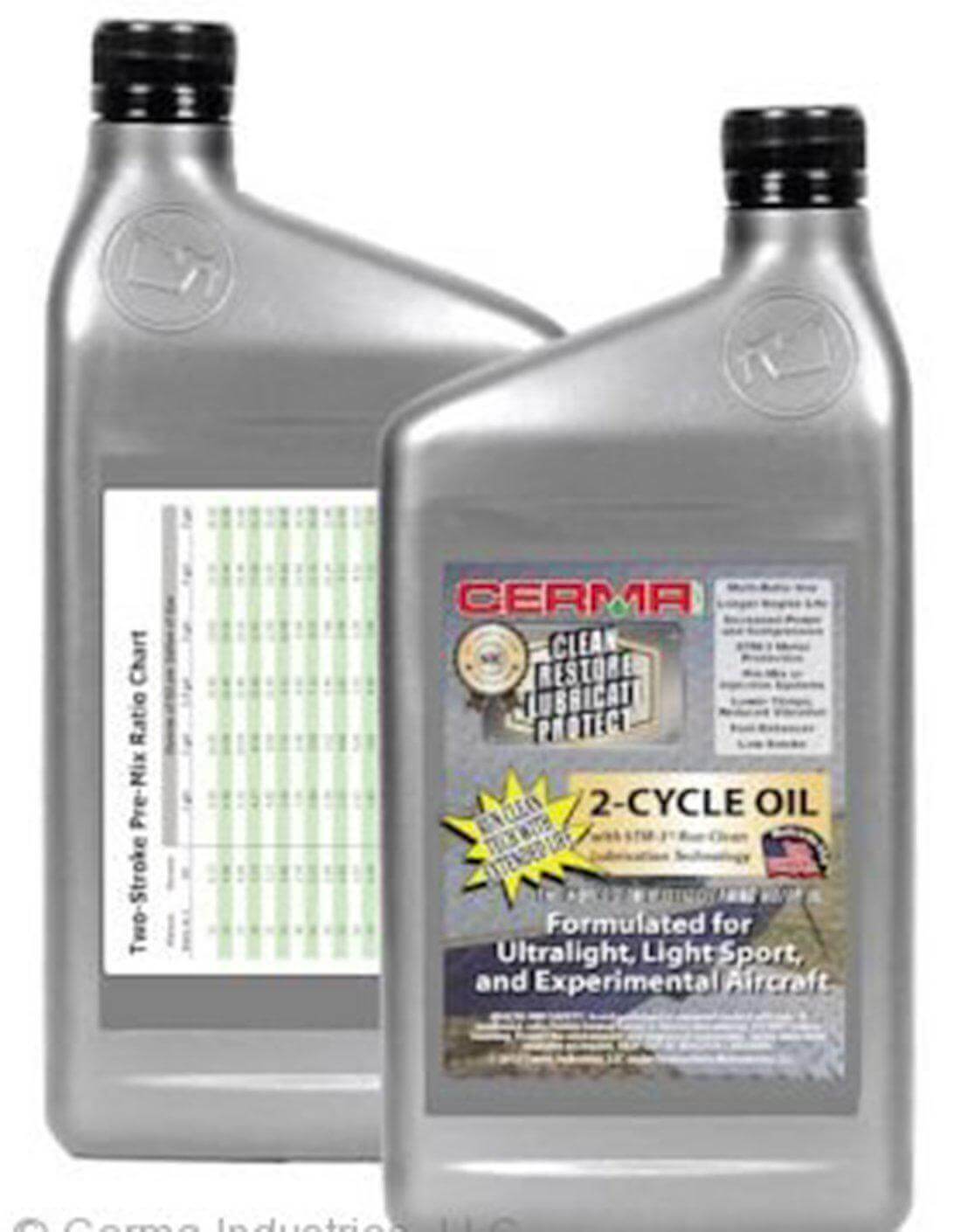
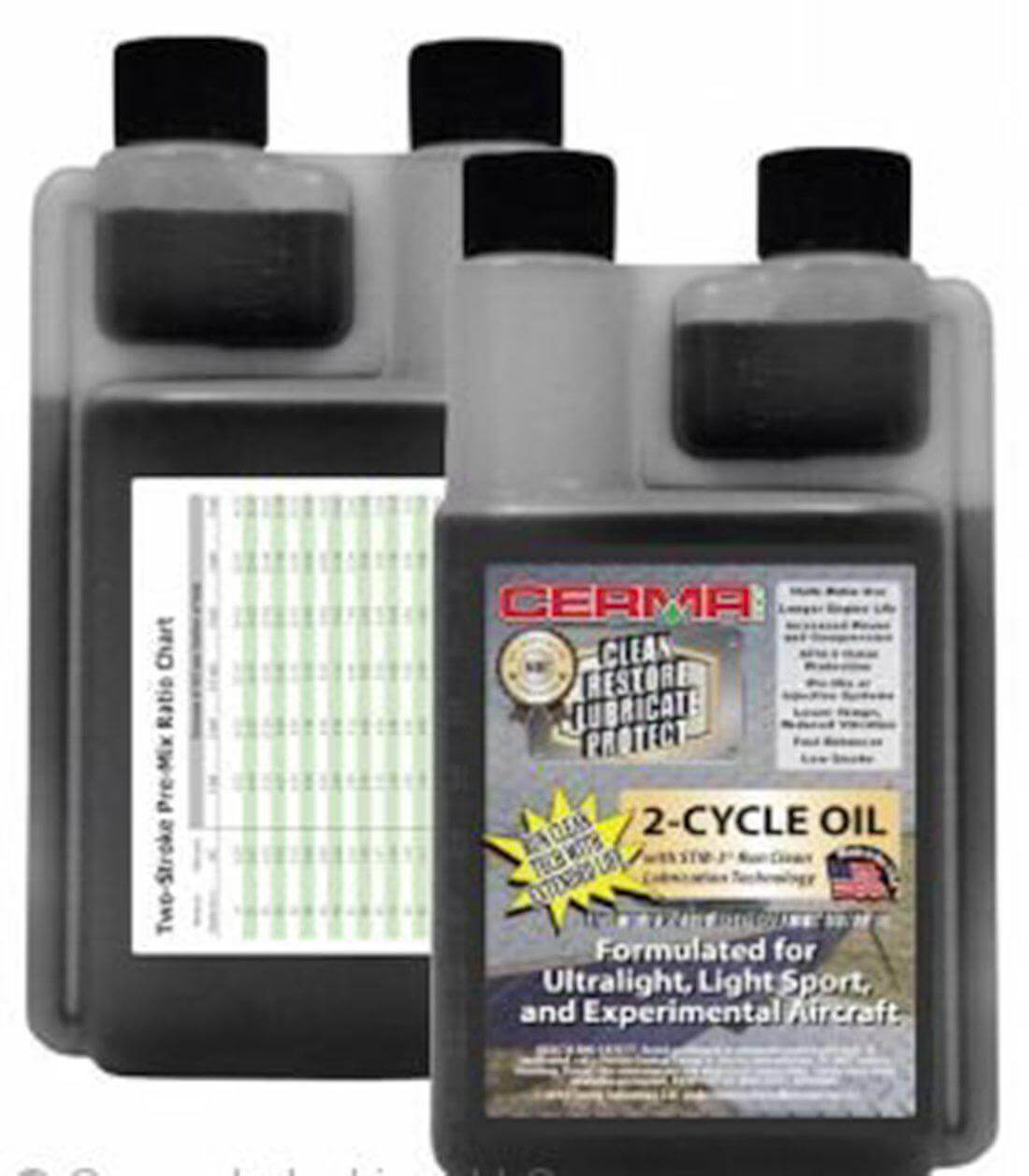
Cermax Air Ceramic 2-Cycle Multi-Ratio Oil is a premium 2-stroke engine oil enhanced with STM-3® Nano Silicon Carbide (SiC) technology, positioned for ultralight aircraft, light sport aircraft (LSA), and experimental amateur-built aircraft with 2-stroke engines — as well as all ground-based 2-cycle applications (chainsaws, trimmers, leaf blowers, snowmobiles, dirt bikes, go-karts, watercraft, power equipment).
Multi-ratio formulation works across all standard pre-mix ratios (50:1, 40:1, 32:1, 25:1, 20:1, 16:1) and in oil-injection systems. Two sizes: 16 oz bottle and 1 Quart (32 oz). Made in the USA by Bijou Inc. in Fort Myers, FL. PTFE-free, solvent-free.
What Cermax Air Delivers
- STM-3® SiC ceramic protection during combustion — Nano Silicon Carbide particles travel with the oil into the combustion chamber and help protect cylinder walls, piston rings, and crankshaft bearings at the moment of peak combustion stress. In aircraft 2-stroke engines where reliability margin matters, the ceramic protection provides an additional wear-reduction mechanism beyond conventional oil film.
- Multi-ratio versatility — formulated to perform across 50:1, 40:1, 32:1, 25:1, 20:1, and 16:1 mix ratios. Use whatever ratio your engine manufacturer specifies.
- Carbon deposit resistance — Run Clean detergent chemistry helps minimize piston crown carbon, ring groove varnish, and exhaust port deposits — which in 2-stroke aircraft engines are a leading cause of power loss and cylinder head issues over time.
- Low-smoke performance — premium synthetic base burns more completely than older petroleum 2-stroke oils, reducing visible exhaust smoke.
- Low-ash no-foul spark plug formula — helps prevent spark plug electrode fouling on 2-strokes running rich or during extended idle (common in aircraft during taxi and run-up).
- Cold-start lubricity — maintains film strength for reliable cold starts at typical operating altitudes and temperature ranges.
- Pre-mix AND oil-injection compatible — works whether your engine uses manual pre-mix (typical on smaller ultralights and ground equipment) or has an oil-injection pump metering from a separate reservoir.
- Works across all ground-based 2-cycle equipment — chainsaws (Stihl, Husqvarna, Echo), string trimmers, leaf blowers, snowmobiles (Polaris, Ski-Doo, Arctic Cat 2-stroke), dirt bikes (KTM 250/300, Husqvarna TE/TX, Yamaha YZ), 2-stroke marine outboards, go-karts, and power equipment.
- PTFE-free, solvent-free — no Teflon, no solvents that could affect engine seals or combustion chamber behavior.
Is This the Right Cermax 2-Cycle Oil for You?
Cerma offers two 2-stroke oil SKUs. Both contain the same STM-3 SiC ceramic technology. Choose based on your use case:
| Product | Best For | Sizes |
|---|---|---|
| Cermax Air Ceramic 2-Cycle (this product) | Aircraft 2-stroke engines (Rotax 447/503/582, Hirth, Zanzottera, HKS 2-stroke) on ultralight, LSA, and experimental aircraft. Also works on all ground-based 2-cycle equipment. Positioned for owners who want aircraft-compatible 2-stroke oil. | 16 oz, 1 Quart (32 oz) |
| Cermax Ceramic 2-Cycle Multi-Ratio | Ground-based 2-cycle equipment only — chainsaws, trimmers, blowers, marine outboards, dirt bikes, snowmobiles, PWC, go-karts, power equipment. Not positioned for aircraft use. | 16 oz, 1 Quart, 1 Gallon, 5-Gallon Pail |
If you own aircraft with a 2-stroke engine, Cermax Air is the right SKU. If you only own ground equipment (chainsaws, dirt bikes, outboards, etc.), either SKU provides the same ceramic protection — the standard Cermax Ceramic 2-Cycle offers larger sizes and better per-ounce economics for high-volume users. For owners who have both aircraft and ground equipment, Cermax Air covers both use cases with one product.
Compatible Equipment
| Equipment Category | Examples |
|---|---|
| Aircraft 2-stroke engines (ultralight, LSA, experimental) | Rotax 447, 503, 582 (the 2-stroke Rotax aviation line); Hirth F-23, F-33, 2702, 3203; Zanzottera MZ series; Simonini Victor; Polini Thor; HKS 700E (verify current engine model); vintage 2-stroke aircraft engines in experimental applications. Not for Rotax 912/914/915 (those are 4-stroke — use 4-stroke aviation oil). Not for certified aircraft requiring approved oils. |
| Chainsaws | Stihl (MS 170 through MS 661 full line), Husqvarna (450 through 592 XP), Echo (CS-400 through CS-800P), Makita, Dolmar, Shindaiwa, Poulan, Homelite vintage |
| String trimmers & leaf blowers | Stihl FS-series trimmers and BR-series blowers; Husqvarna 525/535 trimmers and 580 BTS blowers; Echo SRM-series trimmers and PB-series blowers; all commercial and residential brands |
| 2-stroke watercraft | Older Mercury 2-stroke and OptiMax outboards; Yamaha 2-stroke and HPDI; Evinrude E-TEC and classic; Johnson; Suzuki older 2-stroke; older Sea-Doo, Kawasaki Jet Ski, and Yamaha WaveRunner 2-stroke PWC — all require NMMA TC-W3 compatibility which Cermax Air meets |
| Snowmobiles (2-stroke) | Polaris 2-stroke (800 HO, 850 Patriot), Ski-Doo Rotax 2-stroke (600/800/850 E-TEC), Arctic Cat 2-stroke (600/800 C-TEC2), vintage Yamaha 2-stroke |
| Dirt bikes & 2-stroke motorcycles | KTM 250/300 SX/EXC/XC/TPI; Husqvarna TE/TX 250/300; Yamaha YZ125/YZ250; Suzuki RM125/RM250; Honda CR vintage; Beta 2-stroke enduro; GasGas; Sherco; TM Racing; vintage scooters (Vespa, Piaggio, Tomos, Puch) |
| Go-karts & 2-stroke racing | Yamaha KT100, Rotax FR125/DD2, IAME X30/Leopard, Comer, vintage karting |
| Power equipment | Concrete saws (Husqvarna K760/K970, Stihl TS-series), demolition saws, 2-stroke post drivers, 2-stroke pumps and generators, ice augers, 2-stroke hedge trimmers |
Application — How to Use
For pre-mix engines (most ultralight aircraft, chainsaws, trimmers, blowers, most motorcycles, most power equipment):
- Verify your engine's recommended fuel-to-oil mix ratio — from the engine manufacturer's documentation. Aircraft 2-strokes often spec 50:1 (some older Rotax 447/503 at 50:1, some installations require richer). Modern chainsaws and trimmers: 50:1. Older equipment may require 40:1, 32:1, 25:1, or richer.
- Measure the correct amount of Cermax Air for your target gasoline volume (see ratio chart below).
- Pour oil into a clean approved fuel container.
- Add the correct volume of gasoline.
- Close and shake gently for 10–15 seconds to blend oil into fuel.
- Pour pre-mixed fuel into equipment fuel tank.
- For aircraft use: conduct standard pre-flight checks and appropriate ground run-up to verify normal engine operation before flight. First-use oil changes benefit from confirming normal pressure, temperature, and idle/runup behavior before committed flight operations.
- Use pre-mix within 30 days — 2-stroke pre-mix degrades over time, especially with ethanol-blended fuel. For aircraft use, fresh pre-mix prepared per-flight or per-day is preferred.
For oil-injection engines (some marine 2-stroke outboards, KTM/Husqvarna TPI fuel-injected 2-strokes, Ski-Doo E-TEC, certain aircraft with oil-injection):
- Fill the dedicated oil reservoir with unmixed Cermax Air.
- Fill the fuel tank with straight gasoline (no pre-mix).
- Engine's oil pump meters the correct oil-to-fuel ratio automatically.
- Verify oil reservoir fills properly on first use — oil-pump failures can cause 2-stroke engine seizure without warning.
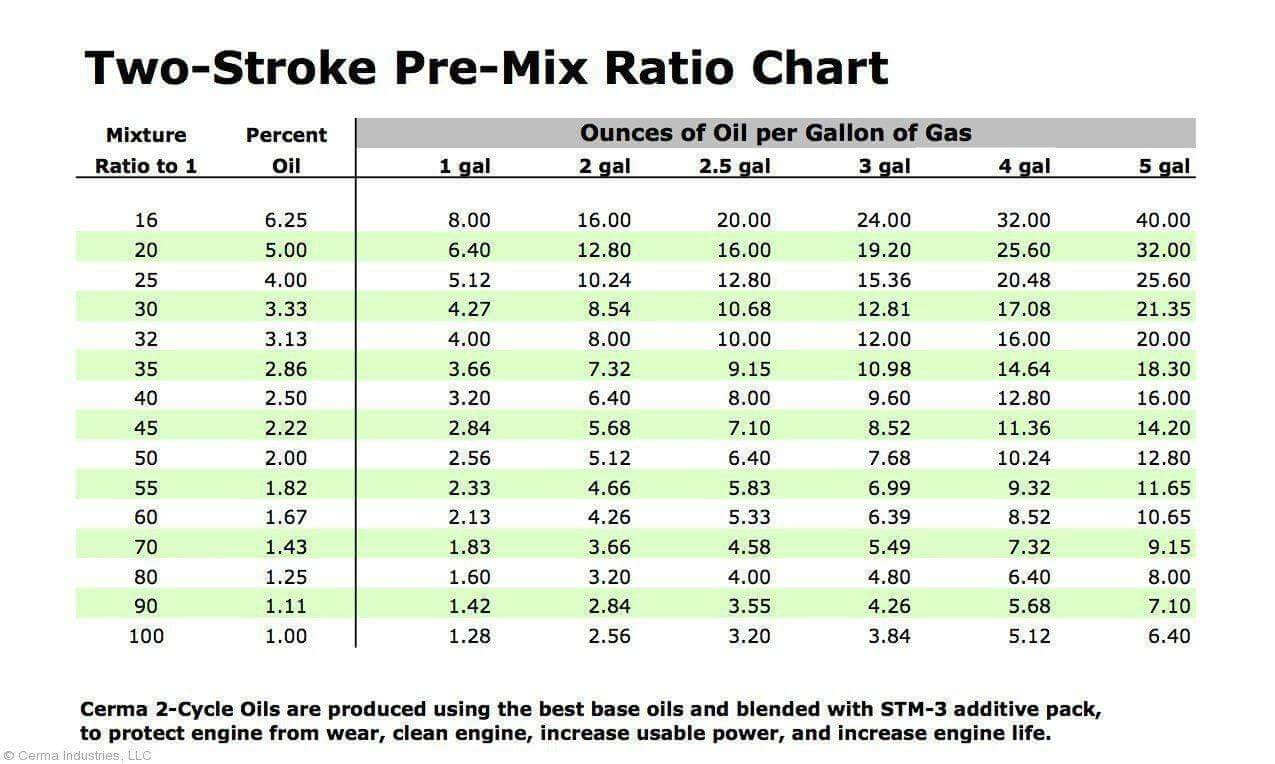
Mix Ratio Quick Reference
| Ratio | Oil per 1 gal gas | Oil per 2.5 gal | Oil per 5 gal | Typical Applications |
|---|---|---|---|---|
| 50:1 | 2.6 oz | 6.4 oz | 12.8 oz | Modern chainsaws, trimmers, blowers; most modern 2-stroke aircraft (Rotax 447/503/582 — verify specific installation); modern dirt bikes; modern 2-stroke outboards |
| 40:1 | 3.2 oz | 8.0 oz | 16.0 oz | Some Stihl equipment when using non-Stihl oil; older 2-stroke aircraft installations requiring richer mix; transitional-era equipment |
| 32:1 | 4.0 oz | 10.0 oz | 20.0 oz | Vintage marine outboards; older 2-stroke aircraft; classic racing applications; some older power equipment |
| 25:1 | 5.1 oz | 12.8 oz | 25.6 oz | Older 2-stroke equipment; break-in for newly rebuilt engines (rich for first hours) |
| 20:1, 16:1 | 6.4–8.0 oz | 16–20 oz | 32–40 oz | Very old 2-stroke equipment; pre-1960s engines; specific vintage racing applications |
Available Sizes
| Size | Best For |
|---|---|
| 16 oz | Homeowner use with one or two pieces of 2-stroke equipment; single-aircraft pilot for routine use; initial trial purchase. At 50:1 ratio, mixes approximately 6 gallons of pre-mix fuel. |
| 1 Quart (32 oz) | Frequent users, multiple 2-stroke machines, landscaping operations, flight school or hangar inventory, commercial operators. Better per-ounce economics. At 50:1, mixes approximately 12 gallons of pre-mix fuel. |
For larger volumes (1 gallon, 5-gallon pail), see the standard Cermax Ceramic 2-Cycle Multi-Ratio Oil — same ceramic formulation, ground-equipment positioning, broader size range.
Cermax Air vs. Conventional 2-Stroke Oil
| Feature | Cermax Air | Conventional 2-Cycle Oil |
|---|---|---|
| STM-3 SiC ceramic protection | ✓ Yes | ✗ No |
| Multi-ratio versatility (50:1 to 16:1) | ✓ Yes | ⚠ Usually optimized for one ratio |
| Low-smoke performance | ✓ Yes | ⚠ Varies by grade |
| Low-ash, no-foul plug formula | ✓ Yes | ⚠ Varies |
| Carbon deposit resistance (Run Clean) | ✓ Yes | ⚠ Varies |
| Aircraft 2-stroke positioning | ✓ Yes (ultralight/LSA/experimental) | Varies — most 2-stroke oils are not aircraft-positioned |
| Pre-mix AND oil-injection compatible | ✓ Both | Varies |
| PTFE-free / solvent-free | ✓ Yes | Varies — some contain PTFE |
Related Cerma Products
- Cermax Ceramic 2-Cycle Multi-Ratio Oil — same ceramic formulation, ground-equipment positioning, larger sizes (1 gal, 5-gal pail) for high-volume users
- Cerma Gas Fuel Treatment — 6-in-1 fuel system protection, safe for use in the gasoline portion of 2-stroke pre-mix
- Cermax Motor Oils — all 4-stroke applications (gas, diesel, marine, motorcycle, hydraulic)
Frequently Asked Questions
Cermax Air is positioned as a 2-stroke oil option for ultralight aircraft (FAR Part 103), light sport aircraft (LSA), and experimental amateur-built aircraft where the operator has discretion in oil selection per the engine manufacturer's recommendations and applicable regulations. Cermax Air is not an FAA-approved or FAA-certified aviation oil — if your aircraft's type certificate, airworthiness directives, or approved maintenance data require specific aviation-approved oils, use only those approved products. For 2-stroke aircraft engines where the operator has oil-selection latitude (typical on ultralights under FAR 103, on many experimental aircraft, and on some LSAs), common compatible engines include: Rotax 2-stroke aviation line (447, 503, 582); Hirth Engines (F-23, F-33, 2702, 3203, etc.); Zanzottera MZ-series; Simonini Victor; Polini Thor; HKS 2-stroke aviation; and vintage 2-stroke engines in experimental installations. Do not use Cermax Air in 4-stroke aircraft engines (Rotax 912/914/915, Continental, Lycoming, Jabiru, ULPower) — those require 4-stroke aviation oil, and certified engines require specifically approved products. Pilots and aircraft owners are responsible for verifying compatibility with their specific engine and airworthiness requirements before use.
Use the mix ratio specified by your engine manufacturer — this is non-negotiable and the most important decision you make. Running too lean (less oil than spec) can cause immediate piston damage or seizure; running slightly rich is messy but generally safer. For aircraft 2-stroke engines, consult the engine manufacturer's documentation and applicable airworthiness records — never improvise ratios on aircraft engines. Typical ratios: Rotax 447/503/582 usually 50:1 (verify specific installation — some require richer); older 2-stroke aircraft may specify 32:1 or richer. For ground equipment, most modern 2-strokes (1990s+) specify 50:1: chainsaws, trimmers, blowers, modern dirt bikes. Older ground equipment may specify 40:1, 32:1, 25:1, or as rich as 16:1 for vintage applications. See the Mix Ratio Quick Reference table above for specific oz-per-gallon amounts.
Both products use the same STM-3 SiC ceramic technology and the same multi-ratio formulation. The differences are positioning and sizing. Cermax Air is positioned for aircraft 2-stroke engines (ultralight, LSA, experimental) in addition to ground equipment, and is offered in smaller sizes (16 oz and 1 Quart) appropriate for aircraft owners' typical usage patterns. Cermax Ceramic 2-Cycle Multi-Ratio is positioned for ground-based 2-cycle equipment only (no aircraft positioning) and is offered in a broader size range (16 oz, 1 Quart, 1 Gallon, 5-Gallon Pail) for high-volume users including landscaping operations, commercial service shops, marinas, and racing teams. If you own aircraft, Cermax Air is the right product. If you only have ground equipment, either SKU works — Cermax Ceramic 2-Cycle Multi-Ratio offers better per-ounce economics at larger sizes. If you have both aircraft and ground equipment, Cermax Air covers everything with one product.
Yes — Cermax Air works across all ground-based 2-stroke equipment. Chainsaws: Stihl (MS-series full line), Husqvarna (400/500/595-series), Echo (CS-series), Makita, Dolmar, Shindaiwa, Poulan. Trimmers: Stihl FS-series, Husqvarna 500-series, Echo SRM-series, Shindaiwa, Redmax, commercial trimmer lines. Leaf blowers: Stihl BR-series, Husqvarna 580 BTS and similar, Echo PB-series, Redmax EBZ-series. Most modern power equipment uses 50:1; verify with your equipment manual. Stihl warranty note: Stihl's warranty policy may require Stihl-branded oil at 50:1 specifically during the warranty period as a warranty condition — verify with your Stihl dealer before using aftermarket oil on warranty equipment.
Yes — Cermax Air works in all 2-stroke watercraft, snowmobiles, dirt bikes, and powersport equipment. 2-stroke watercraft: older Mercury 2-stroke and OptiMax outboards, Yamaha 2-stroke and HPDI, Evinrude E-TEC and classic, Johnson, Suzuki older 2-stroke, Tohatsu 2-stroke, Mariner; older Sea-Doo, Kawasaki Jet Ski, and Yamaha WaveRunner 2-stroke PWC — marine use requires NMMA TC-W3 which Cermax Air meets. Snowmobiles: Polaris 2-stroke (800 HO, 850 Patriot), Ski-Doo Rotax 2-stroke (600/800/850 E-TEC), Arctic Cat 2-stroke (600/800 C-TEC2), vintage Yamaha. 2-stroke dirt bikes: KTM 250/300 (SX/EXC/XC/TPI), Husqvarna TE/TX (KTM-based), Yamaha YZ125/YZ250, Suzuki RM125/RM250, Honda CR vintage, Beta 2-stroke enduro, GasGas, Sherco, TM Racing. Match your equipment's specified mix ratio; most modern applications run 50:1 in pre-mix systems, or run unmixed in oil-injection systems.
Yes — Cermax Air is formulated to remain stable and mix properly with ethanol-blended pump gasoline (E10, E15). However, ethanol fuel accelerates pre-mix degradation in 2-stroke applications: ethanol attracts moisture, encourages phase separation, and breaks down faster than ethanol-free gas. Always use pre-mix within 30 days, sooner if possible. For aircraft use: most ultralight and experimental operations use 100LL avgas (which is ethanol-free by specification) for aviation reliability reasons. If your installation is approved for mogas (automotive gasoline), verify the ethanol content of your pump supply and prefer ethanol-free mogas when available. Ethanol-free pump gas is available at some marinas, small-engine dealers, and marked gas stations in most US regions. For aircraft, most pilots buy ethanol-free fuel or avgas and avoid ethanol-blended automotive gas regardless of oil choice.
Yes — this is one of the genuine benefits of the Run Clean Technology detergent package and low-ash additive chemistry in Cermax Air. The synthetic base stock burns more completely than older petroleum 2-stroke oils, producing less visible exhaust smoke at operating temperature (some smoke at startup is normal with any 2-stroke oil until the engine warms). The low-ash chemistry helps prevent spark plug electrode fouling, and the detergent package helps minimize piston crown carbon, ring groove varnish, and exhaust port deposits. Important caveat: if your mix ratio is too rich (more oil than specified), you'll still see smoke, fouling, and carbon regardless of oil quality. The oil formulation reduces these issues at the correct specified ratio — it doesn't eliminate them from over-mixed fuel. For aircraft 2-strokes in particular, carbon deposit management matters because excessive carbon can lead to power loss and in extreme cases cylinder head issues.
Pre-mixed fuel (Cermax Air + gasoline): 30 days maximum for reliable performance, shorter on ethanol-blended pump gas. After 30 days, expect harder starting, rough idle, potential carburetor varnish issues. For aircraft use, fresh pre-mix per-flight or per-day is strongly preferred — don't fly on aged pre-mix fuel. Unmixed Cermax Air oil in original sealed container: 3–5 years when stored at room temperature away from direct sunlight, freezing, and extreme heat. For seasonal equipment (snowmobiles, winter-only chainsaws, summer outboards), mix only what you'll use in the near term and store remaining oil unmixed. At end of season: drain the fuel tank and run the carburetor dry before storage — stale pre-mix is the #1 cause of "won't start in spring" problems on stored 2-stroke equipment.
Made in the USA by Cerma Treatment (Bijou Inc.), 15880 Summerlin Road #300 Box #301, Fort Myers, FL 33908. 30-day return policy. Free shipping on orders over $150. Ships to US & Canada. Fleet, aviation, landscaping-crew, and commercial volume pricing available. Questions? Call 239-344-9861 or email info@cermatreatment.com. Use discount code C10 for 10% off.
Cermax and Cerma STM-3® are trademarks of Bijou Inc. For two-stroke (2-cycle) engines only — do NOT use in four-stroke (4-cycle) engines. Aviation use disclaimer: Cermax Air Ceramic 2-Cycle Oil is not FAA-certified or FAA-approved as aviation oil. It is positioned as a 2-stroke oil option for ultralight aircraft operating under FAR Part 103, for light sport aircraft, and for experimental amateur-built aircraft where the operator has latitude under applicable regulations to select 2-stroke oil per the engine manufacturer's recommendations. For certified aircraft requiring approved aviation oils under FAA Part 33 or equivalent certification requirements, use only oils specified in the aircraft's approved maintenance data and type certificate data sheet. Pilots, aircraft owners, and builders are solely responsible for verifying compatibility with their specific engine manufacturer's recommendations and for ensuring use complies with applicable airworthiness requirements, operating limitations, and aviation regulations. Cerma Treatment and Bijou Inc. make no representations regarding approval, certification, or airworthiness for aviation applications beyond the engine-manufacturer-compatibility basis for ultralight, LSA, and experimental aircraft positioning. Always consult your engine manufacturer's oil specifications, your aircraft's approved maintenance documents, and a qualified aviation mechanic (A&P or LSA Repairman-Inspection, as applicable) before changing oil on any aircraft engine. Always consult your engine manufacturer's recommended mix ratio — using too little oil (running lean) can cause piston scuffing and engine seizure not covered by any warranty. Third-party brand references (Rotax, Bombardier Recreational Products/BRP, Hirth Engines, Zanzottera, Simonini, Polini, HKS, Continental, Lycoming, Jabiru, ULPower, Stihl, Husqvarna, Echo, Makita, Dolmar, Shindaiwa, Poulan, Mercury Marine, Yamaha, Evinrude, Johnson, Tohatsu, Suzuki, Mariner, KTM, Husqvarna Motorcycles, Yamaha Motor, Suzuki Motor, Honda Motor, Beta, GasGas, Sherco, TM Racing, Polaris, Ski-Doo, Arctic Cat, Sea-Doo, Kawasaki, and specifications such as NMMA TC-W3) are trademarks of their respective owners and are used for compatibility identification only.
Frequently Asked Questions
Cermax Air works in all 2-stroke (2-cycle) engines, with positioning for aircraft applications where operators have oil-selection latitude. Aircraft 2-stroke engines on ultralight, light sport, and experimental aircraft — Rotax 2-stroke line (447, 503, 582), Hirth Engines (F-23, F-33, 2702, 3203), Zanzottera MZ-series, Simonini Victor, Polini Thor, HKS 2-stroke, and vintage 2-stroke aviation engines in experimental installations. Verify with your engine manufacturer's documentation and applicable regulations before use. Ground-based 2-stroke equipment — chainsaws (Stihl, Husqvarna, Echo, Makita, Dolmar, Shindaiwa, Poulan), string trimmers and brushcutters, leaf blowers (handheld and backpack), 2-stroke marine outboards (Mercury, Yamaha, Evinrude, Johnson, Tohatsu, Suzuki older), 2-stroke PWC, 2-stroke snowmobiles (Polaris, Ski-Doo Rotax, Arctic Cat), 2-stroke dirt bikes (KTM, Husqvarna, Yamaha YZ, Suzuki RM, Honda CR vintage, Beta, GasGas, Sherco), go-karts (Yamaha KT100, Rotax, IAME, Comer), 2-stroke scooters and mopeds (vintage Vespa, Piaggio, Tomos, Puch), concrete saws, demolition saws, 2-stroke pumps, 2-stroke generators, ice augers. Do NOT use in 4-stroke engines including 4-stroke aircraft engines (Rotax 912/914/915, Continental, Lycoming), cars, trucks, 4-stroke motorcycles, or any engine with a separate oil sump.
Three things distinguish Cermax Air. (1) STM-3 Nano Silicon Carbide ceramic technology — Cermax Air contains SiC ceramic particles (Mohs 9.5 hardness, 2,730°C melting point) that travel with the oil into the combustion chamber and help protect cylinder walls, piston rings, and crankshaft bearings during each combustion cycle. This is protection beyond what conventional 2-stroke oil's base-oil film provides. (2) Aircraft-positioning with applicable caveats — Cermax Air is positioned as a 2-stroke oil option for ultralight, LSA, and experimental aircraft with 2-stroke engines (where operators have oil-selection latitude under applicable regulations). Most 2-stroke oils are not positioned for aviation use at all; Cermax Air is, with clear operator-responsibility disclaimers. Not FAA-certified or approved aviation oil, but positioned for the aviation-permitted 2-stroke applications where pilots and builders select their own 2-stroke oil. (3) Purpose-built 2-stroke formulation — multi-ratio versatility (50:1 through 16:1), low-smoke synthetic base stock, low-ash no-foul spark plug chemistry, Run Clean Technology detergent/dispersant package for carbon deposit resistance, PTFE-free, solvent-free. Not a relabeled 4-stroke oil — formulated specifically for the combustion characteristics of 2-stroke engines.
Two application methods depending on your engine. For pre-mix engines (most ultralight aircraft, chainsaws, trimmers, blowers, most 2-stroke motorcycles, most carbureted outboards, power equipment): (1) verify your engine's specified mix ratio — for aircraft, consult engine manufacturer documentation; for ground equipment, check the owner's manual or fuel-cap sticker. (2) Measure the correct amount of Cermax Air for your gas volume (at 50:1: 2.6 oz per gallon; at 32:1: 4 oz per gallon). (3) Pour oil into a clean approved mixing container. (4) Add gasoline at correct volume. (5) Close and shake gently for 10–15 seconds to blend. (6) Pour pre-mix into equipment's fuel tank. (7) Use within 30 days. Critical: never add oil directly to an equipment fuel tank and try to mix by shaking the equipment — this leaves undiluted oil at startup and can cause immediate engine damage. For aircraft use specifically: conduct thorough pre-flight checks and appropriate ground run-up before committing to flight on first use of any oil change. Fresh pre-mix per-flight or per-day is strongly preferred over stored pre-mix for aviation reliability. For oil-injection engines (some modern outboards, KTM/Husqvarna TPI dirt bikes, Ski-Doo E-TEC snowmobiles, certain aircraft with oil-injection): fill the dedicated oil reservoir with unmixed Cermax Air; fuel tank gets straight gasoline; engine meters the oil automatically. Verify oil reservoir fills properly on first use — oil-pump failures can cause 2-stroke engine seizure with no warning.
Yes. Cermax Air's Run Clean Technology detergent and dispersant package is designed specifically to minimize carbon deposit formation — the primary service-life killer on 2-stroke engines. Carbon builds up on piston crowns, in ring grooves, in exhaust ports, and on spark arrestors, gradually degrading performance and eventually causing hard starting, power loss, and the need for decarbonization service. The synthetic base stock burns more completely than older petroleum 2-stroke oil, producing less carbon residue. The low-ash chemistry helps prevent spark plug electrode fouling. Combined, these reduce the frequency of carbon-related maintenance on chainsaws, trimmers, and leaf blowers — especially on high-use commercial equipment running many hours per week. Caveat: if you're running too rich (more oil than specified mix ratio), you'll still see carbon buildup regardless of oil quality. Correct mix ratio plus Cermax Air's clean-burn chemistry together produce the best carbon-resistance outcome.
Two sizes are offered for Cermax Air: 16 oz bottle — appropriate for homeowners with one or two pieces of 2-stroke equipment, single-aircraft pilots for routine use, or initial-trial purchase. At 50:1 ratio, 16 oz mixes approximately 6 gallons of pre-mix fuel — about 3–6 months of supply for typical homeowner use. 1 Quart (32 oz) — better per-ounce economics for frequent users, owners with multiple 2-stroke machines, landscaping operations, flight schools, aviation maintenance shops, and commercial operators. At 50:1, 1 quart mixes approximately 12 gallons of pre-mix fuel. For larger sizes (1 gallon and 5-gallon pail), see the standard Cermax Ceramic 2-Cycle Multi-Ratio Oil — same ceramic formulation, ground-equipment positioning, broader size range for high-volume ground-equipment users. For aviation fleet volume pricing or commercial account inquiries, call 239-344-9861.
Share