
Cerma
Heavy-Duty Ceramic Engine Protection Built for Class 7 & Class 8 Semi Trucks
Heavy-Duty Ceramic Engine Protection Built for Class 7 & Class 8 Semi Trucks
Couldn't load pickup availability
Heavy-Duty Ceramic Engine Protection Built for Class 7 & Class 8 Semi Trucks
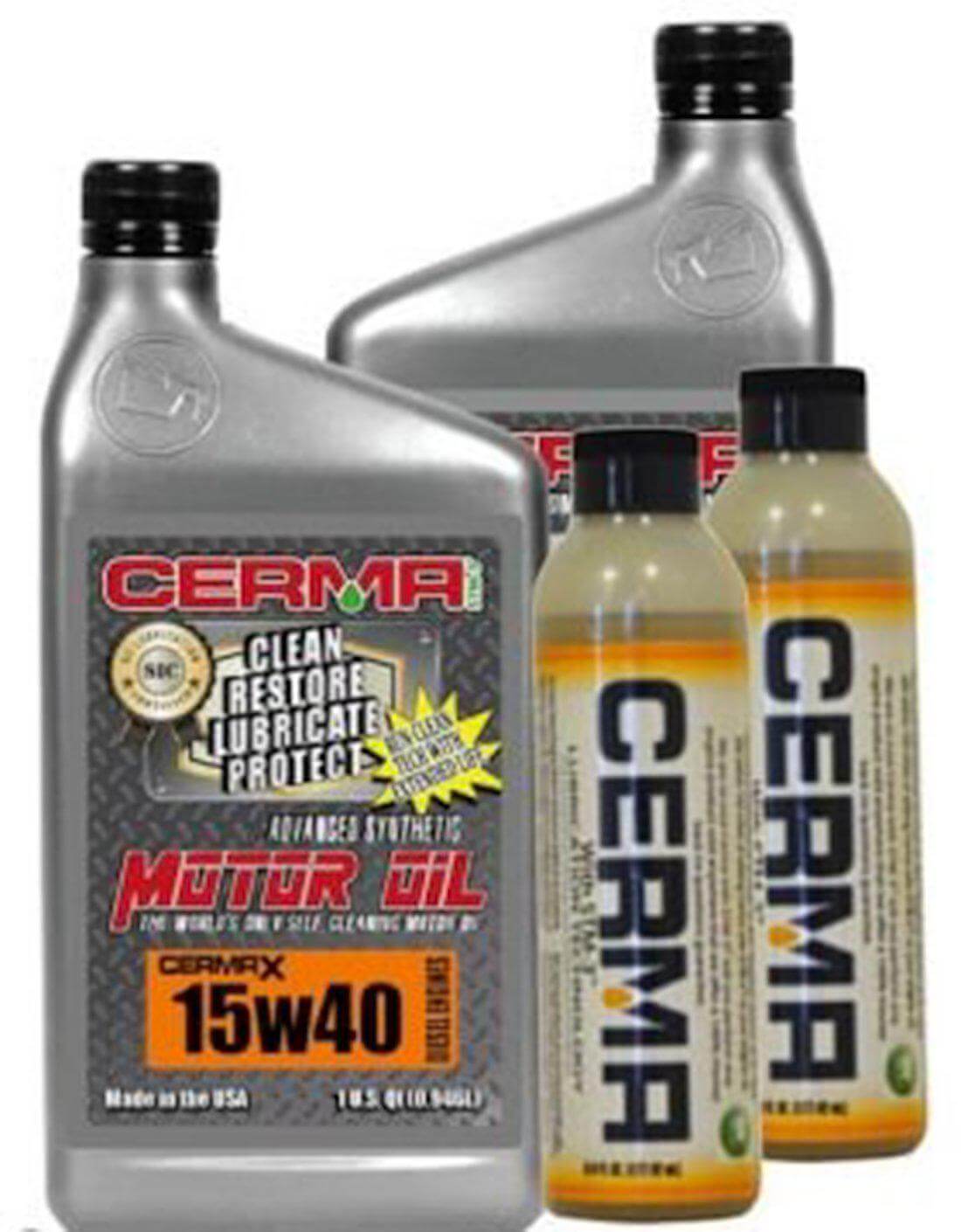
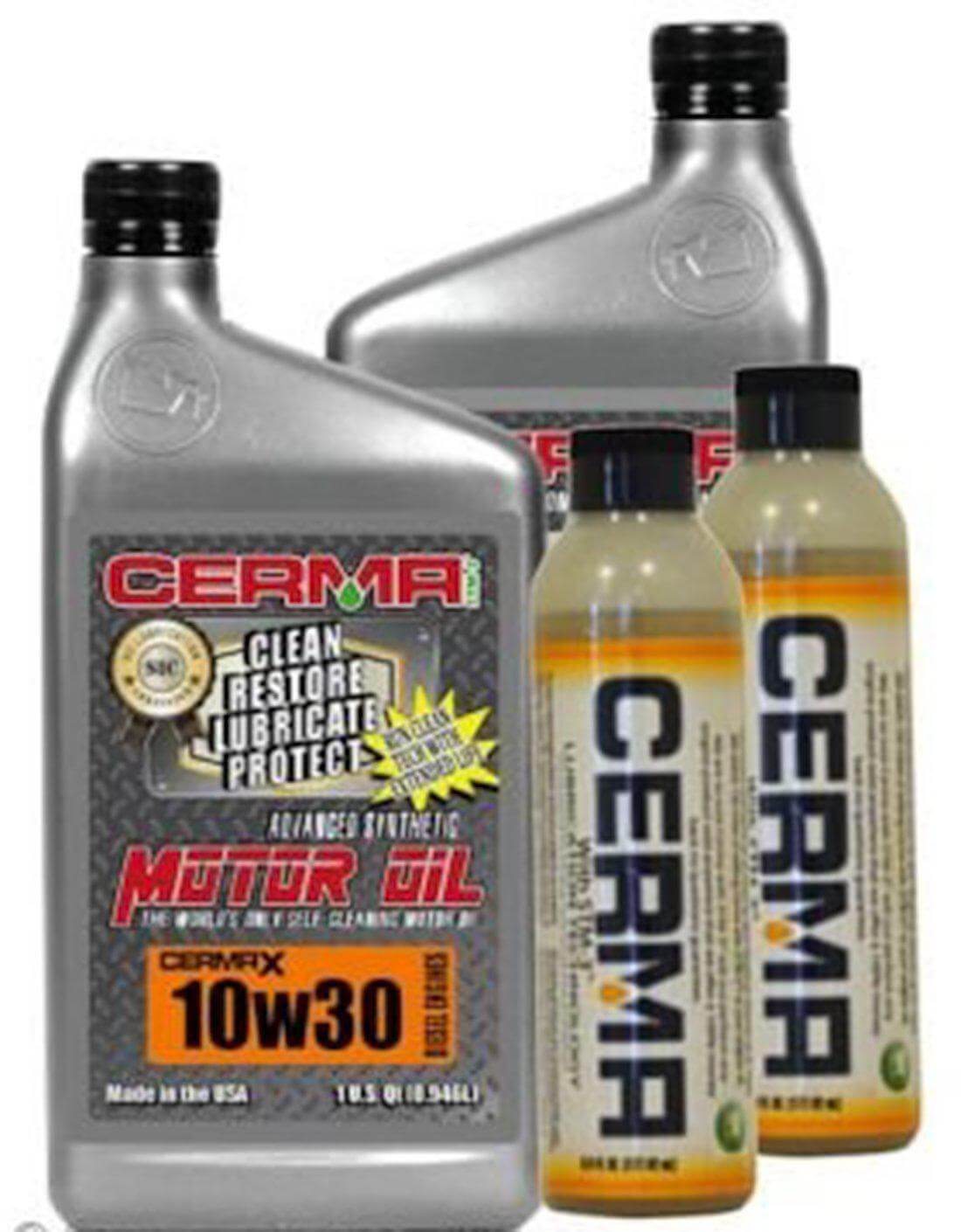
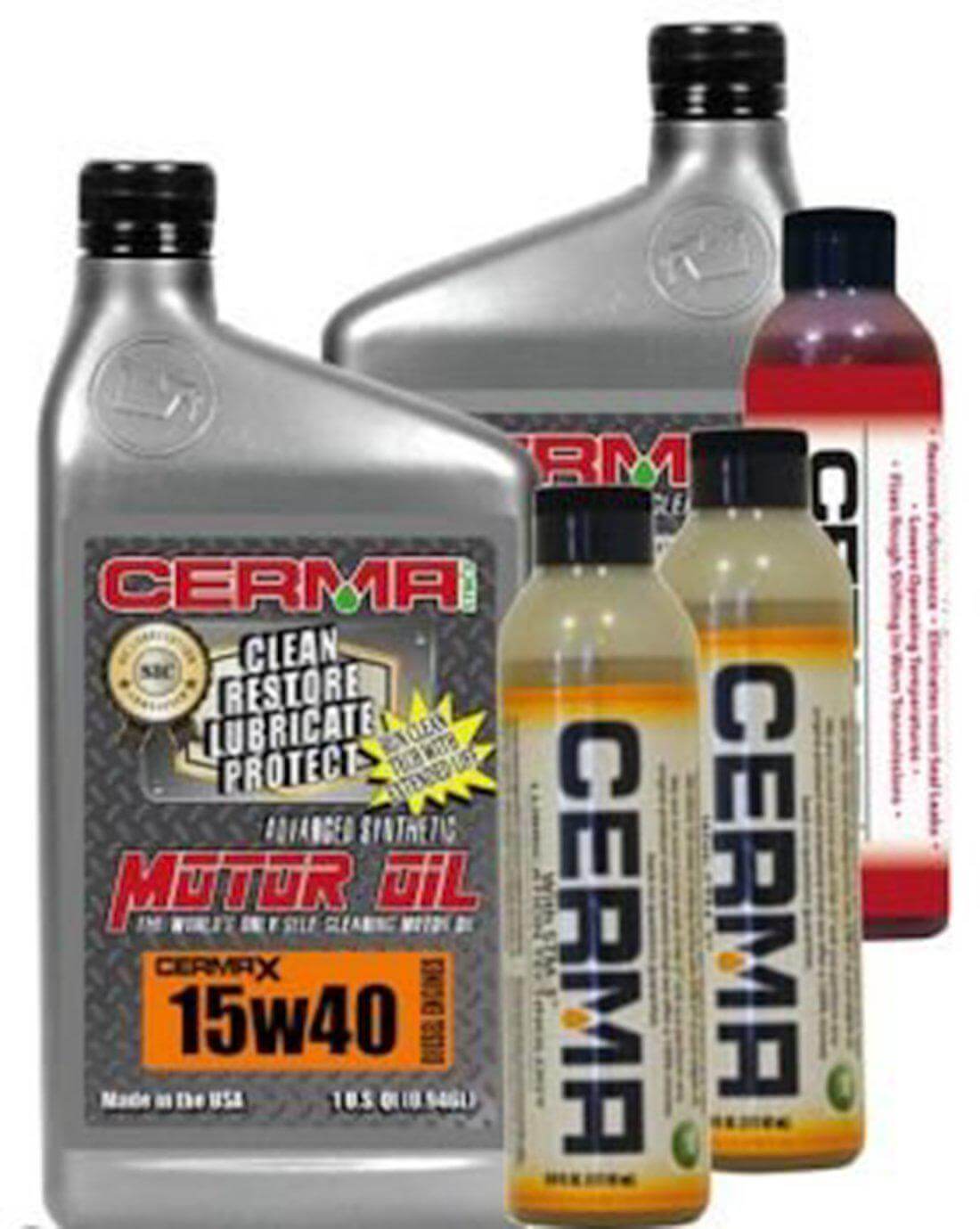
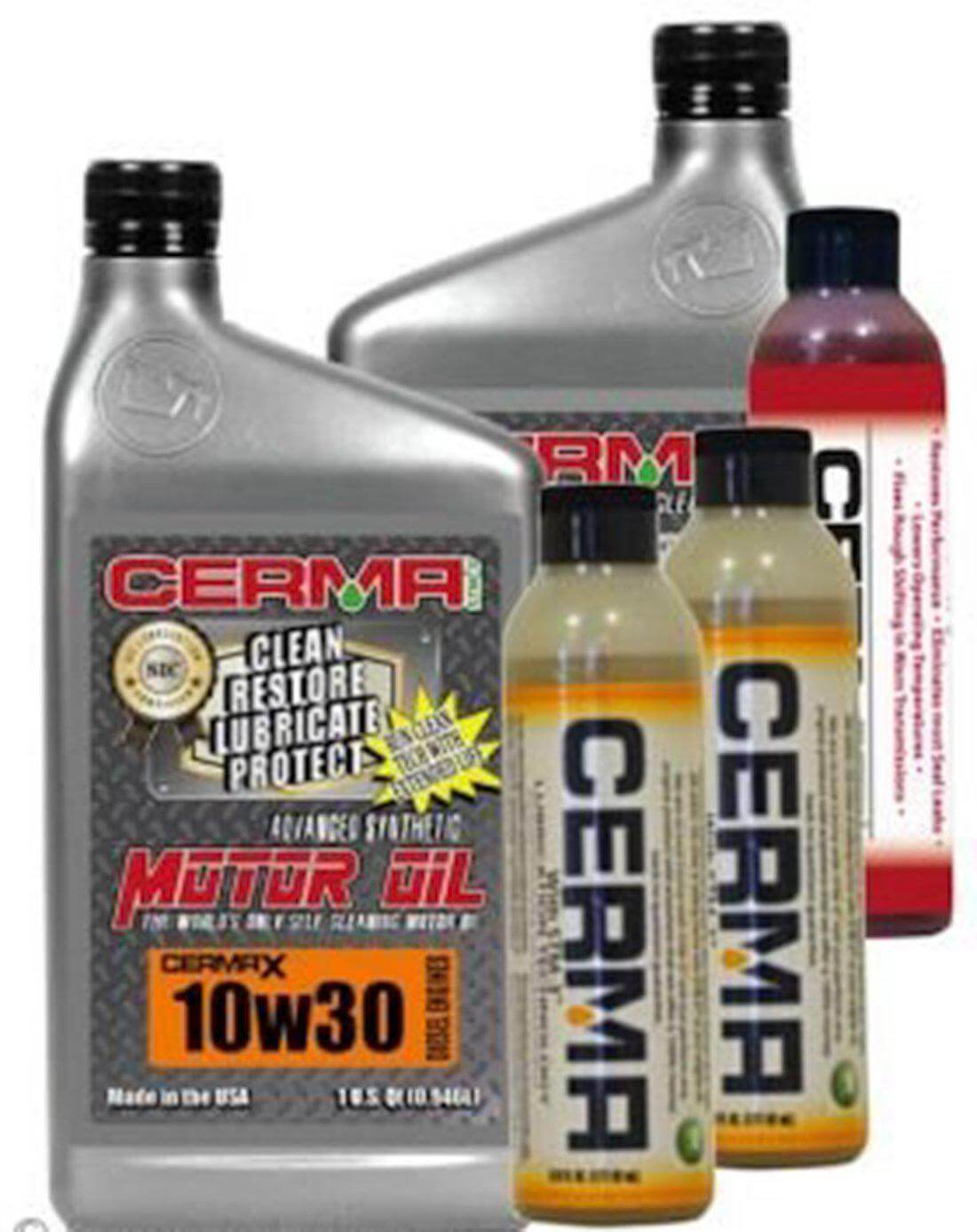
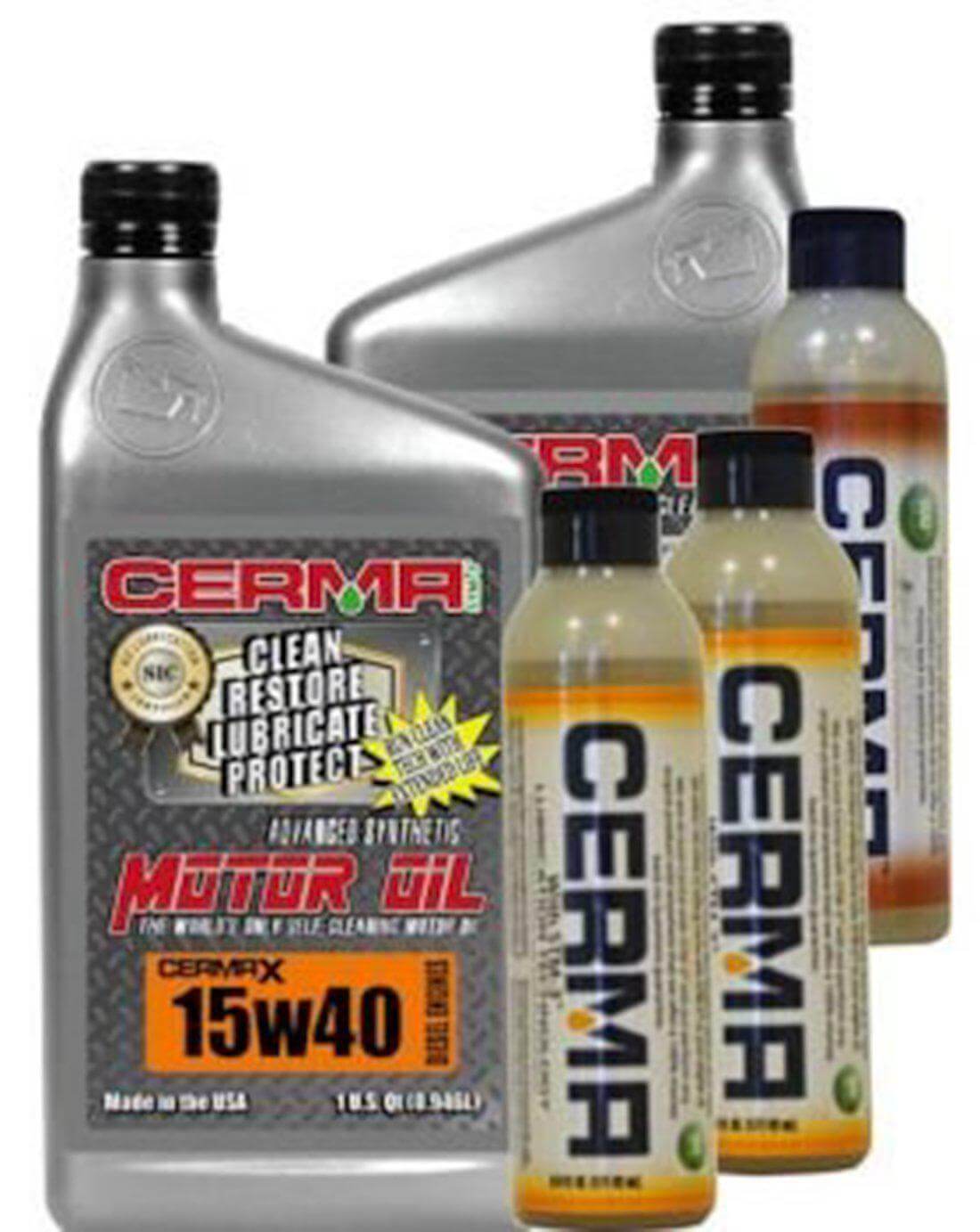
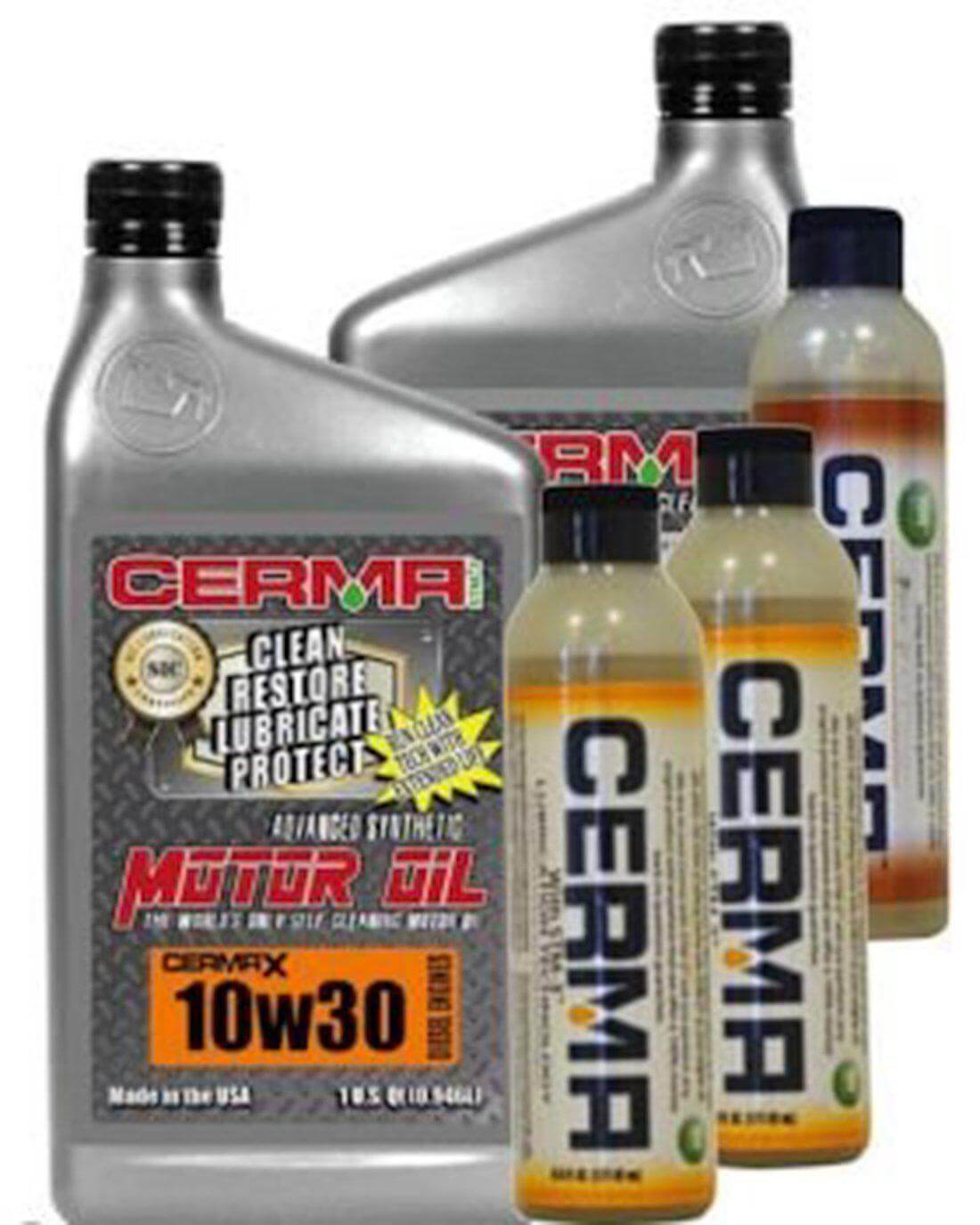
The Cermax Diesel Ceramic Synthetic Oil Value Package for Semi Truck Engines is our largest-displacement bundle, sized for heavy-duty on-highway diesel engines 8.0 liters and above — Cummins X15/ISX, Detroit Diesel DD13/DD15/DD16, Paccar MX-13, Navistar/International A26, Volvo D-Series, Mack MP-Series, and Caterpillar C13/C15. Includes Cerma STM-3® Diesel Engine Treatment (12 oz — two 6 oz bottles, correctly dosed for 8L+ displacement) and 12–18 gallons of Cermax Ceramic Synthetic Motor Oil in your choice of heavy-duty diesel viscosity. Optional 6 oz Automatic or Manual Transmission Treatment available for full powertrain coverage.
Built for the cost-per-mile reality of over-the-road trucking: fewer oil changes, less wear, less downtime. Made in the USA by Bijou Inc. in Fort Myers, FL.
What's Included
| Product | Size | Purpose |
|---|---|---|
| Cerma STM-3® Diesel Engine Treatment | 12 oz (two 6 oz bottles) | One-time ceramic bonding, sized for 8L+ heavy-duty diesel displacement. Nano Silicon Carbide permanently bonds to cylinder liners, pistons, rings, bearings, and cam lobes. Mohs 9.5 hardness, 2,730°C melting point, survives oil changes. |
| Cermax Ceramic Synthetic Motor Oil | 12–18 gallons | SiC-enhanced heavy-duty synthetic diesel oil. Formulated to meet API CK-4 specifications. Delivers fresh ceramic particles with every oil change. Built-in non-ferrous turbo protection. Supports up to 30,000-mile oil change intervals on a treated engine under typical conditions. |
| Automatic or Manual Transmission Treatment (optional — Trans variants) | 6 oz | One-time ceramic protection sized for heavy-duty commercial transmissions. Select Automatic for Allison torque-converter units; select Manual for Eaton Fuller, Mack mDRIVE, Volvo I-Shift, or ZF-AS Tronic. |
Choose Your Configuration
| Package Variant | What You Get |
|---|---|
| 15W-40 Diesel Value Package | 12 oz Engine Treatment + Cermax 15W-40 Oil (12–18 gal) |
| 10W-30 Diesel Value Package | 12 oz Engine Treatment + Cermax 10W-30 Oil (12–18 gal) |
| 15W-40 Value + Automatic Trans | 12 oz Engine Treatment + Cermax 15W-40 Oil + 6 oz Automatic Transmission Treatment |
| 10W-30 Value + Automatic Trans | 12 oz Engine Treatment + Cermax 10W-30 Oil + 6 oz Automatic Transmission Treatment |
| 15W-40 Value + Manual Trans | 12 oz Engine Treatment + Cermax 15W-40 Oil + 6 oz Manual Transmission Treatment |
| 10W-30 Value + Manual Trans | 12 oz Engine Treatment + Cermax 10W-30 Oil + 6 oz Manual Transmission Treatment |
Every variant available in 15W-40 or 10W-30, 12–18 gallons of Cermax Oil to match your engine's factory fill capacity.
Two (or Three) Layers of Ceramic Protection
Layer 1 — Cerma STM-3® Diesel Engine Treatment (one-time)
A catalyst, not an additive. STM-3's Nano Silicon Carbide technology undergoes a thermo-chemical bonding reaction with ferrous engine metal during normal operation under load. The 12 oz dose is sized specifically for 8.0L+ heavy-duty diesel engines — enough SiC catalyst to achieve full coverage across the very large internal surface area of an X15, DD15, MX-13, or similar Class 8 engine block. The resulting bond is permanent, chemically sealed to the metal substrate, and does not wash out with oil changes. Mohs 9.5 hardness — harder than the ferrous metal it protects. EPA ETV certified. One-time application for the life of the engine.
Layer 2 — Cermax Ceramic Synthetic Motor Oil (ongoing)
After the engine treatment has cured (1,500-mile break-in), switching to Cermax Ceramic Synthetic Motor Oil ensures every subsequent oil change continues to deliver fresh SiC particles to both the treated ferrous surfaces and the non-ferrous components of your turbocharger (aluminum housings, bronze bushings, VGT vanes). Formulated to meet API CK-4 heavy-duty diesel specifications. Safe for all modern emissions hardware: DPF, DOC, SCR, EGR, DEF. Supports oil change intervals up to 30,000 miles on a Cerma-treated engine under typical linehaul conditions (confirm with used oil analysis for your specific operation).
Layer 3 — Transmission Treatment (one-time, if you selected a Trans variant)
The 6 oz Transmission Treatment applies the same SiC ceramic bonding technology to the internal surfaces of your truck's transmission — clutch packs, pump, valve body, and planetary gears in an Allison automatic, or gears, synchros (where present), and shift-fork faces in Eaton Fuller and AMT units. Added to your existing transmission fluid at the fill port; does not replace or interfere with OEM-spec fluid.
📋 The Cerma Protocol — How to Apply
Class 7 / Class 8 Turbo Diesel — 8.0L+ Heavy-Duty
| Step | Action |
|---|---|
| 1 | Bring the engine to full operating temperature under normal duty cycle, then return to idle for treatment addition. |
| 2 | With engine idling, add both 6 oz bottles of Cerma STM-3 Diesel Engine Treatment (12 oz total) directly to the oil fill port, into your existing engine oil. |
| 3 | Idle the engine for 15–20 minutes immediately after addition, then resume normal driving. |
| 4 | If you selected a Trans variant: add the 6 oz Transmission Treatment to your transmission through the fill port, following your OEM fill procedure. For Allison units, add through the dipstick tube; for Eaton Fuller, through the fill plug. |
| 5 | Drive for a minimum of 1,500 miles on your existing engine oil to allow full SiC ceramic bonding. Do not change engine oil during this period. Normal loaded operation is ideal — the bonding reaction is activated by operating temperature, pressure, and fluid circulation. |
| 6 | At your next oil drain (after 1,500+ miles), drain the existing oil and refill with Cermax Ceramic Synthetic Motor Oil in the specified viscosity and quantity for your engine (12–18 gallons). |
| 7 | Ongoing: Continue Cermax oil changes at up to 30,000-mile intervals (confirm with UOA). Engine and transmission treatments are one-time applications — no need to repeat. |
Compatible Heavy-Duty Diesel Platforms
| Application | Engines & Examples |
|---|---|
| Class 8 Tractors | Cummins X15 / ISX (14.9L); Detroit Diesel DD13 (12.8L), DD15 (14.8L), DD16 (15.6L); Paccar MX-13 (12.9L); Navistar/International A26 (12.4L); Volvo D13 (12.8L), D16 (16.1L); Mack MP7 (11L), MP8 (13L); Caterpillar C13 (12.5L), C15 (15.2L) |
| Class 7 & Vocational | Cummins L9, B6.7 in Class 7; Paccar MX-11; Allison automatics behind medium-duty diesel tractors, dump trucks, concrete mixers, refuse vehicles |
| Emissions Hardware | DPF + DOC + SCR + EGR + DEF — all compatible. CK-4 low-SAPS chemistry across Cermax diesel viscosities |
| Turbo Configurations | VGT (variable-geometry), fixed-geometry, series-turbo, compound-turbo — all protected by Cermax non-ferrous SiC |
| Allison Automatic Transmissions | 3000, 4000, 4500 series torque-converter units (select Automatic Trans variant) |
| Eaton Fuller & AMT Transmissions | Fuller 10-, 13-, 15-, 18-speed manuals; Eaton AutoShift / UltraShift / UltraShift Plus; Volvo I-Shift; Mack mDRIVE; ZF-AS Tronic (select Manual Trans variant) |
| Marine & Off-Highway | Marine diesel 8L+ (tugboats, commercial fishing, offshore), standby generators, construction and mining equipment, military applications |
Not sure which treatment variant matches your truck? Call 239-344-9861 or email info@cermatreatment.com with your engine and transmission model.
Need a Different Displacement?
Add More Fleet Protection (Optional)
- Cerma Diesel Fuel Treatment — continuous 6-in-1 ceramic fuel-system protection, ULSD-compatible
- Cerma Gear Box & Axle Treatment — ceramic protection for drive axles, inter-axle differentials, and wheel ends
- Cerma Hydraulic Treatment — PTO hydraulic systems, wet-line kits, and dump-body hydraulics
- Cerma Power Steering Treatment — ceramic protection for heavy-duty power steering pumps and gear boxes
- Cerma Blue Ice A/C Treatment — cab A/C compressor protection for over-the-road comfort systems
Frequently Asked Questions
Typical factory oil fill capacities for common Class 8 engines: Cummins X15 / ISX ≈ 12–13 gallons (OEM spec is 44–50 quarts depending on sump); Detroit DD13 ≈ 11–12 gallons; Detroit DD15 ≈ 12–13 gallons (standard sump) / 14 gallons (extended); Detroit DD16 ≈ 13–14 gallons; Paccar MX-13 ≈ 12–13 gallons; Volvo D13 / D16 ≈ 11–14 gallons; Caterpillar C15 ≈ 11–12 gallons; Mack MP7 / MP8 ≈ 10–13 gallons. Always confirm with the capacity plate on your specific engine or your OEM service manual — sump sizes vary by spec. Round up rather than down to ensure you have enough to complete the change. Extra gallons can be kept for between-change top-off (important with 30K-mile drain intervals).
Both Cermax viscosities offered in this package are formulated to meet API CK-4 heavy-duty diesel performance requirements. 15W-40 is the traditional heavy-duty linehaul viscosity — broad temperature tolerance, heavier film strength under sustained load, and preferred by most fleets running older engines and mixed-climate routes. 10W-30 provides modest fuel-economy gain (typically 0.5–1.5% in controlled fleet testing) and meaningful cold-start protection benefits in northern winter operation. Modern Cummins X15, Detroit DD15/DD16, and Paccar MX-13 are factory-spec-approved for 10W-30 under the OEM's extended oil drain program. Some newer engines are additionally approved for FA-4 low-HTHS formulations for further fuel economy gains — if your engine specifically requires FA-4 only (not CK-4), contact us at 239-344-9861 before ordering to confirm current stock. When in doubt, 15W-40 is the safer choice across the widest range of Class 7/8 applications.
Under the Magnuson-Moss Warranty Act (US federal law), an OEM cannot void your engine warranty simply because you used an aftermarket product — they must demonstrate that the specific product caused a specific failure. Cerma STM-3 and Cermax oil are EPA ETV certified, CK-4 formulated (for the oil), and contain no prohibited additives. That said, maintaining a clean warranty claim requires discipline: keep records of every oil change (date, mileage, product used), retain used oil analysis (UOA) reports if you run extended drains, and use Cermax at the viscosity approved by your OEM for your engine. Every major OEM (Cummins, Detroit, Paccar, Cat) publishes extended oil drain guidelines that depend on UOA — follow those, document them, and your warranty position is strong. For fleet-scale questions or specific warranty situations, call us at 239-344-9861 before ordering.
Run the math on your own numbers, but here's a typical Class 8 scenario. A tractor running 125,000 miles/year on a 25,000-mile drain schedule does 5 oil changes per year. At 13 gallons CK-4 synthetic ($90–100/gal at bulk rate) + filter ($45) + labor ($125) = roughly $1,400/change × 5 = $7,000/year. On a 30,000-mile drain with Cermax (confirmed safe via UOA), the same tractor does ~4.2 changes/year at roughly the same per-change cost = $5,880/year. The per-mile difference is small but compounds across a fleet, and the larger value sits in less downtime (one fewer service bay visit per tractor per year) and in the wear-reduction side of the equation — lower oil consumption, reduced blow-by progression, and slower bearing-clearance drift across the engine's life. For owner-operators, the downtime gain alone often justifies the package.
UOA is the right way to set a drain schedule for any fleet operation. If your UOA reports (TBN, soot, fuel dilution, viscosity index, wear metals — Fe, Cu, Pb, Al, Cr) come back within OEM-approved ranges at 30K, many operators extend to 35K, 40K, or 45K+ on Cermax under favorable conditions (linehaul duty cycle, high engine hours per mile, moderate climate). The Cerma-treated engine typically shows lower wear-metal counts than an untreated engine on the same oil, which gives you more headroom on the drain interval. Our recommendation: start at 30K, run UOA at 30K, 35K, and 40K across your first few tractors, and let the data set your fleet-wide interval. For severe-service, mountain, or vocational applications (heavy PTO use, short-haul with frequent start-stop, very hot climates), stay at 25–30K until UOA confirms margin to extend.
Yes, as long as your underlying transmission fluid is an Allison- or Eaton-approved product. The Cerma Transmission Treatment is added to your existing fluid — it does not replace OEM-spec fluid. For an Allison 3000/4000/4500 automatic, keep running your TES-295- or TES-389-approved ATF (TranSynd, Castrol TranSynd 668, or equivalent) and add the 6 oz treatment once. For an Eaton Fuller manual or AMT, keep running PS-164 rev 7 synthetic (Roadranger, Mobil Delvac Synthetic Transmission Fluid, or equivalent) and add the 6 oz treatment once. The SiC ceramic bonds to the transmission's internal metal surfaces over the first 1,500–3,000 miles of normal operation — the OEM-approved fluid continues to carry heat and provide its normal lubrication chemistry. This is how we keep the warranty framework intact.
High-mileage trucks are often where Cerma shows the most driver-perceivable change, because these engines have the most accumulated wear and the most friction-generated heat to reduce. What to realistically expect: smoother idle, modestly improved fuel economy (typically 1–3% on a stable linehaul duty cycle), reduced oil consumption between changes, less blow-by pressure in the crankcase, and lower observed operating temperature. What not to expect: Cerma will not restore compression that has already been lost to scored cylinder liners, broken piston rings, or damaged bearings — those are mechanical failures that require repair. If your engine is healthy but aging, the full protocol can meaningfully extend remaining service life. If it's already showing mechanical distress (blue smoke under load, coolant in oil, rapid oil pressure loss), diagnose and address the underlying issue before treating.
Honest answer: the biggest, most reliable effects of a full Cerma protocol on a Class 8 diesel are reduced wear progression and extended oil-change intervals. Those are the two claims we stand behind without qualification. Secondary effects — fuel economy gains, temperature reduction, blow-by reduction, smoother idle — are real and reported consistently by operators, but they vary significantly by engine condition, duty cycle, driver behavior, route, and load. Typical observed fuel economy improvement on a stable linehaul operation after full protocol completion is 1–3% (for a tractor doing 7.0 MPG, that's 7.07–7.21 MPG). Compression: Cerma cannot restore compression lost to mechanical damage, but on engines with normal wear, the ceramic layer can reduce cylinder-wall leakdown readings meaningfully by sealing micro-imperfections. We'd rather set accurate expectations up front than have you disappointed after 30 days — the real win is wear-reduction economics over 300K–500K additional service miles, not a single-digit MPG number on this week's dispatch.
Made in the USA by Cerma Treatment (Bijou Inc.), 15880 Summerlin Road #300 Box #301, Fort Myers, FL 33908. 30-day return policy. Free shipping on orders over $150. Ships to US & Canada. Fleet pricing and volume discounts available — call 239-344-9861 or email info@cermatreatment.com. Use discount code C10 for 10% off single-truck orders.
Cerma STM-3® is a registered trademark of Bijou Inc. SiC (Silicon Carbide) technology is EPA ETV certified. Cermax Ceramic Synthetic Motor Oil 15W-40 and 10W-30 diesel viscosities are formulated to meet applicable API CK-4 specifications. Cermax is designed for use on engines that have been treated with Cerma STM-3 Diesel Engine Treatment; use in untreated engines is permitted but does not provide the full performance benefit of the Cerma protocol. Automatic Transmission Treatment is formulated to be compatible with Allison-approved TES-295 and TES-389 ATF fluids; Manual Transmission Treatment is formulated to be compatible with Eaton PS-164 rev 7 and equivalent OEM-approved manual transmission fluids. Cerma products are added to, not in place of, OEM-approved fluids. Oil change intervals up to 30,000 miles apply to engines treated per the Cerma protocol under typical linehaul operating conditions; actual drain interval should be confirmed via used oil analysis for each operation. Fuel economy, wear reduction, and temperature effects vary by duty cycle, engine condition, driver behavior, climate, and load. Cerma products are not repair compounds and cannot correct pre-existing mechanical failures such as scored cylinder liners, broken rings, damaged bearings, or failed turbochargers. Individual results vary.
Frequently Asked Questions
The package includes Cerma STM-3 Diesel Engine Treatment (12 oz — two 6 oz bottles), sized for 8.0L+ heavy-duty diesel engines; and 12 to 18 gallons of Cermax Ceramic Synthetic Motor Oil in your choice of 15W-40 or 10W-30 heavy-duty diesel viscosity (API CK-4). Three variant families are offered: the base Diesel Value Package (engine treatment + oil only), Diesel Value + Automatic Trans (adds 6 oz Automatic Transmission Treatment for Allison automatics), and Diesel Value + Manual Trans (adds 6 oz Manual Transmission Treatment for Eaton Fuller, Mack mDRIVE, Volvo I-Shift, or ZF-AS Tronic). Made in the USA by Bijou Inc. in Fort Myers, FL.
This package is sized for Class 7 and Class 8 on-highway diesel engines 8.0 liters and larger. Primary applications include Cummins X15 / ISX (14.9L) and L9 (8.9L); Detroit Diesel DD13 (12.8L), DD15 (14.8L), DD16 (15.6L); Paccar MX-13 (12.9L) and MX-11; Navistar / International A26 (12.4L); Volvo D13 (12.8L) and D16 (16.1L); Mack MP7 (11L) and MP8 (13L); and Caterpillar C13 (12.5L) and C15 (15.2L). Also suitable for Class 7 vocational applications (dump trucks, refuse, concrete mixers) behind 8L+ engines, and for 8L+ marine diesel, standby generator, construction, and mining engines. For heavy-duty diesel pickups (5.0–7.3L) or mid-size diesels (3.0–4.8L), see the displacement-specific packages linked on the product page.
Step 1: Bring the engine to full operating temperature under normal duty, then return to idle. Step 2: Add both 6 oz bottles of Diesel Engine Treatment (12 oz total) to your existing engine oil through the oil fill port while idling. Step 3: Continue idling 15–20 minutes, then resume driving. Step 4: If you selected a Trans variant, add the 6 oz Transmission Treatment to your transmission through the fill port (dipstick tube for Allison; fill plug for Eaton Fuller). Step 5: Drive a minimum of 1,500 miles on your existing engine oil to allow full SiC ceramic bonding — do not change oil during this period. Step 6: At the next drain after 1,500+ miles, refill with Cermax Ceramic Synthetic Motor Oil in the correct viscosity and quantity (12–18 gallons per your engine). Step 7: Continue Cermax drains at up to 30,000-mile intervals, confirmed by UOA. Engine and transmission treatments are one-time applications.
Two heavy-duty diesel viscosities are offered, both formulated to meet API CK-4 performance specifications: 15W-40, the traditional heavy-duty linehaul viscosity, with broad temperature tolerance and heavier film strength under sustained load — recommended for older engines, mixed-climate routes, and any application where the OEM's primary fill specification is 15W-40; and 10W-30, a lower-viscosity heavy-duty option that delivers improved cold-start protection and modest fuel-economy gains under OEM extended-drain programs. Modern Cummins X15, Detroit DD15/DD16, and Paccar MX-13 are factory-approved for 10W-30 CK-4. Always match the viscosity specified by your engine OEM, confirmed against the fill-cap marking or service manual for your specific engine family and model year.
The measurable fleet-level benefits of the Cerma protocol, ranked by consistency of impact: (1) Extended drain intervals — the most reliable effect, with Cermax-on-Cerma enabling 30,000-mile drains (vs. typical 25K OEM intervals) and in many cases 35–45K+ when confirmed by used oil analysis, directly reducing service-bay hours per tractor per year. (2) Reduced wear progression — UOA typically shows lower iron, copper, lead, and aluminum counts on treated engines, translating into longer remaining engine life and better resale or trade-in value. (3) Reduced downtime — one fewer PM service per year per tractor across a fleet is a meaningful operational gain. (4) Fuel economy — typically 1–3% on a stable linehaul duty cycle after full protocol, though route, load, weather, and driver behavior dominate this number. (5) Driver-perceivable comfort — smoother idle, less blow-by, more consistent oil pressure. Fleet pricing and volume discounts available — call 239-344-9861 or email info@cermatreatment.com for quotes across 10+ tractor deployments.
Share