
Cerma
Complete Ceramic Protection for Heavy-Duty Diesel Pickups — Power Stroke, Cummins, Duramax
Complete Ceramic Protection for Heavy-Duty Diesel Pickups — Power Stroke, Cummins, Duramax
Couldn't load pickup availability
Complete Ceramic Protection for Heavy-Duty Diesel Pickups — Power Stroke, Cummins, Duramax
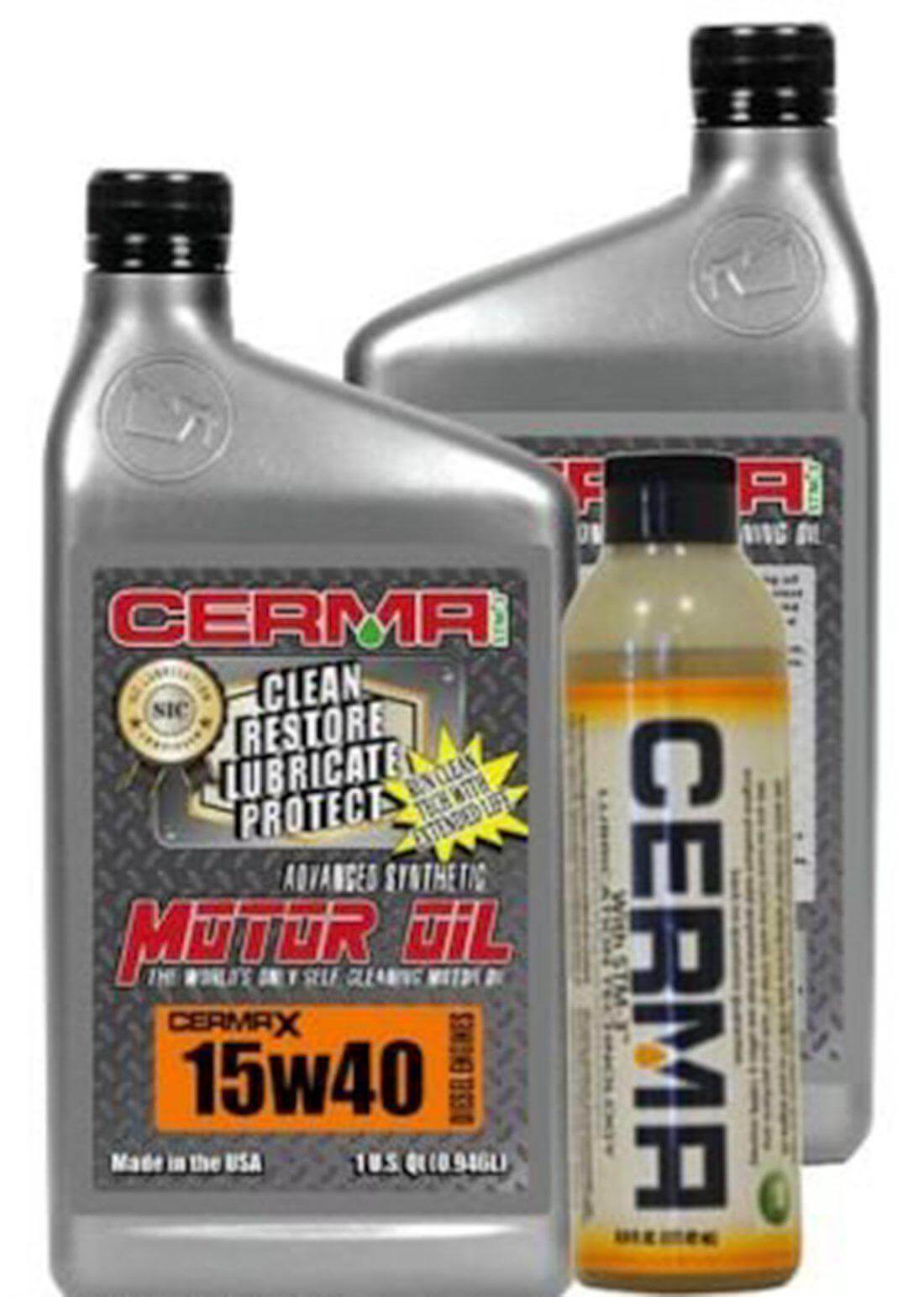
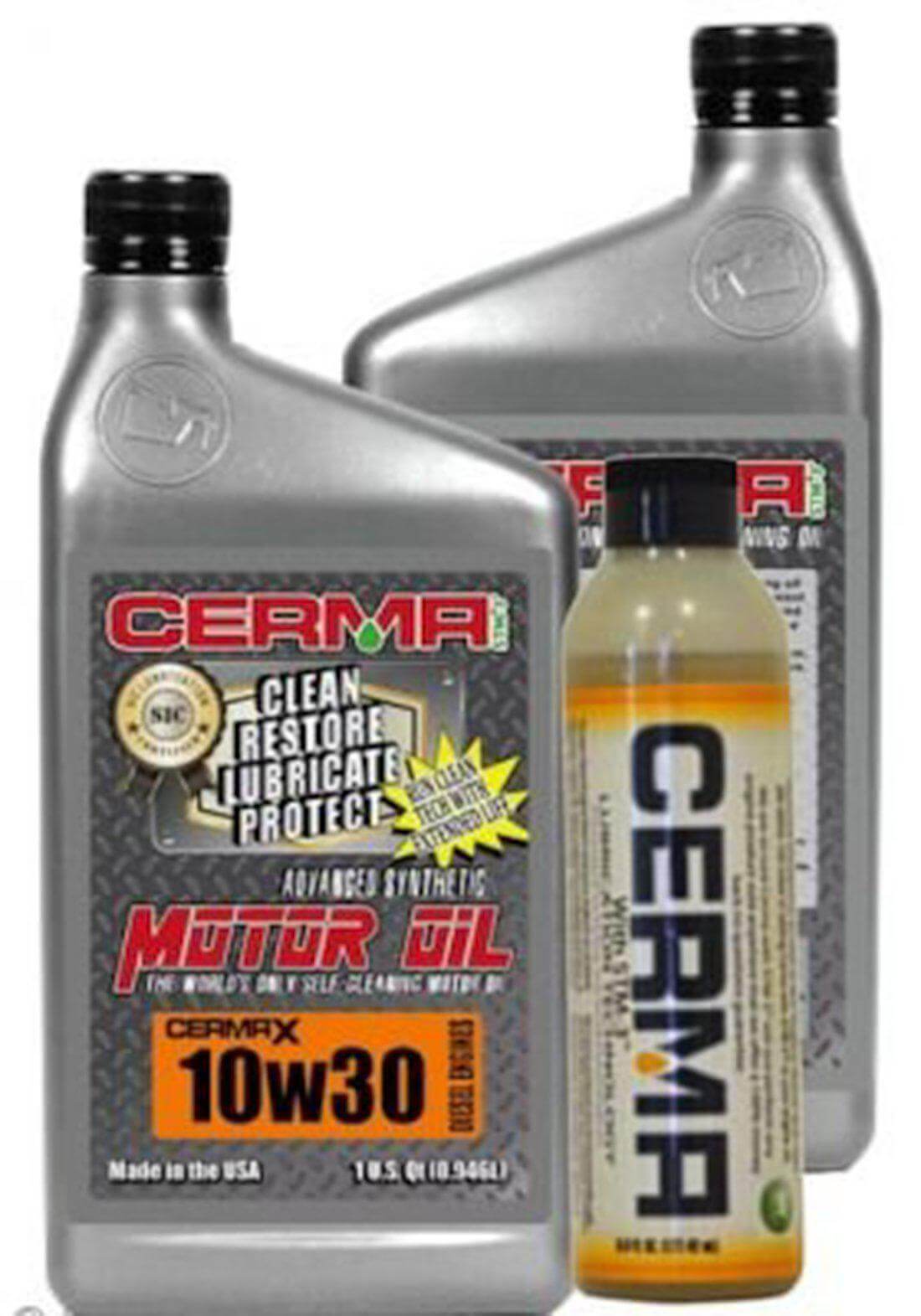
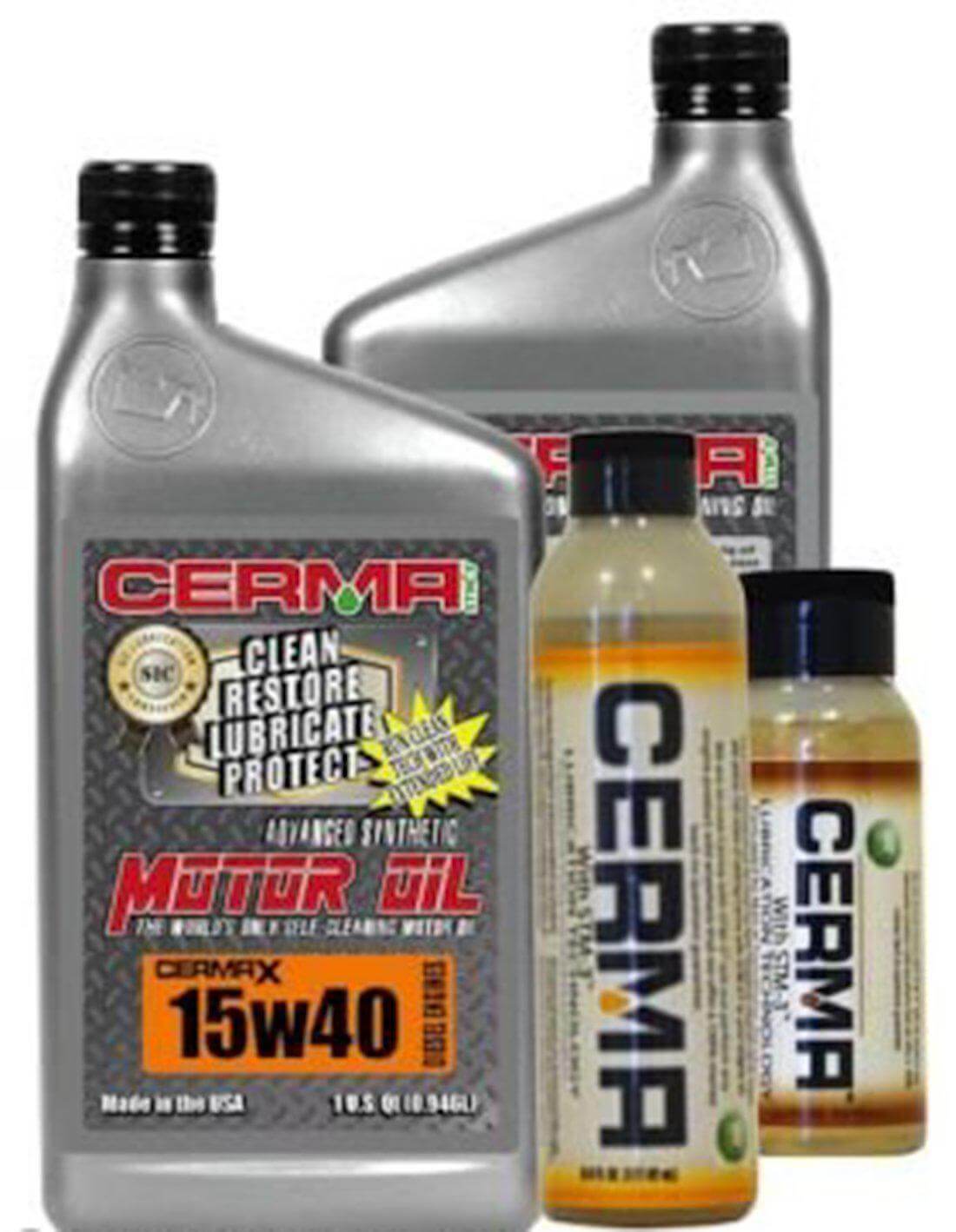
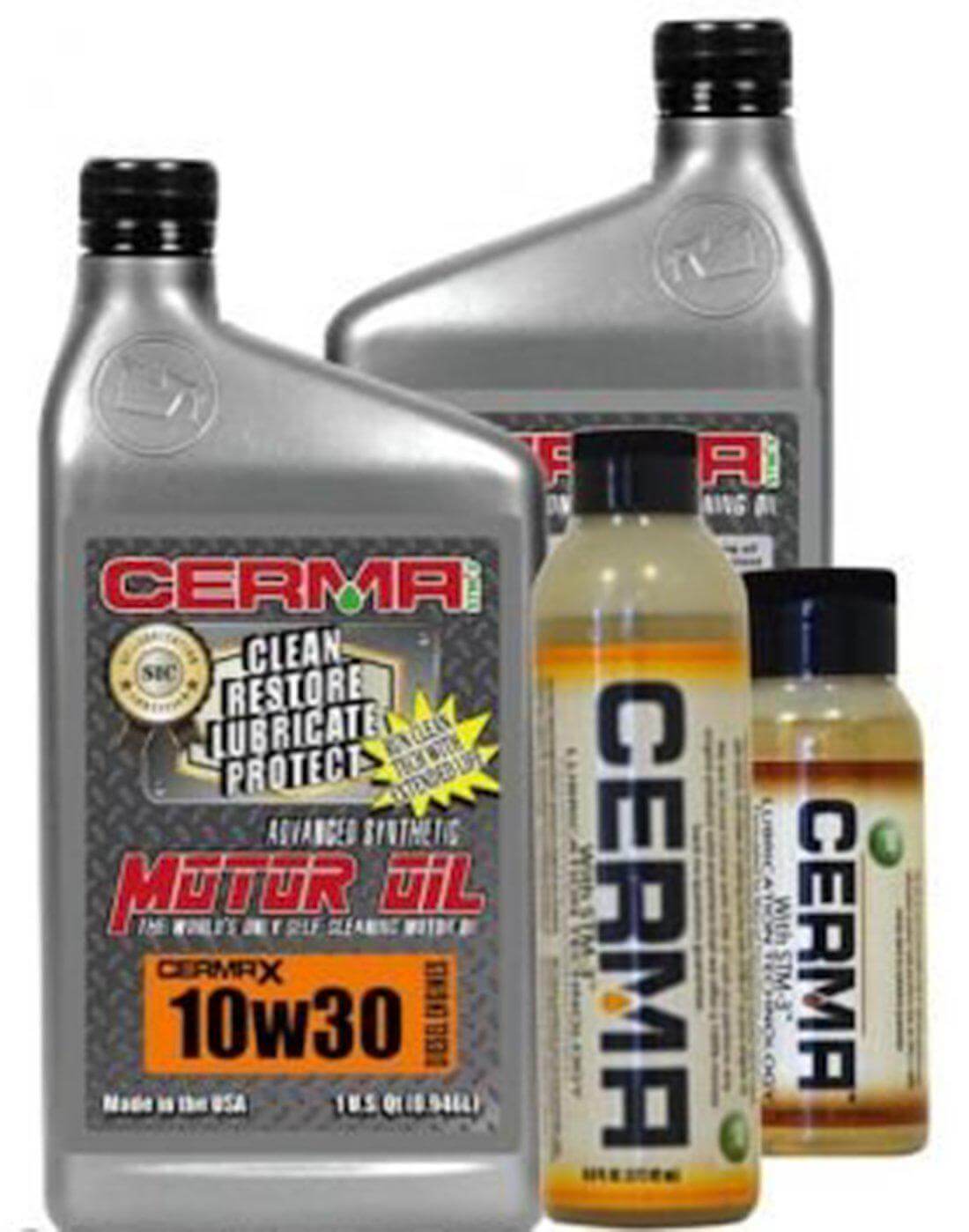
The Cermax Diesel Ceramic Synthetic Oil Value Package for Pick-Up Trucks is purpose-built for heavy-duty 3/4-ton and 1-ton diesel pickups running 5.0L–7.3L engines — Ford F-250/F-350 Power Stroke (6.0L, 6.4L, 6.7L, 7.3L gas/diesel family), Ram 2500/3500 Cummins (5.9L 12V/24V, 6.7L), and Chevrolet/GMC Silverado/Sierra 2500HD/3500HD Duramax (6.6L LB7/LLY/LBZ/LMM/LML/L5P). Includes Cerma STM-3® Diesel Engine Treatment (6 oz, correctly sized for 5.0–7.3L displacement) and 8–20 quarts of Cermax Ceramic Synthetic Motor Oil in your choice of heavy-duty diesel viscosity. Optional 2 oz Automatic or Manual Transmission Treatment available.
Built for trucks that tow, haul, plow, work, and pull doubles of their own weight. Made in the USA by Bijou Inc. in Fort Myers, FL.
What's Included
| Product | Size | Purpose |
|---|---|---|
| Cerma STM-3® Diesel Engine Treatment | 6 oz (single bottle) | One-time ceramic bonding, sized for 5.0–7.3L HD diesel pickup displacement. Nano Silicon Carbide permanently bonds to cylinder liners, pistons, rings, bearings, and cam lobes. Mohs 9.5 hardness, 2,730°C melting point, survives oil changes. |
| Cermax Ceramic Synthetic Motor Oil | 8–20 quarts | SiC-enhanced heavy-duty synthetic diesel oil. Formulated to meet API CK-4 specifications. Delivers fresh ceramic particles with every oil change. Built-in non-ferrous turbo protection. Supports up to 30,000-mile oil change intervals on a treated engine under typical conditions. |
| Automatic or Manual Transmission Treatment (optional — Trans variants) | 2 oz | One-time ceramic protection for heavy-duty pickup transmissions. Select Automatic for Ford TorqShift 6R140/10R140, Ram 68RFE / AS69RC Aisin, or Allison 1000-series. Select Manual for ZF S6-650, Mercedes-Benz G56, or NV5600 manual boxes. |
Choose Your Configuration
| Package Variant | What You Get |
|---|---|
| 15W-40 Diesel Value Package | 6 oz Engine Treatment + Cermax 15W-40 Oil (8–20 qt) |
| 10W-30 Diesel Value Package | 6 oz Engine Treatment + Cermax 10W-30 Oil (8–20 qt) |
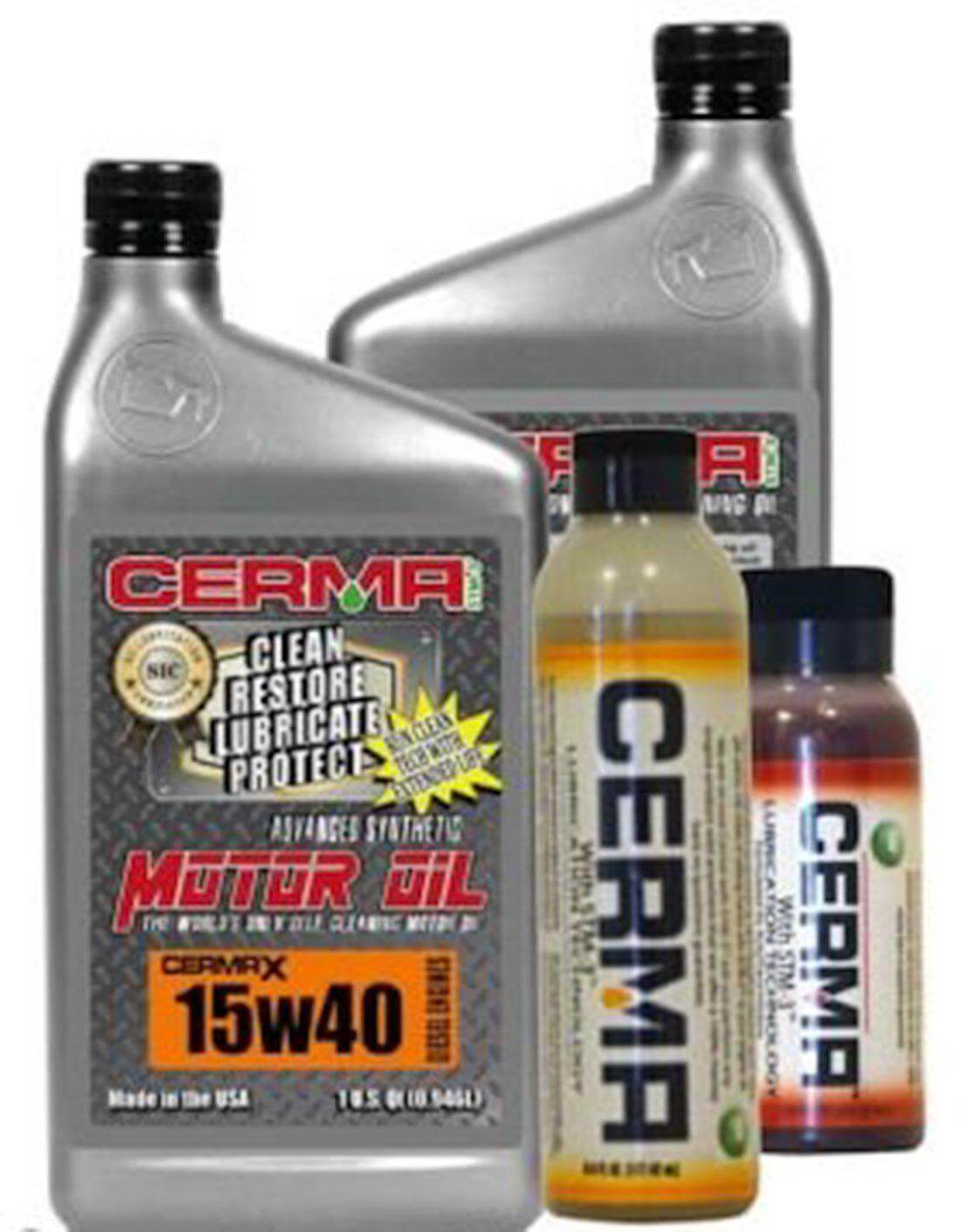
| 15W-40 Value + Automatic Trans | 6 oz Engine Treatment + Cermax 15W-40 Oil + 2 oz Automatic Transmission Treatment |
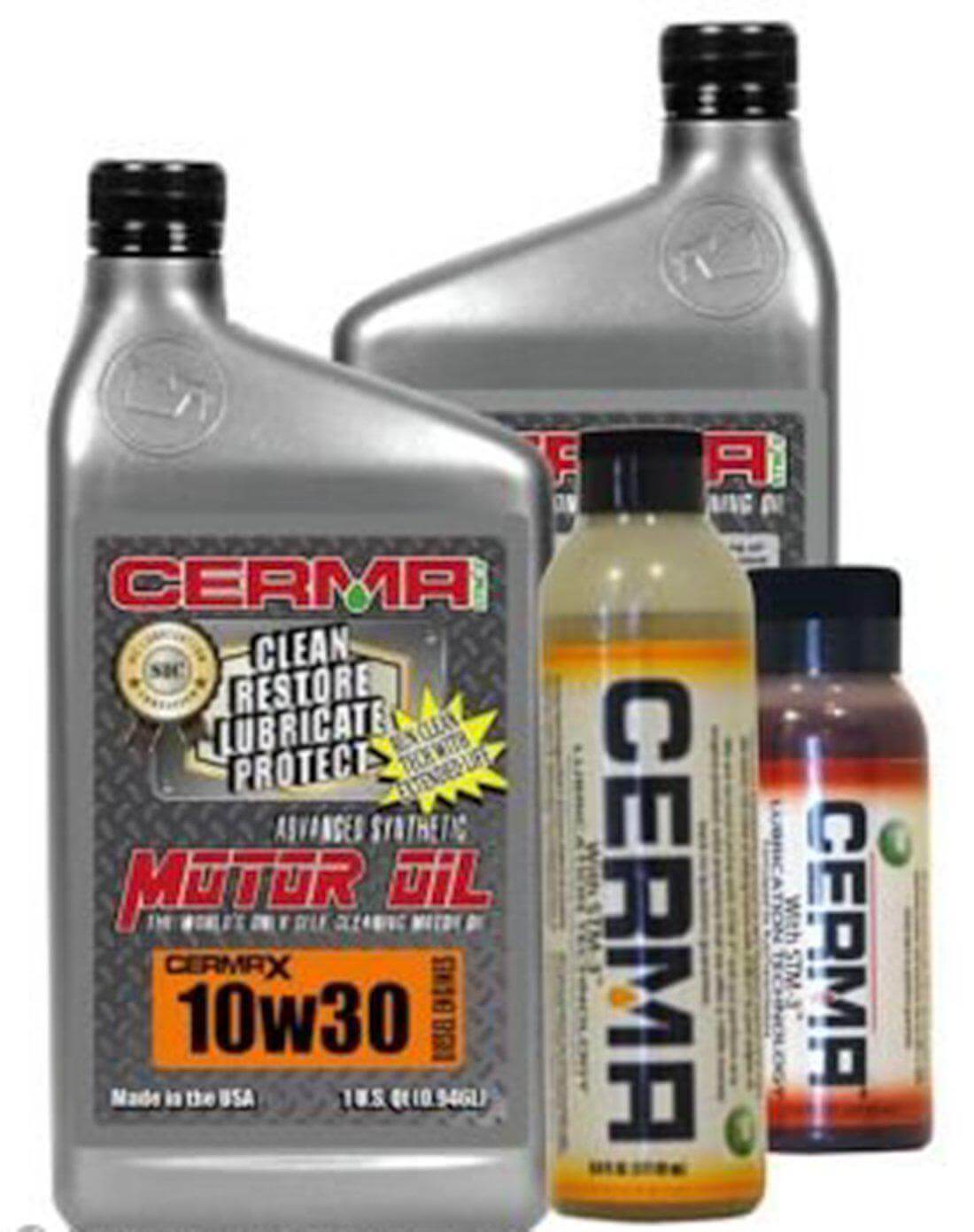
| 10W-30 Value + Automatic Trans | 6 oz Engine Treatment + Cermax 10W-30 Oil + 2 oz Automatic Transmission Treatment |
| 15W-40 Value + Manual Trans | 6 oz Engine Treatment + Cermax 15W-40 Oil + 2 oz Manual Transmission Treatment |
| 10W-30 Value + Manual Trans | 6 oz Engine Treatment + Cermax 10W-30 Oil + 2 oz Manual Transmission Treatment |
Every variant available in 15W-40 or 10W-30 heavy-duty diesel viscosity, 8–20 quarts of Cermax Oil to match your engine's factory fill capacity.
Oil Capacity Quick Reference
| Engine / Year Range | Factory Oil Capacity |
|---|---|
| Ford 7.3L Power Stroke (1994–2003) | 15 quarts |
| Ford 6.0L Power Stroke (2003–2007) | 15 quarts |
| Ford 6.4L Power Stroke (2008–2010) | 15 quarts |
| Ford 6.7L Power Stroke (2011–present) | 13 quarts |
| Ram 5.9L Cummins 12V/24V (1989–2007) | 11–12 quarts |
| Ram 6.7L Cummins (2007.5–present) | 12 quarts |
| GM 6.6L Duramax LB7/LLY/LBZ/LMM (2001–2010) | 10 quarts |
| GM 6.6L Duramax LML (2011–2016) | 10 quarts |
| GM 6.6L Duramax L5P (2017–present) | 10 quarts |
Always verify with your owner's manual or the capacity plate on your specific engine. Round up rather than down, and order a few extra quarts for between-change top-off — important at 30K-mile intervals.
Transmission Compatibility
| Transmission Family | Variant to Select |
|---|---|
| Ford TorqShift 5R110W, 6R140, 10R140 (Super Duty automatic) | Automatic Trans |
| Ram 68RFE (heavy-duty 6-speed automatic, Cummins) | Automatic Trans |
| Ram AS69RC Aisin 6-speed (HD Cummins, 2013+) | Automatic Trans |
| GM Allison 1000 / Allison 2000 (Duramax) | Automatic Trans |
| Ford ZF S6-650 / ZF S5-47 (Super Duty manual) | Manual Trans |
| Ram Mercedes-Benz G56 6-speed (Cummins manual, 2005–2018) | Manual Trans |
| Ram NV5600 6-speed (Cummins manual, 1999–2005) | Manual Trans |
| GM ZF S6-650 / Muncie heavy-duty manual (older Duramax) | Manual Trans |
Two (or Three) Layers of Ceramic Protection
Layer 1 — Cerma STM-3® Diesel Engine Treatment (one-time)
A catalyst, not an additive. STM-3's Nano Silicon Carbide undergoes a thermo-chemical bonding reaction with ferrous engine metal during normal operation under load. The 6 oz dose is engineered for the internal surface area of an HD diesel pickup engine — enough SiC catalyst to achieve full coverage across cylinder liners, pistons, rings, main and rod bearings, and cam lobes in a 6.6L Duramax, 6.7L Cummins, 6.7L/7.3L Power Stroke, or 6.0L/6.4L Power Stroke. The resulting bond is permanent, chemically sealed to the metal substrate, and does not wash out with oil changes. Mohs 9.5 hardness (harder than the steel it protects). EPA ETV certified. One-time application for the life of the engine.
Layer 2 — Cermax Ceramic Synthetic Motor Oil (ongoing)
After the engine treatment has cured (1,500-mile break-in), switching to Cermax Ceramic Synthetic Motor Oil ensures every subsequent oil change continues to deliver fresh SiC particles to both the treated ferrous surfaces and the non-ferrous components of your turbocharger. Formulated to meet API CK-4 heavy-duty diesel specifications. Safe for DPF, DOC, SCR, EGR, and DEF systems. Supports oil change intervals up to 30,000 miles on a Cerma-treated engine under typical operating conditions.
Layer 3 — Transmission Treatment (one-time, if you selected a Trans variant)
The 2 oz Transmission Treatment applies the same SiC ceramic bonding to the internal surfaces of your truck's transmission — clutch packs, pump, valve body, and planetary gears in a TorqShift, 68RFE, AS69RC, or Allison automatic; or gears, synchros, and shift-fork faces in a G56, NV5600, or ZF manual. Added to your existing transmission fluid at the fill port; does not replace OEM-spec fluid.
📋 The Cerma Protocol — How to Apply
5.0–7.3L HD Turbo Diesel Pickups
| Step | Action |
|---|---|
| 1 | Bring the engine to full operating temperature (drive normally for 15–20 minutes under light load), then return to idle for treatment addition. |
| 2 | With engine idling, add the 6 oz Cerma STM-3 Diesel Engine Treatment directly to the oil fill port, into your existing engine oil. (See mileage-based dosing guidance below for engines under 30,000 miles.) |
| 3 | Idle the engine for 15–20 minutes after addition, then resume normal driving or work duty cycle. |
| 4 | If you selected a Trans variant: add the 2 oz Transmission Treatment to your transmission through the designated fill port, following OEM fill procedure. |
| 5 | Drive for a minimum of 1,500 miles on your existing engine oil to allow full SiC ceramic bonding. Do not change engine oil during this period. Towing, hauling, and normal duty cycles are fine and actually help the bonding reaction by generating operating temperature and pressure. |
| 6 | At the next oil drain (after 1,500+ miles), drain the existing oil and refill with Cermax Ceramic Synthetic Motor Oil in the correct viscosity and factory-specified quantity for your engine (see Oil Capacity Quick Reference above). |
| 7 | Ongoing: Continue Cermax oil changes at up to 30,000-mile intervals (or per OEM recommendation for your duty cycle — severe-service, heavy-towing, and plow use may warrant shorter intervals). Engine and transmission treatments are one-time applications; no need to repeat. |
Under 30,000 miles (newer trucks): Use 4 oz of the 6 oz bottle for the initial application — newer engines have minimal wear and need less SiC catalyst for full coverage. Reserve the remaining 2 oz for a follow-up application after 5,000 miles if desired.
Over 30,000 miles: Use the full 6 oz bottle at initial treatment for maximum ceramic coverage of worn surfaces. Higher-mileage HD diesel pickups have accumulated more wear pattern across cylinder liners and bearings — the full dose ensures complete coverage.
Who This Package Is For
- Heavy-tow and hotshot operators: Fifth-wheel, gooseneck, and bumper-pull trailer pulls at or near GCWR; fuel-economy gains during sustained towing and reduced EGT under load are the most cited operator-side benefits.
- Work trucks and vocational users: Snow plow fleets, landscaping and contracting trucks, mobile service rigs, farm use, and light commercial applications where uptime is revenue.
- High-mileage owner-operators: 150,000+ mile 6.7L Cummins, 6.6L Duramax, and 6.7L Power Stroke owners looking to extend remaining engine life before a rebuild or trade.
- Daily-driver HD diesel owners: Even without heavy towing, the wear-reduction and extended drain interval benefits make the package pencil on cost-per-mile across 100K+ miles.
- RV and toy hauler owners: Long interstate runs under sustained load where cooling system stress is real — the ceramic layer's operating-temperature benefit is particularly relevant.
Need a Different Displacement?
Add More Protection (Optional)
- Cerma Diesel Fuel Treatment — continuous 6-in-1 ceramic fuel-system protection, ULSD-compatible, helps with injector deposits common on HD diesel pickups
- Cerma Gear Box & Axle Treatment — ceramic protection for Sterling 10.25/10.5, Dana 60/70/80, and AAM 11.5 rear axles commonly used under HD diesel pickups
- Cerma Power Steering Treatment — ceramic protection for heavy-duty hydraulic steering systems
- Cerma Blue Ice A/C Treatment — ceramic compressor protection
Frequently Asked Questions
Yes — the Cerma treatment is compatible with 6.0L and 6.4L Power Stroke engines, and the wear-reduction benefit is particularly relevant for these platforms. That said, an important caveat: Cerma is a wear-protection and friction-reduction technology, not a repair compound. It will not fix pre-existing 6.0L issues like a failed EGR cooler, cracked head gaskets, oil cooler restrictions, or a failing FICM — those are mechanical problems that require repair regardless of what oil additive is in the sump. If the engine is mechanically healthy but aging, the Cerma protocol can meaningfully reduce further wear progression and extend service life. If the engine is already showing symptoms of a known 6.0L/6.4L failure mode, diagnose and fix the underlying issue first, then treat a healthy engine.
Towing is actually where Cerma-treated engines tend to show the clearest fuel-economy benefit — more than during unloaded daily driving. Under tow, the engine is working harder, internal friction is generating more waste heat, and lubricant shear is higher. The SiC ceramic layer reduces metal-on-metal friction at exactly the surfaces where tow-load stress is highest (cylinder walls, bearings, cam lobes), which translates to slightly less energy lost to friction and slightly more usable power delivery. Typical observed gain in controlled tow testing on a 6.7L Cummins or 6.7L Power Stroke pulling a fifth-wheel at GCWR is 0.3–0.8 MPG after the full protocol completes. On a tow rig that does 40,000 miles/year with half of those miles under load, that pays back the package quickly. Secondary benefit operators frequently report: noticeably lower EGT under sustained tow on long grades.
Under the Magnuson-Moss Warranty Act (US federal law), a manufacturer cannot void your warranty simply because you used an aftermarket product — they must demonstrate that the specific product caused a specific failure. Cerma STM-3 and Cermax oil are EPA ETV certified, API CK-4 formulated, and contain no prohibited additives. That said, maintaining a clean warranty claim requires discipline: keep records of every oil change (date, mileage, product used), use Cermax at the viscosity approved by your OEM for your engine, and keep your scheduled maintenance current. For trucks still under powertrain warranty or extended service contracts, many owners choose to treat the engine after the factory break-in period (typically 5,000–10,000 miles) and before warranty expiration — giving the engine full ceramic protection while the warranty is active. Questions about your specific truck and warranty situation: call 239-344-9861 before ordering.
Honest answer: Cerma cannot directly address fuel-side issues like clogged injectors, failed FICM, or cracked injector tips on a 6.0L. For fuel-system problems, run Cerma Diesel Fuel Treatment through the tank — that's the product for injector cleanup and combustion-side improvements. What Cerma engine treatment + Cermax oil will address: reduced oil consumption between changes, lower blow-by crankcase pressure, smoother cold-start behavior, modestly improved fuel economy (especially under load), lower sustained EGT, and slowed progression of bearing-clearance drift. Many owners report that the combination of a full Cerma engine protocol + Cerma fuel treatment gives them both wear-side and combustion-side improvement on a high-mileage HD diesel, and those two products are fully compatible with each other.
Cerma products are engineered to be emissions-safe with all factory DPF/DOC/SCR/EGR/DEF hardware in place — that's the legal and warranty-compliant configuration. If your truck has modified emissions hardware (deletion, tune, or tuner-based changes), the Cerma protocol still works chemically on the engine, but we cannot advise on the legality, warranty, or resale-value implications of running a deleted setup, and we won't design copy around that use case. Two operational notes that apply regardless of emissions configuration: (1) the 30,000-mile drain interval assumes factory emissions (deleted trucks may actually show longer potential drain intervals due to less regen-related soot loading, but confirm with used oil analysis); (2) all Cerma products remain compatible with ULSD fuel and with OEM-spec engine oil regardless of emissions modifications. For deleted-truck-specific guidance, call 239-344-9861.
Match the viscosity specified in your owner's manual or printed on the oil fill cap — your engine OEM has engineered the design around that spec. 15W-40 is the traditional HD diesel pickup viscosity and is the default specification for most 5.9L/6.7L Cummins, 6.0L/6.4L/7.3L Power Stroke, and older Duramax (LB7, LLY, LBZ, LMM) applications. It delivers broad temperature tolerance and strong film strength for towing and hauling at GCWR. 10W-30 is called for by some newer HD diesel applications — notably the 6.7L Power Stroke (2011+) and 6.6L Duramax L5P in specific model years and conditions — and offers modestly improved cold-start protection and fuel economy. Always confirm against your owner's manual. Both viscosities in this package are formulated to meet API CK-4 performance requirements; both carry the same SiC ceramic technology.
High-mileage HD diesels are often where the Cerma protocol shows the most driver-perceivable change, because these engines have accumulated the most wear and the most friction-generated heat to reduce. Use the full 6 oz dose (per the mileage-based dosing guidance). What to realistically expect: reduced oil consumption between changes, lower blow-by pressure in the crankcase, smoother idle, modestly improved fuel economy (typically 1–3% on a stable duty cycle), and lower observed EGT under tow. What not to expect: Cerma will not restore compression lost to scored cylinder liners, worn-out piston rings, failed injectors, or damaged bearings — those are mechanical failures that require repair. For an engine with normal wear at 200K–300K+ miles, the full protocol can meaningfully extend remaining service life. For an engine with active mechanical distress (coolant in oil, white smoke, rapid oil pressure loss), diagnose the root cause before treating.
Both the Ram 68RFE (6-speed) and AS69RC Aisin (HD 6-speed) have known service histories — the 68RFE is sensitive to heat and clutch wear under tow; the AS69RC is mechanically robust but expensive to repair. The 2 oz Automatic Transmission Treatment deposits a SiC ceramic layer on the internal ferrous surfaces of these transmissions (clutch drums, planetary gears, valve body, pump, torque converter). Owners consistently report smoother shift feel and reduced transmission temperature after the treatment completes its bonding cycle. Important caveats: the treatment is a wear-protection product, not a repair compound — it will not rebuild burned clutches, fix a failing solenoid, or cure a slipping unit. If your transmission is currently shifting correctly but you want to protect remaining service life (especially before warranty expiration or before a known tow-heavy season), the treatment is an excellent preventive investment. If it's already slipping or flaring, get it diagnosed first. Applies equally to the Ford TorqShift 6R140/10R140 and the Allison 1000/2000.
Made in the USA by Cerma Treatment (Bijou Inc.), 15880 Summerlin Road #300 Box #301, Fort Myers, FL 33908. 30-day return policy. Free shipping on orders over $150. Ships to US & Canada. Questions? Call 239-344-9861 or email info@cermatreatment.com. Use discount code C10 for 10% off.
Cerma STM-3® is a registered trademark of Bijou Inc. SiC (Silicon Carbide) technology is EPA ETV certified. Cermax Ceramic Synthetic Motor Oil 15W-40 and 10W-30 diesel viscosities are formulated to meet applicable API CK-4 specifications. Cermax is designed for use on engines that have been treated with Cerma STM-3 Diesel Engine Treatment; use in untreated engines is permitted but does not provide the full performance benefit of the Cerma protocol. Automatic Transmission Treatment is formulated for heavy-duty torque-converter automatic transmissions using manufacturer-specified ATF; not for use in dual-clutch (DSG/DCT) transmissions. Manual Transmission Treatment is for conventional heavy-duty manual gearboxes using manufacturer-specified MTF or gear oil. Oil change intervals up to 30,000 miles apply to engines treated per the Cerma protocol under typical operating conditions; heavy-towing, severe-service, and plow-use applications may warrant shorter intervals confirmed by used oil analysis. Fuel economy, wear reduction, and temperature effects vary by duty cycle, engine condition, driver behavior, climate, and load. Cerma products are not repair compounds and cannot correct pre-existing mechanical failures such as scored cylinder liners, cracked head gaskets, failed EGR coolers, worn-out clutches, or damaged bearings. Individual results vary.
Frequently Asked Questions
The package includes Cerma STM-3 Diesel Engine Treatment (6 oz single bottle), sized for 5.0–7.3L heavy-duty diesel pickup engines, plus 8 to 20 quarts of Cermax Ceramic Synthetic Motor Oil in your choice of 15W-40 or 10W-30 heavy-duty diesel viscosity (API CK-4). Three variant families are offered: the base Diesel Value Package (engine treatment + oil only), Diesel Value + Automatic Trans (adds 2 oz Automatic Transmission Treatment for Ford TorqShift, Ram 68RFE/AS69RC, or Allison 1000), and Diesel Value + Manual Trans (adds 2 oz Manual Transmission Treatment for ZF, G56, NV5600, or equivalent). Made in the USA by Bijou Inc. in Fort Myers, FL.
This package is sized specifically for heavy-duty 3/4-ton and 1-ton diesel pickups running 5.0–7.3L engines: Ford F-250/F-350 Super Duty with 6.0L, 6.4L, 6.7L, or 7.3L Power Stroke; Ram 2500/3500 with 5.9L (12V/24V) or 6.7L Cummins; and Chevrolet/GMC Silverado/Sierra 2500HD/3500HD with 6.6L Duramax (LB7, LLY, LBZ, LMM, LML, or L5P). Also suitable for 5.0–7.3L marine diesel, standby generator, and construction/agricultural equipment applications in the same displacement range. Important: This package is not sized for half-ton diesels (Ford F-150 3.0L Power Stroke, Ram 1500 3.0L EcoDiesel, GMC/Chevy 1500 3.0L Duramax) — those belong on the smaller 4 oz treatment package for 3.0–4.8L engines.
Step 1: Bring the engine to full operating temperature (15–20 minutes of normal driving), then return to idle. Step 2: Add the 6 oz Diesel Engine Treatment to your existing engine oil through the oil fill port while idling. For trucks under 30,000 miles, use 4 oz initially and reserve 2 oz for a follow-up application after 5,000 miles; for trucks over 30,000 miles, use the full 6 oz. Step 3: Idle 15–20 minutes, then resume normal driving or work duty cycle. Step 4: If you selected a Trans variant, add the 2 oz Transmission Treatment to your transmission through the fill port. Step 5: Drive a minimum of 1,500 miles on your existing engine oil to allow full SiC ceramic bonding — towing and normal duty cycles are fine and actually help by generating the operating temperature the reaction needs. Step 6: At the next oil change after 1,500+ miles, refill with Cermax Ceramic Synthetic Motor Oil in the correct viscosity and factory-specified quantity for your engine. Step 7: Continue Cermax drains at up to 30,000-mile intervals per your duty cycle.
Use these factory oil capacities as a guide, and confirm against your owner's manual or capacity plate. Ford: 7.3L Power Stroke (15 qt), 6.0L Power Stroke (15 qt), 6.4L Power Stroke (15 qt), 6.7L Power Stroke 2011+ (13 qt). Ram: 5.9L Cummins 12V and 24V (11–12 qt), 6.7L Cummins 2007.5+ (12 qt). GM: 6.6L Duramax LB7/LLY/LBZ/LMM/LML/L5P (10 qt across the family). Use the Oil Quantity selector (8–20 qt) to match your engine — round up rather than down, and many owners add 2–4 extra quarts to keep on hand for between-change top-offs at the 30K-mile interval.
All three diesel packages in the Cerma family use the same SiC ceramic technology — the difference is the treatment dose sized to engine displacement. The 4 oz package is for 3.0–4.8L diesels (half-ton diesel pickups, European TDI/diesel sedans, 3.0L EcoDiesel). This package (6 oz) is for 5.0–7.3L heavy-duty diesel pickups (Ford Super Duty, Ram 2500/3500, Chevy/GMC HD). The 12 oz semi truck package is for 8.0L+ Class 7/8 engines (Cummins X15, Detroit DD15, Paccar MX-13). Using the wrong dose for your engine either under-covers (too little SiC to bond the full internal surface area) or wastes product (more than the engine can react with). Order the package sized for your actual engine displacement — if you're near a boundary (like a 4.8L), use the larger of the two sizes.
Share