

Cerma
Ceramic Protection for Everyday Gasoline Vehicles — 15,000-Mile Drain Intervals
Ceramic Protection for Everyday Gasoline Vehicles — 15,000-Mile Drain Intervals
Couldn't load pickup availability
Entry-Level Ceramic Protection for Everyday Gasoline Vehicles — 15,000-Mile Drain Intervals
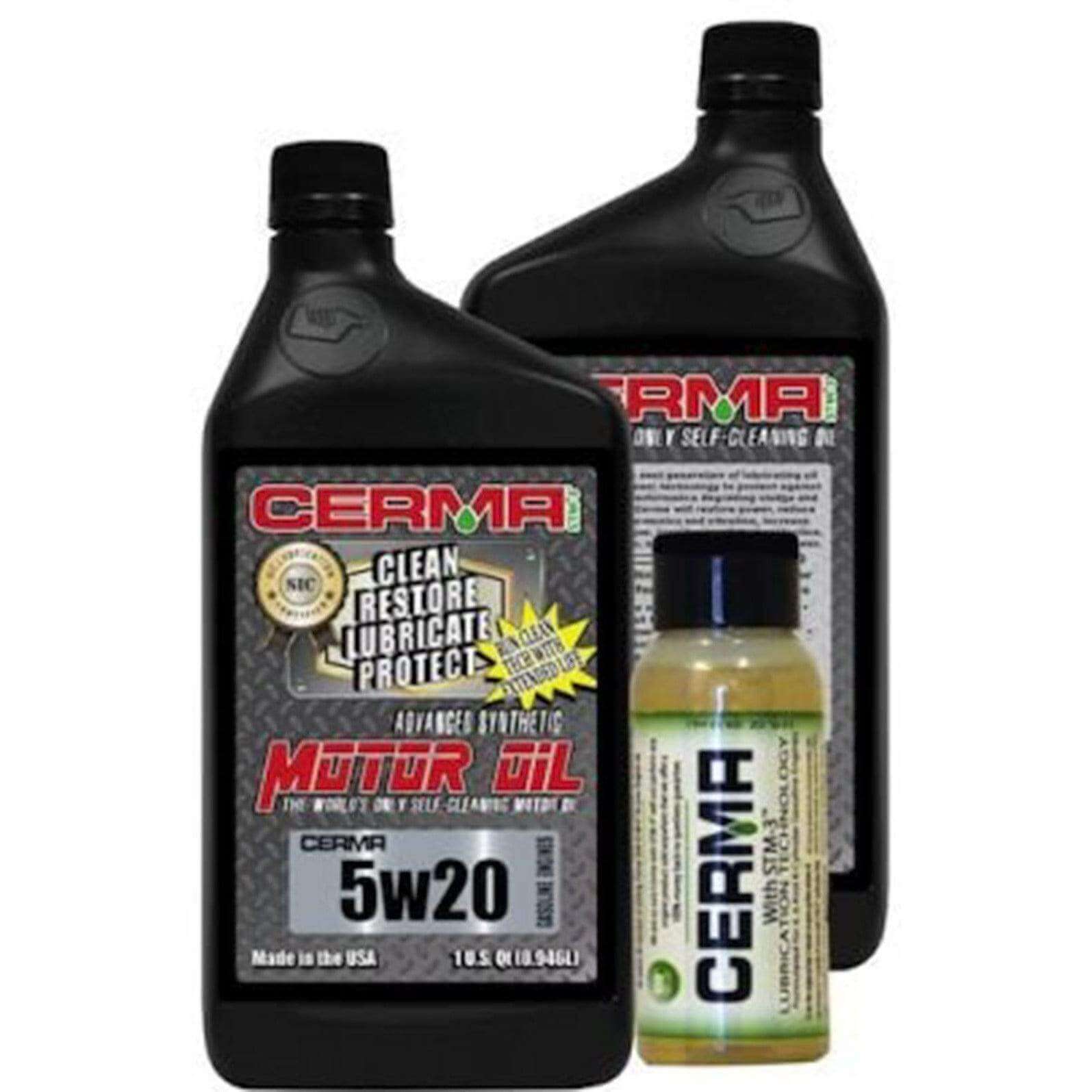
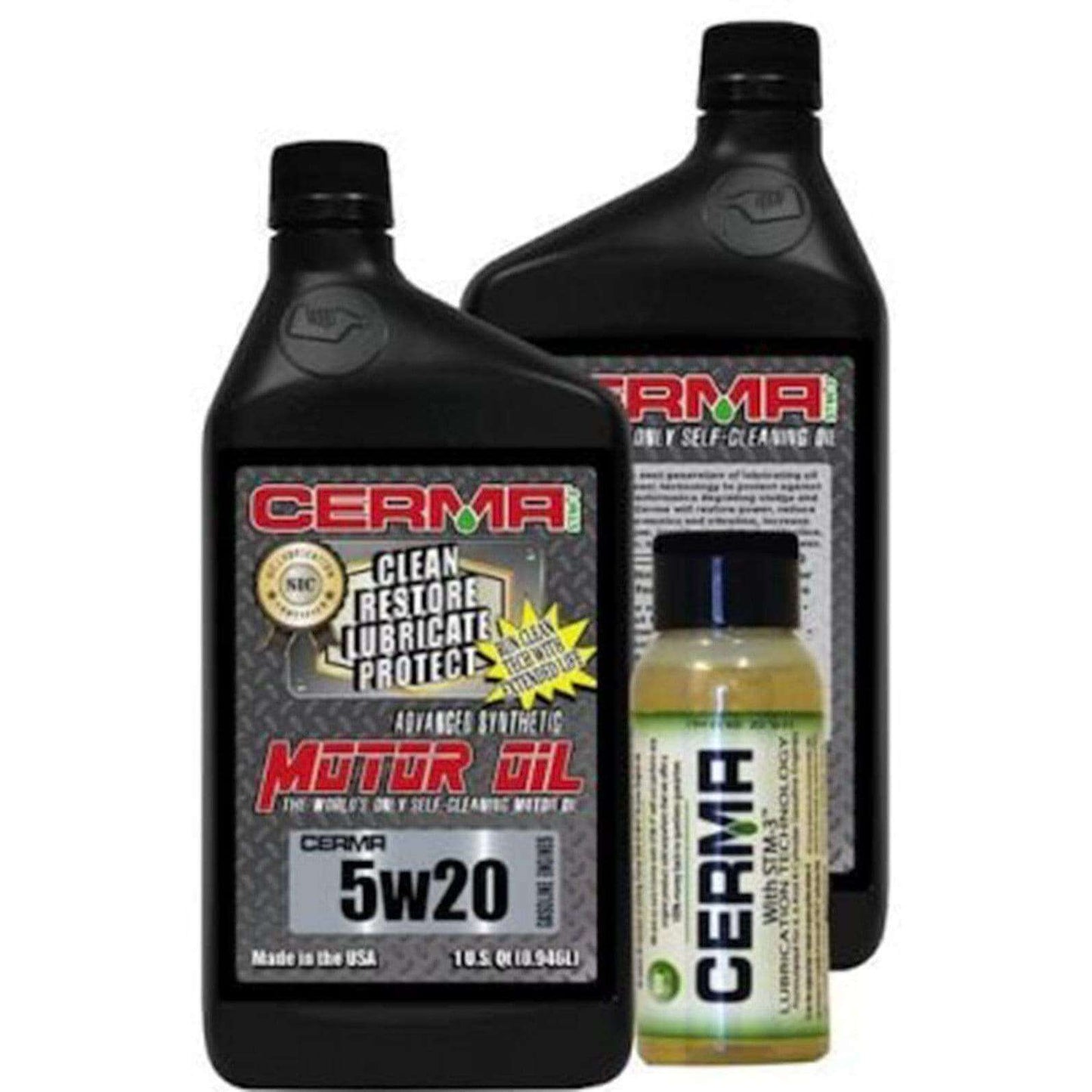
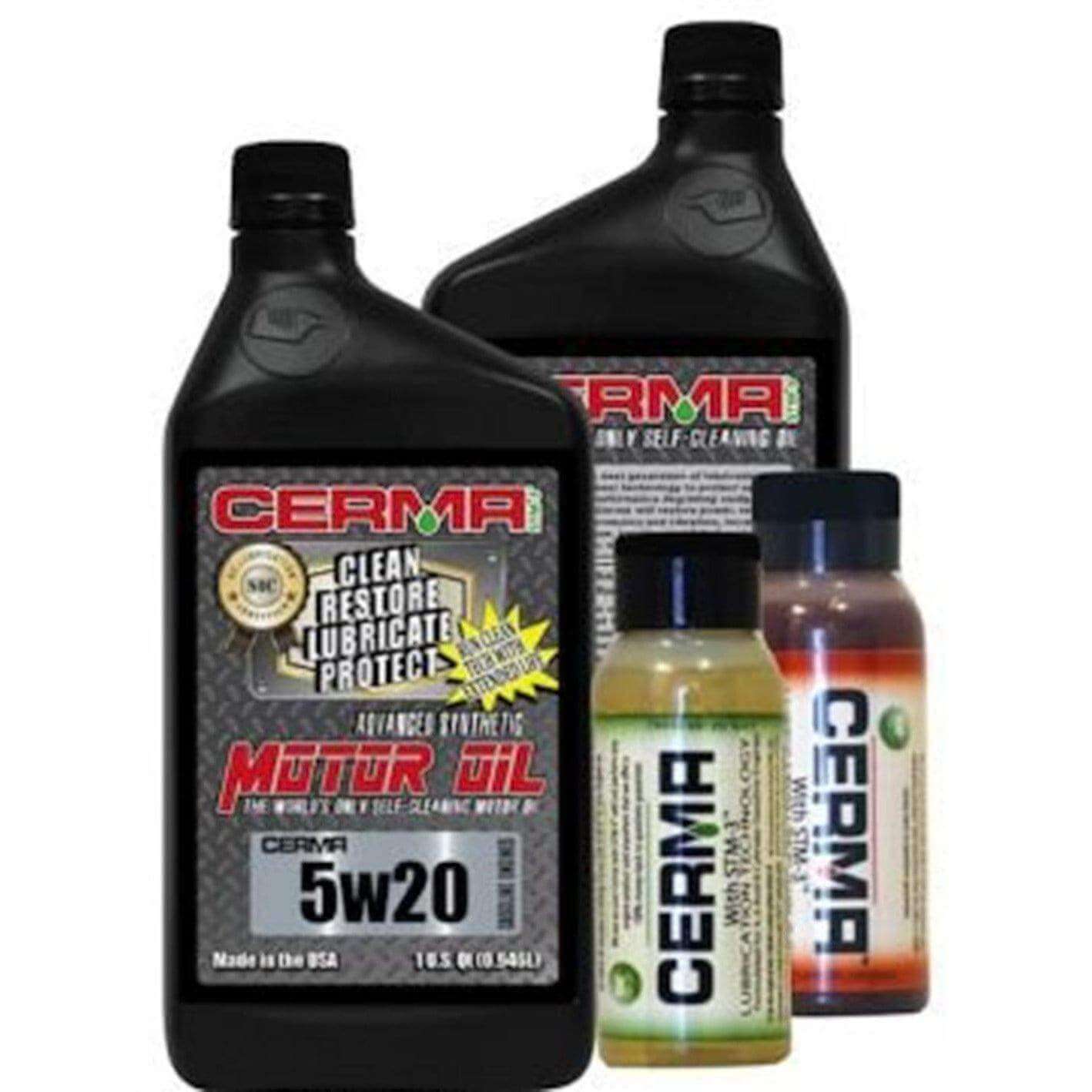
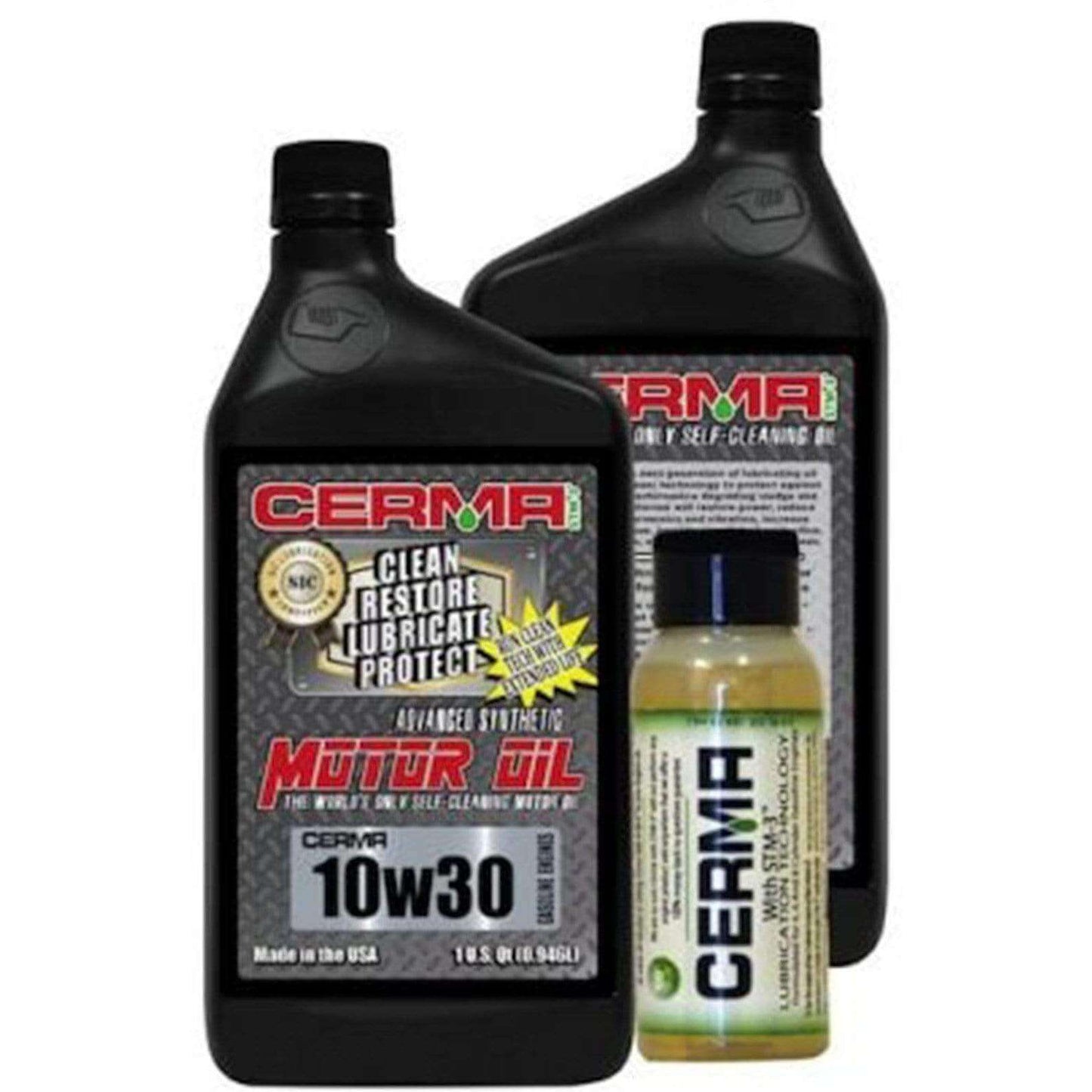
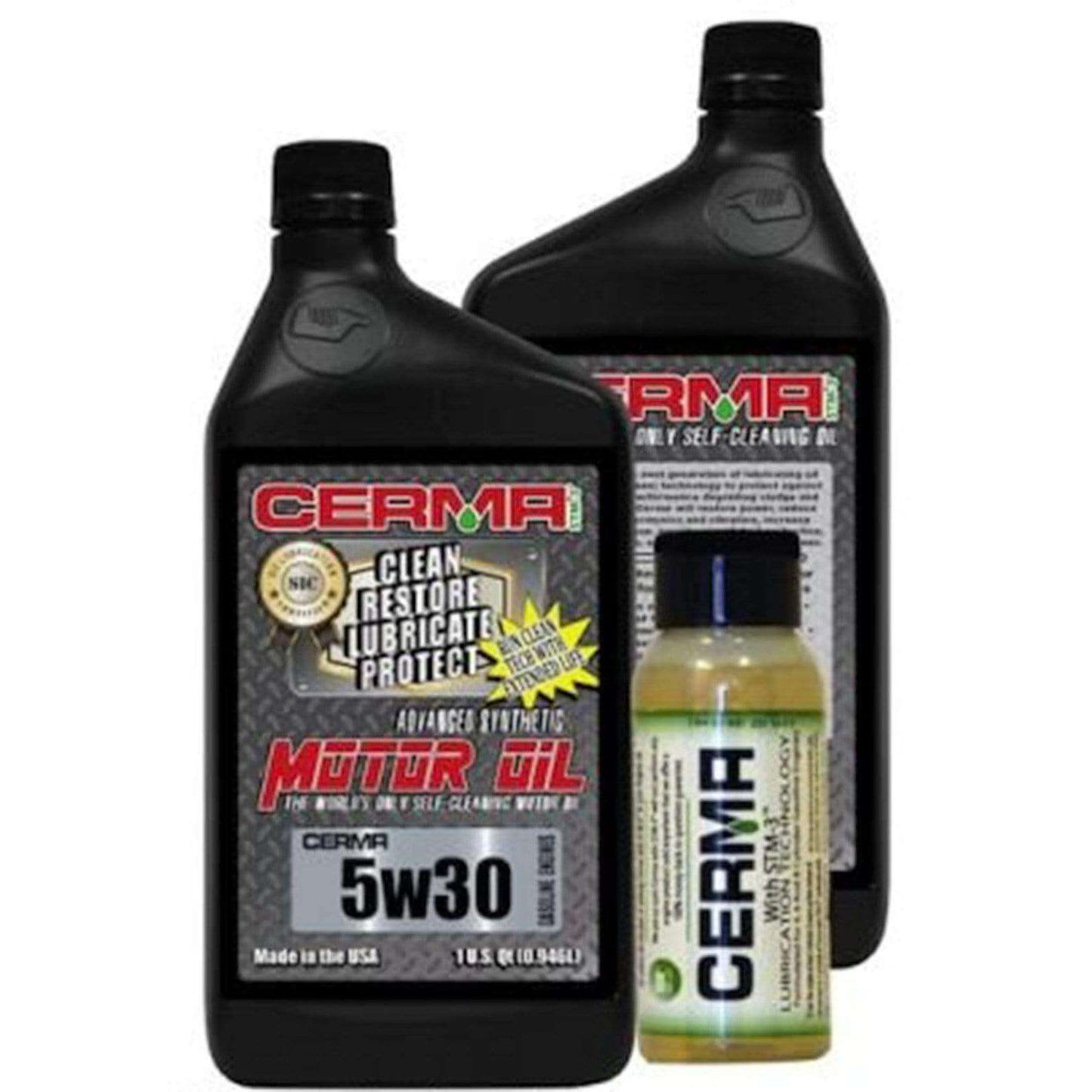
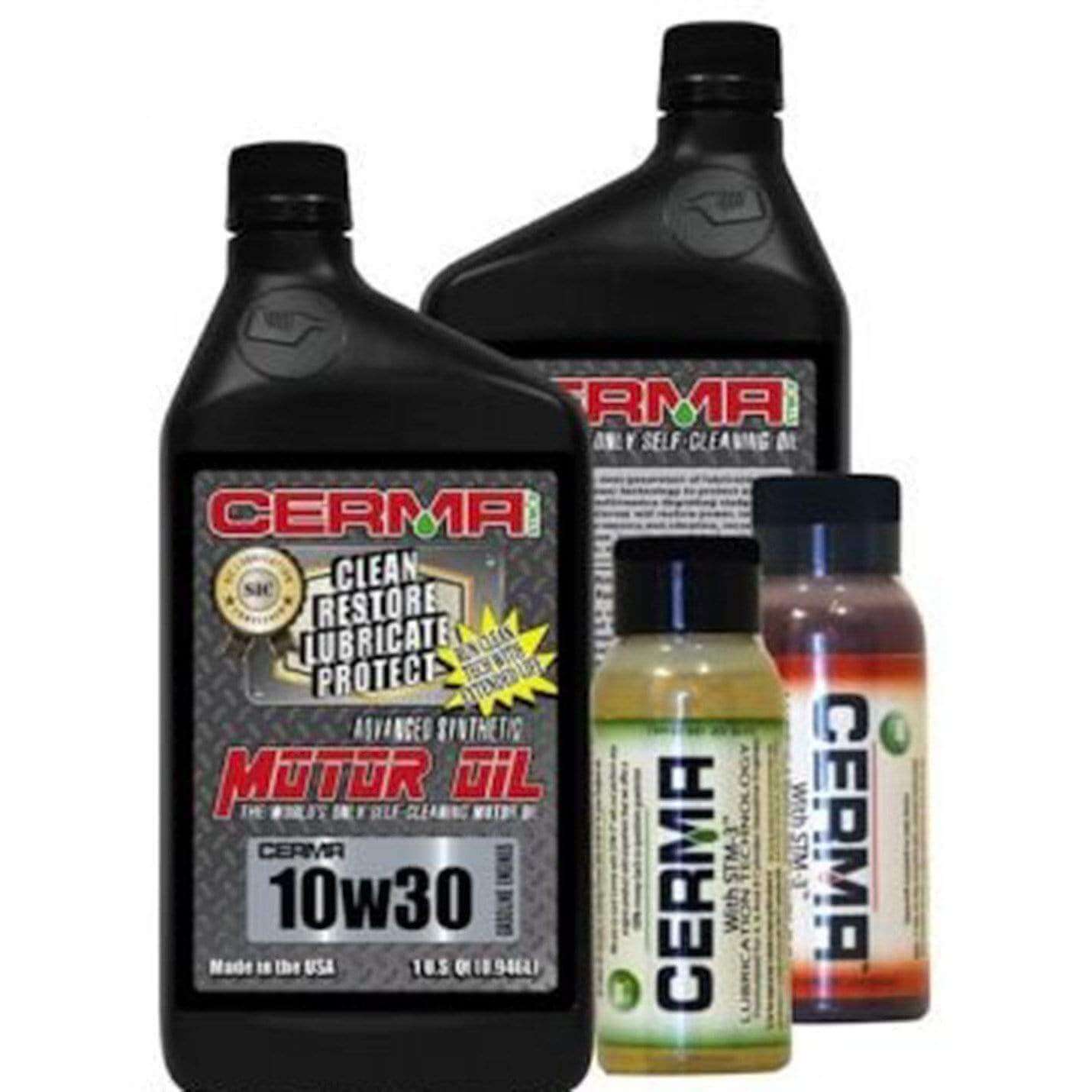
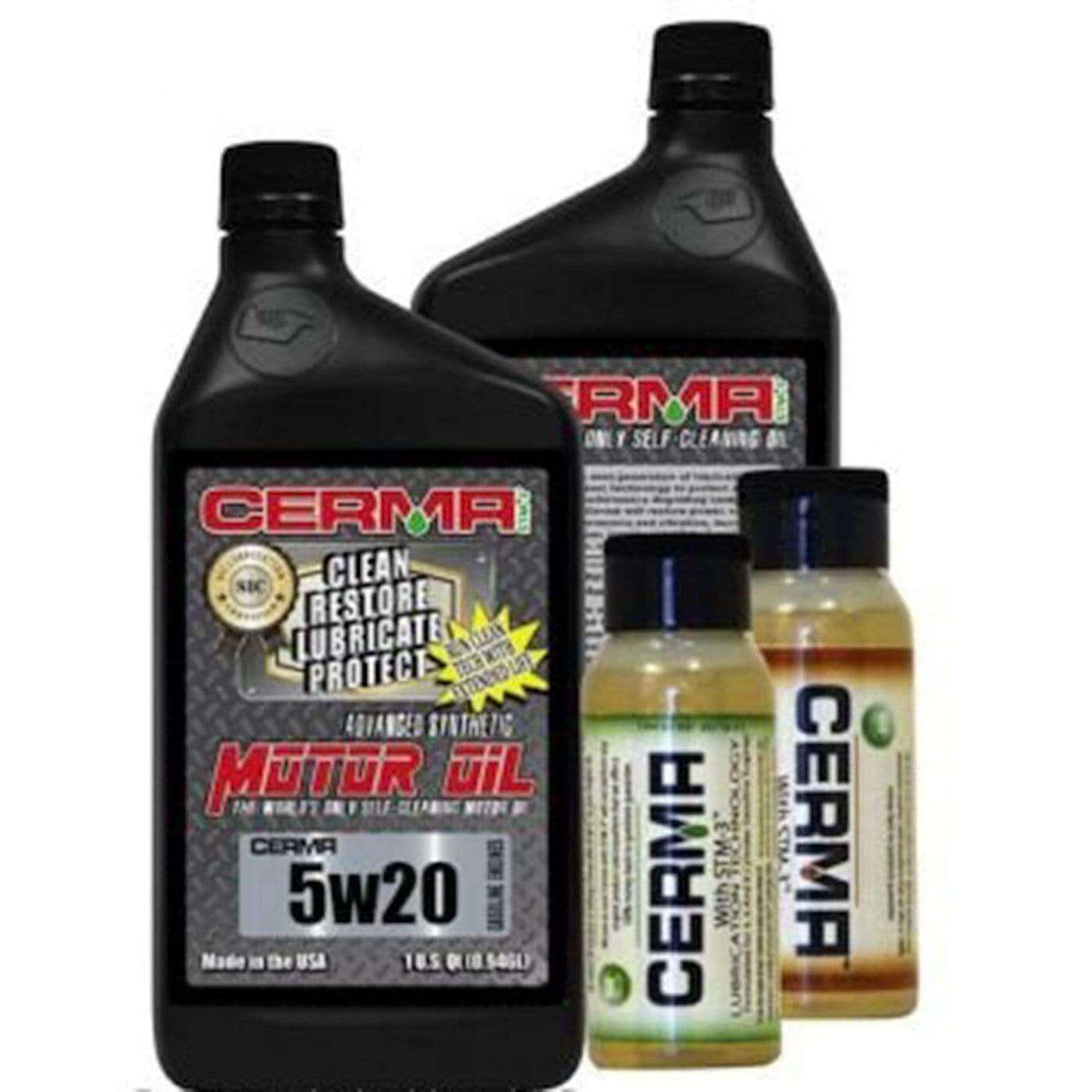
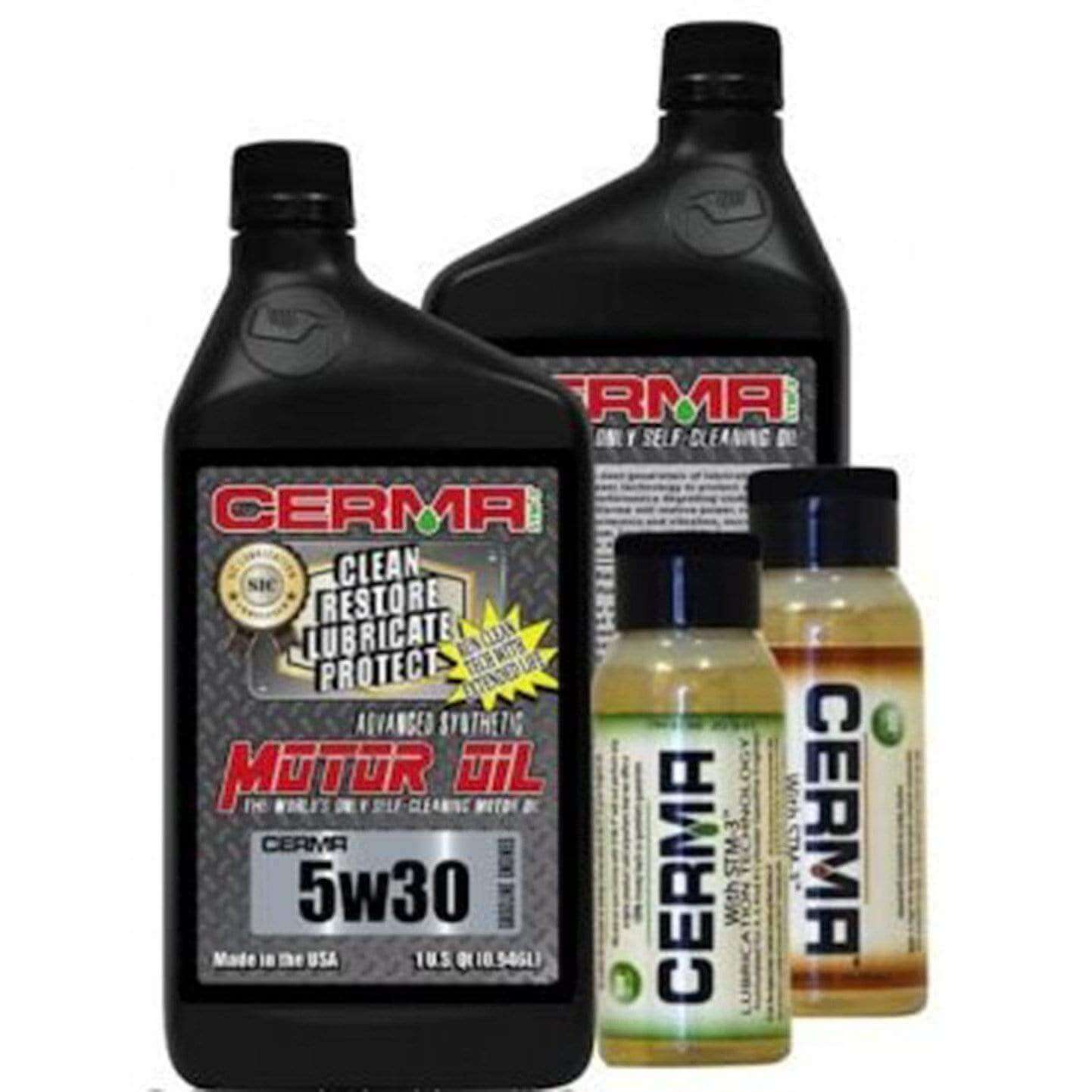
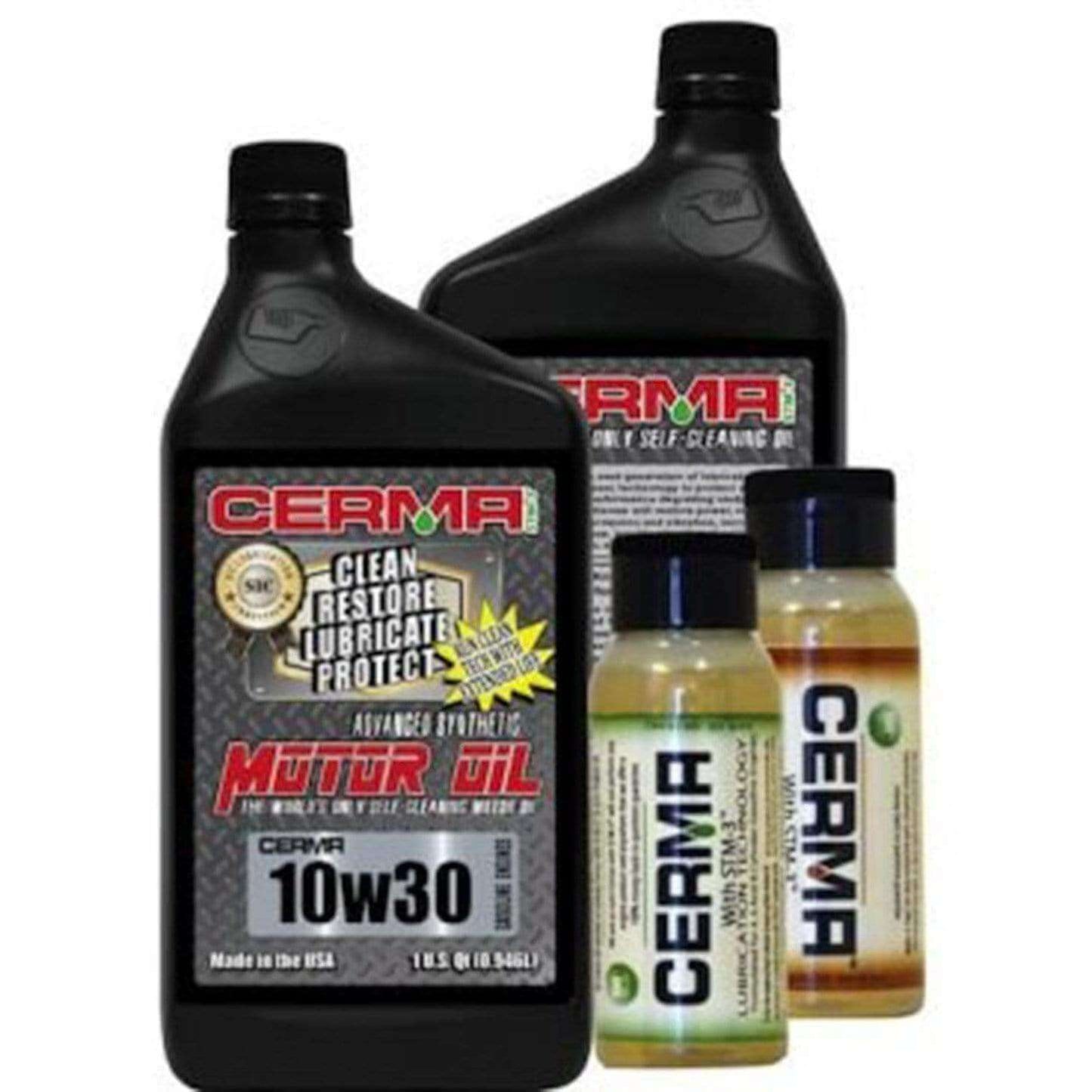
The Cerma Ceramic Synthetic Oil Value Package — 15,000 Mile is our entry-level ceramic protection bundle for everyday gasoline vehicles. Includes Cerma STM-3® Gas Engine Treatment (2 oz) for permanent ferrous ceramic bonding, plus 5–10 quarts of Cerma Ceramic Synthetic Motor Oil in your choice of 5W-20, 5W-30, or 10W-30. Optional 2 oz Automatic or Manual Transmission Treatment available for full powertrain coverage.
Works across all gasoline 4-, 6-, and 8-cylinder engines — cars, SUVs, crossovers, pickup trucks, vans, and hybrids. Made in the USA by Bijou Inc. in Fort Myers, FL. The accessible entry point into Cerma ceramic technology for drivers who want real wear protection without the premium pricing of the Cermax 30K-mile line.
What's Included
| Product | Size | Purpose |
|---|---|---|
| Cerma STM-3® Gas Engine Treatment | 2 oz | One-time ceramic bonding — permanently seals SiC (silicon carbide) into ferrous engine metal surfaces. Mohs 9.5 hardness, 2,730°C melting point, survives oil changes. Compatible with all 4-, 6-, and 8-cylinder gasoline engines. |
| Cerma Ceramic Synthetic Motor Oil | 5–10 quarts | SiC-enhanced synthetic motor oil supporting up to 15,000-mile drain intervals on a treated engine. Formulated to meet API SP and ILSAC GF-6 specifications. Available in 5W-20, 5W-30, and 10W-30 viscosities. |
| Automatic or Manual Transmission Treatment (optional — Trans variants) | 2 oz | One-time ceramic protection for the transmission. Select Automatic for torque-converter automatics (Ford 6R/10R, GM 6L/8L/10L, Chrysler 8HP/TorqueFlite, Toyota Aisin AW, ZF 8HP). Select Manual for conventional manual gearboxes. Not for DCT/DSG/PDK or CVT — see transmission warning below. |
Choose Your Configuration
| Package Variant | What You Get |
|---|---|
| 5W-20 Value Package | 2 oz Engine Treatment + Cerma 5W-20 Oil (5–10 qt) |
| 5W-30 Value Package | 2 oz Engine Treatment + Cerma 5W-30 Oil (5–10 qt) |
| 10W-30 Value Package | 2 oz Engine Treatment + Cerma 10W-30 Oil (5–10 qt) |
| 5W-20 Value + Automatic Trans | 2 oz Engine Treatment + Cerma 5W-20 Oil + 2 oz Automatic Transmission Treatment |
| 5W-30 Value + Automatic Trans | 2 oz Engine Treatment + Cerma 5W-30 Oil + 2 oz Automatic Transmission Treatment |
| 10W-30 Value + Automatic Trans | 2 oz Engine Treatment + Cerma 10W-30 Oil + 2 oz Automatic Transmission Treatment |
| 5W-20 Value + Manual Trans | 2 oz Engine Treatment + Cerma 5W-20 Oil + 2 oz Manual Transmission Treatment |
| 5W-30 Value + Manual Trans | 2 oz Engine Treatment + Cerma 5W-30 Oil + 2 oz Manual Transmission Treatment |
| 10W-30 Value + Manual Trans | 2 oz Engine Treatment + Cerma 10W-30 Oil + 2 oz Manual Transmission Treatment |
Do NOT order a Trans variant if your vehicle has:
- CVT (continuously variable): Nissan Xtronic, Toyota Direct-Shift, Honda CVT, Subaru Lineartronic, Mitsubishi INVECS. Require CVT-specific fluid.
- DCT/DSG/PDK (dual-clutch): VW/Audi DSG, Porsche PDK, BMW M-DCT, Ford PowerShift, Hyundai/Kia DCT, Mercedes AMG Speedshift DCT. Require dual-clutch-specific fluid.
Two Layers of Ceramic Protection
Layer 1 — Cerma STM-3® Gas Engine Treatment (one-time)
A catalyst, not an additive. Cerma's Nano Silicon Carbide technology undergoes a thermo-chemical bonding reaction with ferrous engine metal during normal driving. The result is a permanent, self-healing ceramic layer on cylinder walls, bearings, cam lobes, and valvetrain surfaces. EPA ETV certified. Mohs 9.5 hardness — harder than the steel and cast iron it bonds to. Does not wash out with oil changes. One-time application for the life of the engine.
Layer 2 — Cerma Ceramic Synthetic Motor Oil (ongoing, 15K intervals)
After the engine treatment has cured (1,500-mile break-in), switching to Cerma Ceramic Synthetic Motor Oil ensures every subsequent oil change continues to deliver fresh SiC particles to treated engine surfaces. Formulated to meet API SP and ILSAC GF-6 specifications for modern gasoline engines. Supports oil change intervals up to 15,000 miles on a Cerma-treated engine under typical operating conditions (vs. 3,000–7,500 miles typical for conventional synthetic oils).
Optional Layer 3 — Transmission Treatment (one-time, if selected)
The 2 oz Transmission Treatment applies the same SiC ceramic bonding to your transmission's internal surfaces. For torque-converter automatics, it bonds to clutch drums, pump, valve body, planetary gears, and torque converter surfaces. For manual gearboxes, it bonds to gear teeth, synchro rings, bearings, and shift-fork faces. Added to your existing transmission fluid at the fill port; does not replace OEM-spec fluid.
📋 The Cerma Protocol — Step by Step
All Gasoline Engines — 4-Cyl, V6, V8, Turbo, Supercharged, Hybrid
| Step | Action |
|---|---|
| 1 | Bring your engine to full operating temperature (drive normally 15–20 minutes), then return to idle. |
| 2 | With engine warm and idling, add the Cerma STM-3 Engine Treatment directly to the oil fill port, into your existing engine oil. See mileage-based dosing below for engines under 30,000 miles. |
| 3 | Drive for 15–20 minutes immediately after adding, at varied speeds (mix of city and highway is ideal) to distribute the SiC particles through the engine. |
| 4 | If you selected a compatible Trans variant: add the 2 oz Transmission Treatment to your transmission through the fill port per OEM fill procedure. Can be done the same day as the engine treatment or any time afterward. |
| 5 | Continue normal driving for a minimum of 1,500 miles on your existing engine oil to allow full SiC ceramic bonding. Do not change oil during this period. Do not add any other additives. |
| 6 | At the next oil change (after 1,500+ miles), drain old oil, replace the oil filter, and refill with Cerma Ceramic Synthetic Motor Oil in the selected viscosity and correct capacity for your engine. |
| 7 | Ongoing: Continue Cerma Ceramic Oil changes at up to 15,000-mile intervals (or per your OEM recommendation if shorter). The engine treatment is one-time — no need to repeat. |
Under 30,000 miles (newer engines): Use 1 oz of the 2 oz bottle for the initial application — newer engines have minimal wear and need less SiC catalyst for full coverage. Reserve the remaining 1 oz for a follow-up application after 5,000 miles if desired.
Over 30,000 miles: Use the full 2 oz bottle at initial treatment for maximum ceramic coverage of existing wear surfaces. Higher-mileage engines benefit from the full dose across accumulated wear patterns.
Oil Capacity Quick Reference
| Engine Type | Typical Oil Capacity |
|---|---|
| 4-cylinder (1.5L–2.5L NA) | 4–5 quarts |
| 4-cylinder turbo (1.5T–2.0T) | 5–6 quarts |
| V6 (3.0L–3.6L NA) | 5–6 quarts |
| V6 turbo (2.7T–3.5T) | 6 quarts |
| V8 (4.6L–5.3L) | 6–7 quarts |
| V8 (5.7L–6.2L Hemi, LT1, Coyote) | 7–8 quarts |
| Full-size truck V8 (Ford 5.0, GM 6.2, Ram 5.7) | 7–8 quarts |
| Hybrid 4-cyl gasoline (Prius, RAV4 Hybrid, etc.) | 4–4.5 quarts |
Always verify against your owner's manual or the capacity plate on your specific engine. Round up rather than down, and order 1–2 extra quarts for between-change top-offs (especially helpful at 15K-mile intervals).
Compatible Vehicles
- All gasoline 4-cylinder engines: naturally aspirated and turbocharged — Honda Civic/Accord/CR-V, Toyota Camry/Corolla/RAV4, Hyundai Elantra/Sonata/Tucson, Mazda3/CX-5, Nissan Altima/Rogue, Ford Focus/Escape/Fusion, Chevy Malibu/Equinox, etc.
- All gasoline V6 engines: naturally aspirated and turbocharged — Toyota Highlander/Sienna, Honda Pilot/Ridgeline, Nissan Maxima/Pathfinder, Ford Explorer/F-150 3.5 EcoBoost, Chevy Traverse/Colorado, Jeep Grand Cherokee 3.6L Pentastar.
- All gasoline V8 engines: Ford F-150 5.0 Coyote, Chevrolet Silverado/Tahoe/Suburban 5.3L and 6.2L, Ram 1500 5.7L Hemi, Toyota Tundra 5.7L, Jeep Grand Cherokee 5.7L Hemi, classic muscle cars.
- Hybrid gasoline platforms: Toyota Prius, Camry Hybrid, RAV4 Hybrid; Honda Accord Hybrid, CR-V Hybrid; Ford Escape Hybrid, F-150 PowerBoost; Hyundai/Kia hybrid lineup.
- Turbocharged and supercharged gasoline engines: Ford EcoBoost family (1.0T, 1.5T, 1.6T, 2.0T, 2.3T, 2.7T, 3.5T, 3.0T), GM 2.7T/3.0T/6.2L supercharged, Mercedes turbo lineup, most modern European turbo applications.
Not sure if your vehicle qualifies? Call 239-344-9861 or email info@cermatreatment.com with your year, make, model, and engine.
Package Family — Choose Your Tier
Add More Protection (Optional)
- Cerma Gas Fuel Treatment — continuous 6-in-1 fuel-system protection, particularly important for GDI/T-GDI engines prone to intake-valve carbon buildup
- Cerma Turbo Nano Treatment — add-on for turbocharged and supercharged engines (non-ferrous ceramic protection for turbo bearings, compressor wheels, VGT vanes)
- Cerma Gear Box & Axle Treatment — ceramic protection for differentials and transfer cases on AWD/4WD vehicles
- Cerma Power Steering Treatment — for older vehicles with hydraulic (non-electric) power steering
- Cerma Blue Ice A/C Treatment — ceramic compressor protection
Frequently Asked Questions
Two things are the same: (1) the one-time Cerma STM-3 Engine Treatment — identical product in both packages, permanent ceramic bonding that lasts the life of the engine. (2) the protocol — same 1,500-mile break-in, same viscosity match to OEM spec, same application procedure. One thing is different: the oil. This package uses Cerma Ceramic Synthetic Motor Oil formulated for 15,000-mile drain intervals on a treated engine. The Cermax package uses Cermax Ceramic Synthetic Motor Oil — an upgraded SiC-enhanced formula with extended-performance additive package that supports 30,000-mile drains. Think of it as "good" vs. "best" in the Cerma gas-engine lineup. If you're someone who changes oil yourself every 10–15K miles, this package fits your routine and saves you money vs. the Cermax tier. If you want the longest possible time between oil changes — say, once a year for a 12–15K-mile-a-year driver — the Cermax tier pays back in convenience. Both oils deliver ceramic protection; the difference is drain-interval endurance.
Match your OEM's recommended viscosity — printed on your oil fill cap or listed in your owner's manual. Common matches: 5W-20 for most Ford EcoBoost, Honda (older Civic/Accord), Mazda (older), and Chrysler Hemi V8 applications; 5W-30 for most GM applications (including 5.3L and 6.2L V8 trucks, Corvette Stingray, most GM crossovers), most Toyota applications, most Nissan, most Hyundai/Kia, and many modern Ford EcoBoost 2014+; 10W-30 for older vehicles (pre-2005), hot-climate high-mileage use, and classic muscle cars. Modern vehicles that spec 0W-20 (many 2018+ Toyota, Honda, Mazda, some GM) should step up to the Cermax Performance Value Package, which includes 0W-20 Cermax Synthetic as a viscosity option — this package's 5W-20 is acceptable as a near-substitute but not ideal for engines with specific 0W-20 VVT timing requirements. Running a viscosity outside your OEM spec can affect fuel economy, cold-start oil pressure, and in some cases warranty coverage. When in doubt, call 239-344-9861.
Not initially. For newer engines with under 30,000 miles, use only 1 oz of the 2 oz bottle for the initial application. Newer engines have minimal accumulated wear and don't need the full SiC catalyst dose for complete surface coverage. Save the remaining 1 oz for a follow-up application after roughly 5,000 miles if desired (some owners apply the second dose at the first oil change mark for additional ceramic layer building; others save it for a future vehicle). For engines over 30,000 miles, use the full 2 oz at initial treatment — accumulated wear surfaces benefit from the full dose. This mileage-based dosing guidance is specific to the gas engine treatment; the diesel engine treatments are dosed to displacement regardless of mileage.
The STM-3 Engine Treatment's SiC catalyst needs to bond to engine metal during the 1,500-mile break-in period. Cerma Ceramic Oil already contains SiC particles — so if you put the treatment into Cerma oil simultaneously, you have high SiC concentration in the oil and in the treatment, which creates particle competition: some particles stay suspended in the oil rather than bonding to metal, and the catalyst gets flushed out before the bond cures. The correct sequence works because your existing oil has low SiC concentration, which creates a concentration gradient that drives the catalyst particles toward metal surfaces — where they bond permanently. After the 1,500-mile break-in, you switch to Cerma Ceramic Oil and the suspended SiC in the oil reinforces the already-established bond rather than competing with it. Following the sequence matters for bond strength and ceramic layer quality.
You can use this package on a turbocharged vehicle — the engine treatment and Cerma oil both contain SiC technology and provide baseline turbo protection through the oil's built-in non-ferrous chemistry. Cerma Ceramic Oil carries SiC particles that address both ferrous engine surfaces (treated by the engine treatment) and non-ferrous turbo components (aluminum housings, bronze bushings, compressor wheels) during every oil change. For most daily-driven turbo vehicles driven conservatively — Ford EcoBoost family, Hyundai/Kia turbos, Honda 1.5T Civic, VW/Audi 2.0T family daily drivers — this package provides adequate protection. If you have a high-output forced-induction vehicle (Subaru WRX/STI, tuned EcoBoost with bigger turbo, BMW M2/M3/M4, Shelby GT500, Hellcat) or you drive hard / track / tune, the Racing Value Package adds a concentrated 1 oz Turbo Nano Treatment for stronger initial ceramic layer specifically on turbo non-ferrous components, plus the premium Cermax Oil. That's the step-up for enthusiasts.
Yes, for the engine — not for the transmission. Order the base Value Package (engine treatment + Cerma Ceramic Oil only, no Trans variant). Your engine still gets full SiC ceramic protection. The Automatic Transmission Treatment in the Trans variants is formulated for torque-converter automatics, which use standard ATF. CVTs use highly specialized belt-slip-calibrated CVT fluid (Nissan Xtronic NS-3, Toyota CVTF TC, Honda CVTF, Subaru CVTF, etc.) that our transmission treatment is not validated for. Applying it to a CVT can cause belt slippage and expensive transmission damage. For CVT-specific fluid service, follow your OEM schedule with the exact OEM-spec CVT fluid. Same guidance applies to DCT vehicles (VW DSG, Porsche PDK, BMW M-DCT, Ford PowerShift, etc.) — these require dual-clutch-specific fluids.
Honest expectation-setting: the most reliable effects on a typical daily-driver gas engine after the full Cerma protocol completes are wear-rate reduction (the primary benefit — friction-reduction at metal surfaces slows further wear progression) and extended drain intervals (15,000 miles with Cerma Oil vs. 3,000–7,500 miles typical for conventional synthetic). Secondary effects that drivers frequently report: modestly smoother idle, small fuel-economy improvement (typically 1–3% on a stable commute pattern), reduced oil consumption between changes, and on higher-mileage engines, reduced blow-by pressure and slightly improved cold-start behavior. What the package will not do: fix mechanical issues (scored cylinder walls, worn rings, damaged bearings, failed sensors) — those are repair problems. Cerma is a wear-protection and friction-reduction technology, not a repair compound. For an engine with normal wear, the full protocol can meaningfully extend remaining service life; for a mechanically distressed engine, address the root cause first.
No. Do not use any other oil additives alongside Cerma products. Cerma STM-3 and Cerma Ceramic Oil are a complete engine protection system — adding film-modifier additives (Lucas Oil Stabilizer, etc.), ZDDP boosters, seal conditioners, or PTFE-based products can interfere with SiC bonding in multiple ways: competing for adsorption sites on metal surfaces, altering the oil's viscosity and additive balance, or depositing their own film layer that blocks SiC contact. Cerma Ceramic Oil already contains the detergent, dispersant, anti-wear, and friction-modifier chemistry needed for modern gas engines — meeting API SP and ILSAC GF-6 — plus the SiC ceramic technology. Adding other products on top adds risk without benefit. The only Cerma products safe to use alongside this package are the optional Turbo Nano Treatment (if your vehicle is turbocharged/supercharged), Cerma Diesel Fuel Treatment (if applicable), Cerma Gear Box Treatment, and other Cerma line products — all formulated to work together.
Made in the USA by Cerma Treatment (Bijou Inc.), 15880 Summerlin Road #300 Box #301, Fort Myers, FL 33908. 30-day return policy. Free shipping on orders over $150. Ships to US & Canada. Questions? Call 239-344-9861 or email info@cermatreatment.com. Use discount code C10 for 10% off.
Cerma STM-3® is a registered trademark of Bijou Inc. SiC (Silicon Carbide) technology is EPA ETV certified. Cerma Ceramic Synthetic Motor Oil viscosities 5W-20, 5W-30, and 10W-30 are formulated to meet applicable API SP and ILSAC GF-6 specifications. Cerma Ceramic Oil is designed for use on engines treated with Cerma STM-3 Gas Engine Treatment; use in untreated engines is permitted but does not provide the full performance benefit of the Cerma protocol. Automatic Transmission Treatment is formulated for traditional torque-converter automatic transmissions using manufacturer-specified ATF; not for use in dual-clutch (DCT/DSG/PDK) or CVT transmissions. Manual Transmission Treatment is for conventional manual gearboxes using manufacturer-specified gear oil (GL-4/GL-5) or MTF. Oil change intervals up to 15,000 miles apply to engines treated per the Cerma protocol under typical operating conditions; severe-service (track use, taxi/rideshare, sustained high-load, direct-injection engines prone to fuel dilution) may warrant shorter intervals — always follow your vehicle manufacturer's recommended interval when shorter than 15,000 miles. For 30,000-mile drain intervals on gasoline engines, see the Cermax Performance Value Package with Cermax Ceramic Synthetic Motor Oil. Performance claims represent formulation targets and typical results; individual vehicle results vary based on engine condition, age, mileage, driving style, climate, and maintenance practices. Cerma products are not repair compounds and cannot correct pre-existing mechanical failures.
Frequently Asked Questions
The package includes Cerma STM-3 Gas Engine Treatment (2 oz single bottle) for one-time ceramic bonding of ferrous engine surfaces, plus 5 to 10 quarts of Cerma Ceramic Synthetic Motor Oil in your choice of three viscosities: 5W-20, 5W-30, or 10W-30. The oil is formulated to meet API SP and ILSAC GF-6 specifications and supports up to 15,000-mile drain intervals on a treated engine. Three variant families are offered: the base Value Package (engine treatment + oil only), Value + Automatic Trans (adds 2 oz Automatic Transmission Treatment for torque-converter automatics), and Value + Manual Trans (adds 2 oz Manual Transmission Treatment for conventional manual gearboxes). Made in the USA by Bijou Inc. in Fort Myers, FL.
Three reasons. First, bundled pricing — the package is roughly 17% off the sum of individual component prices, saving approximately $33 versus separate purchases. Second, one shipment instead of two or three — the Engine Treatment, Ceramic Oil, and optional Transmission Treatment arrive together in a single order, and the package price automatically qualifies for free shipping (over the $150 threshold). Third, correct sizing out of the box — you select viscosity and oil quantity to match your specific engine, so there's no guesswork about how many quarts to order or whether to treat the transmission. For drivers new to Cerma who want to start the protocol correctly on a first vehicle, this package is the simplest entry point. For drivers who already have a Cerma-treated engine and just need oil for the next change, individual component purchase may be more economical.
Follow the Cerma Protocol in sequence. Step 1: Bring your engine to operating temperature (drive 15–20 minutes normally), then return to idle. Step 2: With engine warm and idling, add the Cerma STM-3 Engine Treatment to your existing engine oil through the oil fill cap (use 1 oz for engines under 30,000 miles; 2 oz for engines over 30,000 miles). Step 3: Drive 15–20 minutes immediately at varied speeds to distribute the SiC particles through the engine. Step 4: If you selected a compatible Trans variant, add the 2 oz Transmission Treatment to your transmission through the fill port — can be done the same day as the engine treatment or any time afterward. Step 5: Continue normal driving for a minimum of 1,500 miles on your existing engine oil to allow full SiC ceramic bonding. Do NOT change oil during this period. Do NOT add any other additives. Step 6: At the next oil change after 1,500+ miles, drain old oil, replace the oil filter, and refill with Cerma Ceramic Synthetic Motor Oil from this package in the correct viscosity and quantity. Step 7: Ongoing — continue Cerma Ceramic Oil changes at up to 15,000-mile intervals. The engine treatment is one-time; no need to repeat.
The engine treatment and Cerma Ceramic Oil are compatible with virtually all gasoline-engine vehicles — all 4-cylinder, 6-cylinder, and 8-cylinder engines, naturally aspirated and turbocharged, hybrid gasoline platforms, classic and modern applications. Compatible makes include Toyota, Honda, Hyundai, Kia, Mazda, Nissan, Subaru, Ford, Chevrolet/GMC, Chrysler/Dodge/Jeep/Ram, Volkswagen, Audi, BMW, Mercedes-Benz, and virtually every major manufacturer. The transmission variants are where compatibility matters: select Automatic Trans for torque-converter automatics (most trucks, SUVs, and sedans — Ford 6R/10R, GM 6L/8L/10L, Chrysler 8HP/TorqueFlite, Toyota Aisin AW, ZF 8HP); select Manual Trans for conventional 3-pedal manual gearboxes. Do NOT select a Trans variant if your vehicle has CVT (Nissan Xtronic, Toyota Direct-Shift CVT, Honda CVT, Subaru Lineartronic) or DCT/DSG/PDK (VW/Audi DSG, Porsche PDK, BMW M-DCT, Ford PowerShift, Mercedes AMG Speedshift DCT) — those require specialized fluids. For CVT and DCT vehicles, order the base Value Package (engine + oil only); your engine still gets full ceramic protection. Not sure what transmission you have? Call 239-344-9861.
The Cerma protocol completes over approximately 90 days of normal driving, with different effects showing up at different mileage milestones. Many drivers report subtle early changes within the first 500 miles — slightly smoother idle, quieter operation, and on higher-mileage engines sometimes reduced cold-start noise. The main ceramic bonding reaction completes at the 1,500-mile break-in mark, which is also when you switch to Cerma Ceramic Oil. From the 1,500-mile mark through roughly 90 days of driving, the ceramic layer continues to refine and the full wear-protection benefit reaches its stable state. Longer-term benefits — reduced wear progression, extended drain intervals, sustained fuel-economy improvements — show up across the first complete oil change cycle (15,000 miles with Cerma Oil) and become more evident over the vehicle's subsequent service life. Honest note: the Cerma system is a long-term wear-protection technology, not a dramatic "noticeable instantly" product. The core benefits — extended engine life and longer drain intervals — are measured in years and tens of thousands of miles, not days and weeks.
Share

Frequently Asked Questions
- 5 stars: 1 (100%)
- 4 stars: 0 (0%)
- 3 stars: 0 (0%)
- 2 stars: 0 (0%)
- 1 star: 0 (0%)
i am out done with how will Cerma works... i haven't used it for one year ago; i mistaken had oil changed with conventional oil. once i received my my products, i change out the old with Cerma. Immediately i notice the power of the engine was BACK! Prior to this oil change, I've used the engine treatment & oil according to procedures. treatment 1500miles or better then change the oil wi Cerma. Big Ups to the creator of the product. p.s. i never stop using the gas treatment