


Cerma
Cermax Ceramic 5W-30 Synthetic Motor Oil 30K Mile | Cerma
Cermax Ceramic 5W-30 Synthetic Motor Oil 30K Mile | Cerma
Couldn't load pickup availability
Cermax Ceramic 5W-30 Synthetic Motor Oil — STM-3 Nano Silicon Carbide Technology | Quad-Action Run Clean Protection | North America's Most Versatile Viscosity | Up to 30,000-Mile Oil Changes
The most widely-applicable member of the Cermax motor oil family — built for the viscosity specified across the majority of North American gasoline engines. Cermax Ceramic 5W-30 Synthetic Motor Oil is engineered with Cerma STM-3 Run Clean Technology — Nano Silicon Carbide (SiC) ceramic particles in a premium full synthetic base with extended-performance additive package, delivering up to 30,000-mile drain intervals* in the viscosity GM, Ford, Chrysler, and many European and Asian automakers specify for their gasoline engines. The diamond-hard SiC ceramic matrix permanently bonds to engine metal surfaces, continuously cleaning, protecting, and restoring your engine with every mile.
5W-30 is the most versatile motor oil viscosity in North America — specified for most General Motors gasoline vehicles (Silverado, Tahoe, Suburban, Equinox, Malibu, Traverse, Acadia, Corvette 6.2L LT1, most Cadillac, Buick, GMC), Ford 2014+ EcoBoost engines (F-150 3.5L EcoBoost, 2.7L EcoBoost, Explorer ST, Mustang EcoBoost, Escape 2.0L), Mustang GT 5.0L Coyote (some years), Chrysler Pentastar V6 and some Hemi applications, older Asian imports (pre-2011 Toyota/Honda, older Hyundai/Kia, older Mazda), European vehicles with LL-12 FE or similar specifications (some BMW, some Mercedes, VW with 504 00/507 00 when combined with additional requirements), and virtually every hot-climate heavy-duty gasoline application. Available in 6 sizes with automatic volume discounts on multi-unit purchases.
⬇️ Looking for Value-Tier 5W-30?
This is Cermax 5W-30 — our premium 30,000-mile ceramic synthetic oil. For a lower price point at 15,000-mile drain intervals, see Cerma Synthetic Ceramic 5W-30 Motor Oil. Both use the same STM-3 SiC ceramic technology — Cermax features a higher SiC concentration and extended-performance additive package for twice the drain interval at a higher price per quart. Choose Cerma for value, Cermax for maximum extended-drain performance.
✅ Quad-Action Run Clean Protection Technology
Cermax 5W-30 performs four distinct protective functions simultaneously:
| Action | How It Works |
|---|---|
| Action 1: CLEAN | SiC ceramic attracts carbon, varnish, and lacquer into filterable masses — your oil filter removes them, so your engine gets cleaner over time, not dirtier (especially valuable for Ford EcoBoost direct-injection engines and Chrysler Hemi engines prone to intake deposits) |
| Action 2: RESTORE | SiC particles bond to microscopic wear sites on cylinder walls, bearings, and cam lobes — helping restore lost compression and reduce oil consumption in higher-mileage GM, Ford, and Chrysler engines |
| Action 3: PROTECT | Bonded ceramic layer (Mohs 9.5, 2,730°C melting point) provides ongoing wear protection plus SAE 30-weight hot-film strength — the balanced viscosity that works across the widest range of engines and operating conditions |
| Action 4: EXTEND | Higher SiC concentration + premium extended-performance additive package delivers up to 30,000-mile drain intervals* — far beyond typical GM 7,500-mile, Ford 10,000-mile, and Chrysler 10,000-mile service schedules |
🔬 Advanced Features
- STM-3 Nano Silicon Carbide ceramic technology — Mohs 9.5 hardness, 2,730°C melting point, enhanced concentration for premium tier
- Up to 30,000-mile drain intervals* — 3–4× typical manufacturer-recommended intervals
- Most versatile North American viscosity — SAE 5W-30 is the specified grade for the majority of GM, Ford 2014+, Chrysler, and many European and Asian gasoline engines
- Balanced operating temperature range — 5W cold-flow provides reliable cold-climate startup; SAE 30 hot-viscosity film offers strong protection without the parasitic friction of thicker grades
- Formulated to meet performance targets of API SN, SM, and ILSAC GF-5 specifications*
- Self-cleaning Run Clean action — helps prevent sludge, carbon, and varnish buildup on metal surfaces (critical for Ford EcoBoost, GM Ecotec, Chrysler GDI engines prone to intake valve carbon buildup)
- Restores lost compression in higher-mileage engines — SiC fills micro-imperfections in cylinder walls; particularly valuable for high-mileage Chevy, GMC, Ford F-150, and Chrysler Hemi engines
- LSPI resistance — modern full synthetic chemistry mitigates low-speed pre-ignition in small turbo-GDI engines (Ford 2.7L EcoBoost, GM 2.7L Turbo, etc.)
- Turbocharger & supercharger optimized — 30-weight hot film + SiC ceramic bond provides robust protection for modern turbo GDI engines (Ford EcoBoost, GM 2.7L Turbo, Chrysler Hurricane)
- Direct injection (GDI) compatible — SiC Run Clean technology helps reduce combustion deposits that degrade GDI engines
- Cumulative protection — SiC ceramic bond builds over successive oil changes rather than depleting
- VVT/AFM compatible — correct viscosity for GM Active Fuel Management/Dynamic Fuel Management, Ford Variable Cam Timing, Chrysler MDS cylinder deactivation, and similar variable valve timing systems
- High-mileage engine support — SiC restoration action benefits older engines (150K+ miles) with accumulated wear
- Hot climate performance — 30-weight hot film maintains strength in extreme summer conditions
- Lowest cost per mile — 30K drain interval makes Cermax cost-effective vs conventional synthetics
- PTFE-Free, Solvent-Free, Environmentally Safe formulation — made in the USA
🌡️ Why 5W-30 Is North America's Dominant Viscosity: 5W-30 became the most widely specified motor oil viscosity in North America because it delivers an ideal balance of cold-start flow, hot-temperature film strength, fuel economy, and engine protection. The 5W cold rating ensures reliable startup lubrication in cold climates, while the SAE 30 hot viscosity provides robust film strength for a wide range of engine designs — from small turbo-GDI engines (Ford 2.7L EcoBoost, GM 2.7L Turbo, Chrysler Pentastar) to large V8s (Chevy 5.3L, 6.2L L86, Ford Coyote 5.0L, Chrysler 5.7L Hemi). Most GM gasoline engines specify 5W-30 with dexos1 certification. Ford transitioned many engines to 5W-30 starting around 2014 (early EcoBoost was 5W-20). Chrysler Pentastar V6 engines specify 5W-30 across most applications. Even many European vehicles specify 5W-30 variants (BMW LL-12 FE, Mercedes 229.5, VW 504 00/507 00) for improved fuel economy. The 30-weight hot film is thicker than 5W-20 (better wear protection in hot conditions) but thinner than 5W-40 (better fuel economy), making 5W-30 the pragmatic sweet spot for most drivers.
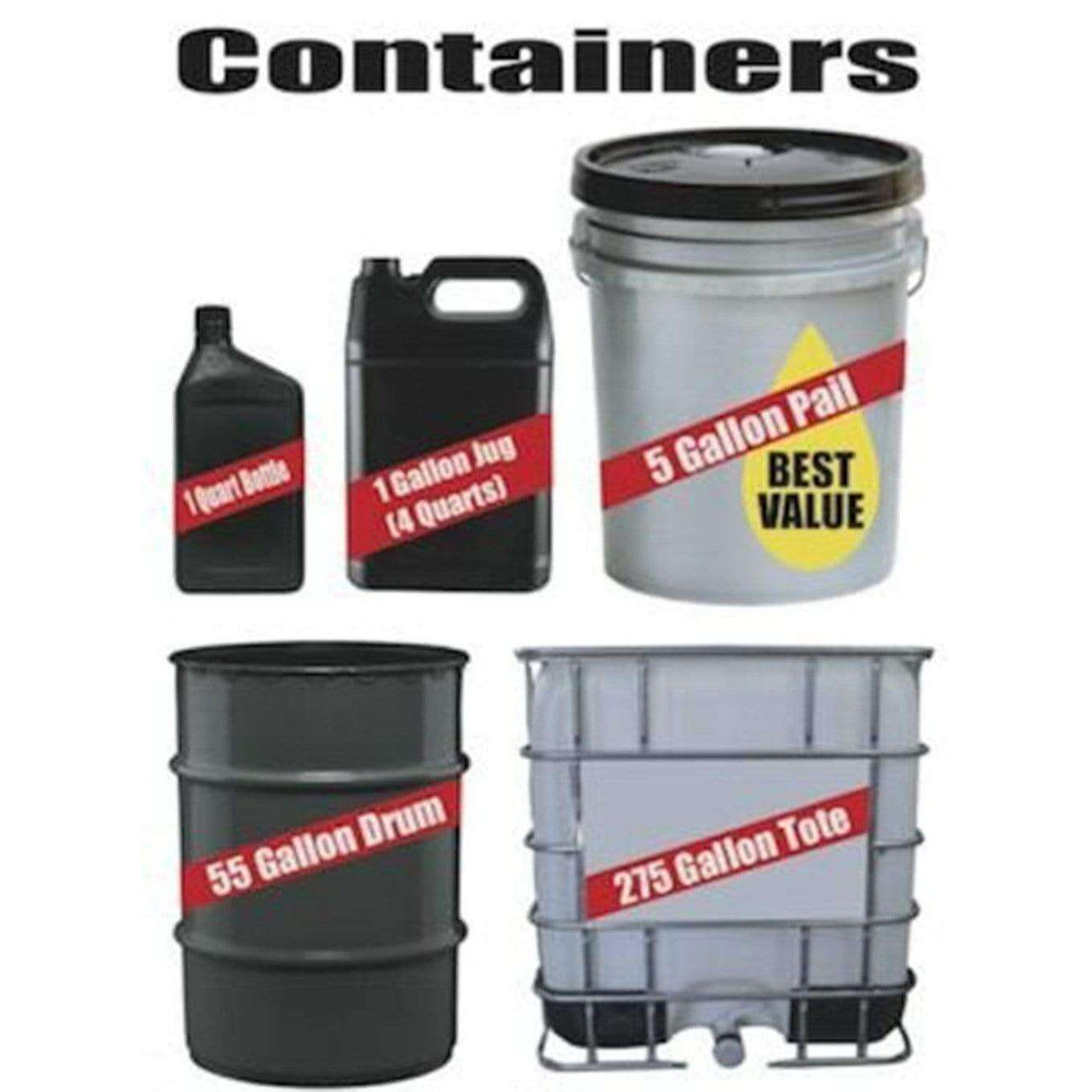
📦 Choose Your Size — 6 Variants Available
| Size | Best For |
|---|---|
| Quart (32 fl oz) | Individual oil changes, top-offs between changes |
| 12 Quart Case | Multiple oil changes (2 full changes for most F-150, Silverado, 2–3 for Malibu/Camry/4-cyl) |
| 1 Gallon (128 fl oz) | Most 4-cylinder and V6 oil changes (Silverado 4.3L V6, Camry, Malibu, Escape, Equinox) |
| 4 Gallon Case | Multi-vehicle households, V8 truck oil changes, independent shops |
| 5 Gallon Pail | Shops, garages, fleet maintenance (contractor trucks, delivery vans, commercial fleets) |
| 55 Gallon Drum | High-volume shops, dealerships, large commercial fleet operations |
See variant dropdown above for current pricing. Automatic volume discounts apply on multi-unit purchases — Buy 2 and Buy 5 pricing tiers shown below the variant selector. For fleet or commercial volume pricing beyond listed sizes, call 239-344-9861.
📋 How to Use Cermax 5W-30
💡 For Best Results — Recommended Enhancement: For the deepest SiC ceramic protection, treat your engine first with Cerma STM-3 Engine Treatment (a one-time, permanent application), then use Cermax 5W-30 for all subsequent oil changes. Especially valuable for high-mileage GM, Ford, and Chrysler engines (150K+ miles) with accumulated wear, and for Ford EcoBoost engines known for intake valve carbon buildup. The engine treatment establishes the deep ceramic bond quickly; Cermax oil maintains and reinforces it with every oil change.
- Verify viscosity spec — confirm your owner's manual recommends SAE 5W-30. If your vehicle specifies 0W-20, 5W-20, 5W-40, 10W-30, or another grade, do NOT substitute with 5W-30 — use a matching-viscosity Cerma or Cermax oil instead.
- Warm the engine — drive 5–10 minutes before draining so old oil flows freely and carries contaminants.
- Drain old oil — park on level ground, set parking brake, drain through pan drain plug. Allow full drainage (10–15 minutes).
- Replace the oil filter — always install a new filter. For GM applications, use ACDelco or equivalent (Mobil 1, Fram Ultra, Wix XP, K&N Pro-Series). For Ford, use Motorcraft FL-500S or equivalent. For Chrysler, use Mopar or equivalent. Avoid economy-grade filters at extended drain intervals.
- Reinstall drain plug — use a new crush washer or gasket per manufacturer spec; torque to manufacturer specification (typically 18–30 ft-lbs).
- Fill with Cermax 5W-30 — add the correct capacity per your owner's manual. Start engine and let idle 30 seconds, then check level with engine off.
- Verify level and inspect for leaks — top off as needed. Check under vehicle after 5–10 minutes for any leaks at drain plug or filter.
- Reset oil life monitor (OLM) — most 5W-30-spec vehicles have an Oil Life Monitor (GM Oil Life System, Ford IOLM, Chrysler OLM) that must be reset after oil change. Procedure varies by model (typically accessible through dashboard controls, infotainment menu, or key-on pedal-press sequence).
- Drive normally — Cermax provides up to 30,000 miles of protection per change. Monitor oil level between changes, especially in Ford EcoBoost and GDI engines where fuel dilution can occur.
- Do not add additional oil additives — Cermax is a complete protection system.
📊 Technical Specifications
| Specification | Details |
|---|---|
| Type | Premium full synthetic ceramic motor oil with STM-3 SiC Run Clean Technology |
| Viscosity Grade | SAE 5W-30 (multi-grade — cold flow of SAE 5W, hot film strength of SAE 30) |
| Oil Change Interval | Up to 30,000 miles or manufacturer's recommended interval, whichever comes first* |
| API Service Classification | Formulated to meet performance targets of API SN, SM* |
| ILSAC Performance | Formulated to meet performance targets of ILSAC GF-5* |
| LSPI Protection | Formulated to meet LSPI resistance standards for small turbo-GDI applications |
| OEM Approvals | Formulated to meet performance levels referenced by GM dexos1, Ford WSS-M2C946-A, and similar North American OEM specs — does NOT carry specific current OEM certifications (see FAQ) |
| Ceramic Technology | STM-3 Nano Silicon Carbide (SiC) — Mohs 9.5 hardness, 2,730°C melting point, enhanced concentration |
| Base Stock | Premium full synthetic (Group III/IV) with extended-performance additive package |
| Turbo / Supercharger Safe | Yes — optimized for modern turbo GDI applications where 5W-30 is specified |
| VVT/AFM/MDS Compatible | Yes — correct viscosity for GM AFM/DFM, Ford VCT, Chrysler MDS cylinder deactivation systems |
| Engine Type | Gasoline engines specifying SAE 5W-30 viscosity |
| Not Suitable For | Engines requiring 0W-20, 5W-20, 5W-40, 10W-30, or thicker grades (use matching-viscosity Cermax); diesel engines (use Cermax diesel grades); 2-cycle engines; motorcycles with shared-sump transmissions |
| Additive Properties | PTFE-Free, Solvent-Free, Environmentally Safe |
| Made In | USA — Fort Myers, FL (Bijou Inc.) |
🚗 Vehicle & Engine Compatibility
| Vehicle / Engine Type | Compatible? |
|---|---|
| GM/Chevrolet (Silverado, Tahoe, Suburban, Equinox, Malibu, Traverse, Corvette 6.2L LT1, Colorado, Camaro) | ✅ Yes — GM's dominant factory-fill viscosity; verify dexos requirement for warranty |
| GMC (Sierra, Acadia, Yukon, Terrain, Canyon) | ✅ Yes — verify dexos requirement for warranty-covered vehicles |
| Cadillac (Escalade, XT5, XT6, CT5, CT4) | ✅ Yes — verify dexos requirement for warranty |
| Buick (Enclave, Encore, Envision) | ✅ Yes |
| Ford F-150 with 2.7L EcoBoost, 3.5L EcoBoost (2014+), 5.0L Coyote V8 | ✅ Yes — 2014+ EcoBoost transitioned from 5W-20 to 5W-30 |
| Ford Mustang (EcoBoost 2015+, GT 5.0L some years), Explorer, Expedition, Bronco, Ranger | ✅ Yes — verify model year spec |
| Ford Escape, Edge, Fusion (newer models with 5W-30 spec) | ✅ Yes — verify owner's manual |
| Chrysler/Dodge/Jeep/Ram Pentastar 3.6L V6 (Charger, 300, Pacifica, Grand Cherokee, Wrangler, Ram 1500 Pentastar) | ✅ Yes — Pentastar's specified viscosity |
| Chrysler Hemi 5.7L and 6.4L V8 (where 5W-30 is spec; verify — some Hemi applications spec 5W-20) | ⚠️ Verify — most Hemi engines spec 5W-20; some newer spec 5W-30 |
| Older Toyota/Lexus (pre-2011 Camry, Highlander, Tundra, RX, GX — 5W-30 era) | ✅ Yes — older Toyota engines before the 5W-20/0W-20 transition |
| Older Honda/Acura (pre-2001 most models, various specific applications) | ✅ Yes — verify owner's manual |
| Older Nissan/Infiniti (pre-2011 most models) | ✅ Yes |
| BMW (some 5W-30 spec applications including LL-12 FE models — verify specific OEM approval needs) | ⚠️ Verify BMW Longlife approval requirement — see FAQ |
| Mercedes-Benz (various 5W-30 applications with MB 229.5 approval) | ⚠️ Verify MB approval requirement — see FAQ |
| Volkswagen/Audi gasoline (VW 502 00 or 504 00 applications) | ⚠️ Verify VW approval requirement — see FAQ |
| Modern turbocharged gasoline engines specifying 5W-30 (Ford EcoBoost, GM 2.7L Turbo, Hyundai Theta 2.0T in 5W-30 spec markets) | ✅ Yes — 5W-30 + SiC ceramic ideal for modern turbos |
| High-mileage engines (150,000+ miles) where 5W-30 is factory spec | ✅ Excellent — SiC restoration action benefits aged engines |
| Hot-climate heavy-load gasoline applications | ✅ Yes — 30-weight film maintains strength in extreme heat |
| Engines specifying 0W-20 (most Toyota/Lexus 2011+, newer Honda/Acura) | ❌ Do not substitute — use Cermax 0W-20 |
| Engines specifying 5W-20 (older Ford/Honda/Chrysler Hemi) | ❌ Do not substitute — use Cermax 5W-20 |
| Engines specifying 5W-40 (most European performance — BMW, MB, Audi, Porsche) | ❌ Do not substitute — use Cermax 5W-40 |
| Engines specifying 10W-30 (older GM trucks, some older applications) | ❌ Do not substitute — use Cermax 10W-30 |
| Diesel engines | ❌ Not compatible — use Cermax Diesel oils |
| Motorcycles with shared-sump transmissions | ❌ Not recommended — need JASO MA/MA2-rated oil |
🛡️ Cermax 5W-30 vs Cerma 5W-30 vs Premium Synthetic 5W-30
| Feature | Cermax 5W-30 | Cerma 5W-30 (15K) | Premium Synthetic 5W-30 (Mobil 1, Pennzoil, Castrol) |
|---|---|---|---|
| Oil Change Interval | Up to 30,000 mi* | Up to 15,000 mi* | 7,500–20,000 mi |
| Ceramic SiC Technology | ✅ Enhanced concentration | ✅ Standard concentration | ❌ None |
| Run Clean Self-Cleaning | ✅ Yes | ✅ Yes | Detergent only |
| Restores Compression | ✅ Yes | ✅ Yes | ❌ No |
| LSPI Protection | ✅ Formulated to meet* | ✅ Formulated to meet* | ✅ Typically certified |
| GM dexos1 Gen 3 Certification | Formulated to meet performance targets | Formulated to meet performance targets | Usually carries dexos cert |
| Turbo / GDI Protection | Superior (SiC enhanced) | Very Good | Good |
| Price Per Quart | Higher | Lower | Varies |
| Best For | Maximum drain intervals, fleets, long-term ownership, turbo GDI | Value-minded, multi-vehicle households, entry-point ceramic | Warranty-covered GM/Ford requiring specific certifications |
🔗 Complete Your Cerma Engine Protection
Pair Cermax 5W-30 with other Cerma ceramic products for total vehicle coverage:
- Cerma STM-3 Gas Engine Treatment — one-time permanent ceramic treatment (especially valuable for high-mileage GM/Ford/Chrysler engines and Ford EcoBoost with carbon buildup concerns)
- Cerma 5W-30 Motor Oil (15K-mile) — value-tier alternative with same SiC ceramic technology at lower per-quart cost
- All Cermax Motor Oil Viscosities — 0W-20, 5W-20, 5W-40, 10W-30, 10W-40, diesel grades
- Cerma Transmission Treatments — ceramic protection for GM 6L/8L/10L automatic transmissions, Ford 6R80/10R80, Chrysler 8HP/TorqueFlite
- Cerma Gas Fuel Treatment — critical for Ford EcoBoost direct-injection engines with intake valve carbon buildup (GDI bypasses intake valves, so fuel-side cleaners are essential)
- Cerma Turbo Nano Treatment — ceramic protection for turbochargers (Ford 2.7L EcoBoost, 3.5L EcoBoost, GM 2.7L Turbo, Chrysler Hurricane)
- Cerma Power Steering Treatment — protect power steering systems
- Cerma Blue Ice A/C Treatment — improve A/C compressor performance
- Cerma Gear Box & Axle Treatment — protect differentials and transfer cases (4WD/AWD trucks and SUVs)
🔬 Technical & Application FAQs
Both products use the same core STM-3 Nano Silicon Carbide (SiC) ceramic technology — the self-cleaning Run Clean chemistry that makes Cerma unique. The key differences are in SiC concentration and additive package robustness. Cerma 5W-30 delivers up to 15,000-mile drain intervals at a lower price per quart — it's the value-tier entry point to ceramic oil technology. Cermax 5W-30 (this product) features a higher SiC concentration and extended-performance additive package for up to 30,000-mile drain intervals at a higher price per quart — the premium option for maximum extended-drain service. Which should you choose? If you value the lowest cost per quart and will change oil at normal intervals (every 10K–15K miles), Cerma is the right fit. If you want to maximize time between oil changes, run a fleet where labor cost matters, drive a commercial vehicle, or prioritize long-term ownership of a GM/Ford/Chrysler truck or SUV where cumulative ceramic protection pays off, Cermax is worth the price premium. Both build ceramic protection in your engine cumulatively — you'll see benefits either way. Many multi-vehicle households use Cermax on their daily-driver/long-term keeper vehicles and Cerma on secondary/short-term vehicles.
Honest answer: Cermax 5W-30 is formulated to meet the performance targets of API SN, SM, and ILSAC GF-5, and includes modern LSPI-resistant chemistry. However, it does not currently carry current API SP or ILSAC GF-6A/GF-6B certifications, nor does it carry GM's dexos1 Gen 3 certification. Why this matters especially for 5W-30: GM is the single largest market for 5W-30 oil, and GM's dexos1 Gen 3 (launched 2022) is the specification referenced in most modern GM owner's manuals. GM dealers are often strict about dexos-certified oils for vehicles under factory warranty. API SP (May 2020) and ILSAC GF-6A (May 2020) are the current North American gasoline oil specifications with enhanced timing chain wear protection, LSPI protection, fuel economy requirements, and turbocharger deposit control. To carry these certifications, an oil must be submitted for formal testing — an expensive process most small oil producers don't pursue. Major brands (Mobil 1, Pennzoil, Castrol, Valvoline, Shell, Amsoil) typically carry current certifications. Practical guidance for 5W-30 buyers: (1) GM vehicles under factory warranty (especially 2020+) — consider using a dexos1 Gen 3 certified oil (Mobil 1 Extended Performance, Pennzoil Platinum dexos, Valvoline EP, Castrol Edge) during the warranty period for simplest dealer documentation. Switch to Cermax after warranty expires for SiC ceramic benefits. (2) Ford vehicles under warranty — Ford's WSS-M2C946-A specification is less strictly enforced than dexos; Cermax use is lower-risk. (3) Chrysler vehicles under warranty — Chrysler's MS-6395 specification is similarly moderate; Cermax use is generally acceptable with good documentation. (4) Out-of-warranty vehicles of any brand — certifications become less important; SiC ceramic benefits become more important. Cermax is an excellent choice. (5) Legal protection: under the US Magnuson-Moss Warranty Act, manufacturers cannot void your warranty simply because you used an aftermarket oil — they must prove the specific oil caused a specific failure. Certifications simplify warranty situations but don't legally determine warranty validity.
The answer depends on which direction you're substituting: 5W-20 or 0W-20 engines (Toyota, Honda, newer Ford, Chrysler Hemi some): Do NOT substitute Cermax 5W-30 as your primary oil. The 30-weight hot viscosity is meaningfully thicker than 20-weight. Consequences can include reduced fuel economy (2–5% loss), VVT/VTEC/VVT-i system issues (phasers calibrated for thinner oil flow), MDS/AFM cylinder deactivation problems, and warranty denial if oil-related failure occurs. Some older Ford owner's manuals (pre-2014 5W-20 spec vehicles) explicitly allowed 5W-30 as an acceptable alternative in hot climates — check your specific manual. For Ford F-150 owners: early EcoBoost (2011–2013) used 5W-20; later EcoBoost (2014+) uses 5W-30. Verify your specific year. 5W-40 engines (most European — BMW, MB, Audi, Porsche, VW performance): Do NOT substitute Cermax 5W-30. The 40-weight hot film provides robust protection that European turbocharged engines are designed around (sustained autobahn driving, aggressive performance use, extreme turbo heat). 5W-30 provides insufficient hot-temperature film strength. Use Cermax 5W-40 instead. 10W-30 engines (older GM trucks, some older applications): Consider using Cermax 10W-30 instead — 10W cold-flow is different from 5W cold-flow, and some older engine designs specifically benefit from the thicker cold-start viscosity. The exceptions (cases where substitution is sometimes appropriate): (1) High-mileage engines (200K+ miles) with accumulated wear where thicker hot film helps maintain oil pressure — hot-climate 5W-30 instead of 5W-20 or 0W-20 can work if the manual allows; (2) Severe-duty hot-climate heavy-load use (towing a trailer across the Southwest desert in a vehicle that normally specs 5W-20) — 5W-30 may offer better protection under these conditions, but verify owner's manual; (3) Older European vehicles that specify 5W-30 OR 5W-40 depending on climate — either works. The general rule: match your manual's specified viscosity. When in doubt, call your dealer's service advisor — most will confirm your vehicle's spec without trying to sell you an oil change.
Using Cermax should not void your warranty as long as you use the viscosity grade specified in your owner's manual (5W-30) and meet the performance category your manufacturer requires. Under the US Magnuson-Moss Warranty Act, manufacturers cannot void your warranty simply because you used an aftermarket oil — they must prove the specific oil caused a specific failure. However, dealer strictness varies significantly by brand: (1) GM dealers are typically the strictest among North American brands about oil certifications — specifically dexos1 Gen 3 certification. GM's position is that oils not carrying current dexos certification may create warranty friction. For GM vehicles under the 5-year/60,000-mile powertrain warranty, extra documentation discipline is recommended. (2) Ford dealers are generally moderate — Ford's WSS-M2C946-A specification is specified in manuals but less strictly enforced than GM dexos. Most Ford dealers accept quality full synthetic 5W-30 oils. (3) Chrysler/Dodge/Jeep/Ram dealers are generally moderate — Chrysler's MS-6395 specification is similar. (4) BMW/Mercedes/Audi dealers (for European vehicles specifying 5W-30) are typically strictest in North America — they often require specific OEM approvals (BMW Longlife-01/LL-04, MB 229.5, VW 504 00). If your European vehicle specifies 5W-30 with specific OEM approval requirements, verify warranty implications before using Cermax. Practical guidance for warranty-covered vehicles: (1) Keep all purchase receipts showing Cermax 5W-30 with dates and odometer readings; (2) Save used filters from each oil change (sealed plastic bags) — demonstrates proper maintenance if warranty claim arises; (3) Document every oil change with mileage, date, Cermax product used, and filter brand/part number; (4) For maximum GM warranty protection, some owners prefer using a dexos1 Gen 3 certified oil during the warranty period (5 years typically) and switching to Cermax after warranty expires — when SiC ceramic benefits matter most for long-term ownership; (5) Consider your dealer relationship — friendly independent service shops often accept Cermax without issue. For out-of-warranty vehicles: no warranty concerns — Cermax is an excellent choice, and SiC ceramic benefits become more valuable as vehicles age.
Yes — Cermax 5W-30 is formulated for and fully compatible with modern turbocharged, direct-injection, and LSPI-prone engines where 5W-30 is specified. This includes Ford EcoBoost (2.7L, 3.5L in F-150, Explorer ST, Expedition; 2.0L in Edge, Escape; 2.3L in Mustang EcoBoost, Bronco — 2014+ typically 5W-30), GM 2.7L Turbo (Silverado 1500, Sierra 1500), GM 3.0L Duramax diesel (though verify — diesel applications may require dedicated diesel oil), Chrysler Pentastar 3.6L V6, Chrysler Hurricane 3.0L Twin Turbo (newer Jeep Wagoneer, Grand Wagoneer, Ram 1500), Honda CR-V 1.5T (where 5W-30 is spec), Hyundai Theta 2.0T (in 5W-30 spec markets), Mazda 2.5T Skyactiv-G, and various modified/tuned applications. What makes Cermax especially good for these engines: (1) SiC ceramic bonding provides permanent protection on turbo bearing surfaces — turbos spin at up to 250,000 RPM and depend on robust oil film at extreme temperatures; (2) Run Clean self-cleaning chemistry helps combat intake valve deposits characteristic of GDI engines (Ford EcoBoost is particularly known for this — direct injection bypasses the intake valves, so oil-side cleaning addresses part of the problem, but these engines also benefit from Cerma Gas Fuel Treatment and periodic mechanical intake cleaning); (3) LSPI resistance — low-speed pre-ignition is a documented problem in small turbo-GDI engines under low-RPM high-load conditions. Modern full synthetic Cermax chemistry mitigates this; (4) 30-weight hot film — provides better film strength under sustained high-load turbo operation than thinner 5W-20 oils used in some engine families; (5) VVT/AFM/DFM compatibility — 5W-30 is the correct viscosity for GM's Active Fuel Management (cylinder deactivation on V8s), Ford's Variable Cam Timing, and similar variable valve timing systems calibrated for this viscosity. Important caveats: (1) Don't skip the post-shutdown cool-down (30–60 seconds at idle after hard driving) for turbo engines — hot-shutdown coking damages turbos regardless of oil quality; (2) Ford EcoBoost timing chain stretch — a documented issue in 3.5L EcoBoost; Cermax SiC ceramic may help on chain-to-sprocket wear but cannot reverse established mechanical stretch; (3) Chrysler Hemi MDS lifter failures — mechanical hardware issue; Cermax may help preserve MDS lifters but cannot compensate for existing damage.
This is a nuanced question depending on your specific vehicle's OEM approval requirements. Cermax 5W-30 is formulated to meet the performance targets of major European 5W-30 specifications including ACEA A3/B4 and similar standards, but does not carry specific OEM test certifications such as BMW Longlife-01 (LL-01), BMW LL-04, BMW LL-12 FE, Mercedes-Benz 229.5, MB 229.51/229.52, Volkswagen 504 00, VW 507 00, or Porsche A40/C30. Here's what European vehicle owners need to understand: European OEM approvals are proprietary test regimes each manufacturer uses to qualify oils for their specific engines. Major brands like Mobil 1, Castrol, Liqui Moly, and Motul typically carry specific approvals because they're OEM suppliers. Smaller oil producers rarely pursue these expensive certifications. Practical guidance for European vehicles specifying 5W-30: (1) Warranty-covered European vehicles where dealer is strict: for maximum warranty protection during coverage period, consider using an oil with specific OEM approval during warranty — then switch to Cermax after warranty expires for SiC ceramic benefits. Particularly important for BMW, Mercedes, and Porsche vehicles at independent dealers. (2) Audi/VW mass-market vehicles: dealers are typically moderate strictness about VW approvals — Cermax use is lower-risk for out-of-warranty or long-term ownership situations. (3) Older European vehicles (pre-2005): original OEM approvals often no longer exist in current testing regimes; modern ACEA A3/B4 compliance is the practical equivalent. (4) For vehicles specifically requiring VW 504 00 or MB 229.51 (low-SAPS oils for DPF-equipped diesels): Cermax 5W-30 is NOT a low-SAPS formulation. Do not use in DPF-equipped diesel vehicles — use diesel-specific oil with the exact approval required. Bottom line: for in-warranty European vehicles where the dealer requires specific approvals, use an approved oil during warranty. For out-of-warranty European vehicles where SiC ceramic benefits matter, Cermax is an excellent choice. If your European vehicle specifies 5W-40 rather than 5W-30, see Cermax 5W-40 which is better suited for most European performance applications.
Cermax 5W-30 is fully compatible with other 5W-30 motor oils from major brands (Mobil 1 Extended Performance 5W-30, Mobil 1 Annual Protection 5W-30, Pennzoil Platinum/Ultra Platinum 5W-30, Castrol Edge 5W-30, Castrol GTX Magnetec 5W-30, Valvoline Advanced Full Synthetic 5W-30, Valvoline EP 5W-30, Amsoil Signature Series 5W-30, Amsoil OE 5W-30, Quaker State Ultimate Durability 5W-30, Shell Helix Ultra 5W-30, dealer brands like ACDelco dexos 5W-30, Motorcraft 5W-30, Mopar 5W-30, etc.). For emergency top-off between oil changes, it's safe to add Cermax to your existing 5W-30 oil. However, for full SiC ceramic benefit and to justify 30,000-mile drain intervals, a complete drain-and-fill is strongly recommended rather than mixed top-off. Three reasons: (1) enhanced SiC concentration works best at full strength; (2) ceramic bonding is faster and more effective with undiluted Cermax; (3) old oil carries accumulated contaminants and depleted additives. Best practice: perform complete drain-and-fill at next scheduled oil change (with a new premium filter), then run Cermax from that point forward. Don't mix viscosities: never combine 5W-30 with 5W-20, 0W-20, 5W-40, or 10W-30 — the resulting mixture's viscosity won't match your engine's specification, and for modern engines with precise VVT/AFM/MDS hardware calibrated for 5W-30, mismatched viscosity can cause timing-related issues. Important for warranty-covered GM vehicles: if you've been using a dexos1 Gen 3 certified oil (ACDelco, Mobil 1 dexos, Pennzoil dexos) for warranty documentation purposes and plan to continue that approach, don't dilute with non-dexos aftermarket oil — use full drain-and-fill with a single consistent oil choice during the warranty period.
5W-30 is one of the largest motor oil categories in North America, with intense competition among premium synthetic brands. Cermax competes with: Mobil 1 Extended Performance 5W-30 (15,000-mile rated, widely-available, flagship Mobil 1 product), Mobil 1 Annual Protection 5W-30 (20,000-mile rated, dexos1 Gen 3 certified), Pennzoil Platinum 5W-30 and Ultra Platinum 5W-30 (dexos1 certified, gas-to-liquid base stock), Castrol Edge 5W-30 with Fluid Titanium (dexos1 certified), Castrol Edge High Mileage 5W-30, Valvoline Advanced Full Synthetic 5W-30 and Extended Protection (EP) 5W-30 (15,000-mile rated, dexos1 certified), Valvoline Restore & Protect 5W-30 (high-mileage formula), Amsoil Signature Series 5W-30 (25,000-mile rated, premium dexos-alternative positioning), Amsoil OE 5W-30 (standard interval), Quaker State Ultimate Durability 5W-30 (Shell), ACDelco dexos1 Gen 3 Full Synthetic 5W-30 (GM dealer brand), Motorcraft Full Synthetic 5W-30 (Ford dealer brand), and Mopar 5W-30 (Chrysler dealer brand). These are all excellent oils — premium full synthetic base stocks, strong anti-wear chemistry, current API SP + ILSAC GF-6A certifications in most cases, dexos1 Gen 3 certifications on major brands, and drain ratings from 7,500–25,000 miles. What makes Cermax different: the addition of STM-3 Nano Silicon Carbide ceramic technology — no competitor 5W-30 offers this. Practical differences: (1) Drain interval — Cermax claims 30,000 miles vs 7,500–25,000 for competitors; only Amsoil Signature Series approaches this range; (2) Ceramic bonding — Cermax deposits permanent SiC layer on engine metal vs competitors' depleting additive chemistry; (3) Run Clean self-cleaning — Cermax actively reduces carbon deposits in GDI engines beyond competitor detergent packages; (4) Cumulative protection — Cermax's SiC layer builds over oil changes rather than starting over each interval; (5) Compression restoration — SiC fills micro-wear sites, something no competitor chemistry does. When competitor oils may be preferable: (1) GM warranty documentation — ACDelco dexos1 Gen 3, Mobil 1 Annual Protection, Pennzoil Platinum dexos, or Valvoline EP provide simplest dealer paperwork path during factory warranty; (2) Current dexos1 Gen 3 certification required — major brands carry current certifications; (3) Local availability — major brands are at every auto parts store, Walmart, and dealership. When Cermax 5W-30 is the better choice: higher-mileage GM, Ford, or Chrysler vehicles where SiC restoration provides measurable benefit; Ford EcoBoost owners wanting extra defense against intake deposits; Chrysler Hemi owners for long-term ownership; fleet/commercial operators where 30K drain intervals cut labor costs; anyone prioritizing long-term ownership and cumulative ceramic protection over current-year certification paperwork. Honest positioning: "premium 5W-30 with ceramic technology competitors don't offer."
Made in the USA by Cerma Treatment (Bijou Inc.), Fort Myers, FL. 30-day return policy. Free shipping on orders over $150. Ships to US & Canada. Fleet and commercial volume pricing available beyond listed sizes. Questions? Call 239-344-9861 or email info@cermatreatment.com.
*"Up to 30,000-mile drain interval" represents the maximum recommended interval under normal operating conditions — severe-duty operation (heavy towing, sustained high-load driving, extreme temperatures, extensive short-trip use, taxi/rideshare/delivery service, dusty environments, commercial fleet use) requires shorter intervals per manufacturer guidance or used-oil analysis. Direct-injection (GDI) engines including Ford EcoBoost may benefit from 15,000–20,000 mile intervals due to increased fuel-dilution potential. Always follow your vehicle manufacturer's recommended interval when shorter than 30,000 miles, and annual time-based oil change regardless of mileage. Performance claims — including restored compression, reduced friction, 30K drain capability, LSPI resistance, and Run Clean self-cleaning action — represent formulation targets and typical results; individual vehicle results vary based on engine condition, age, mileage, driving style, climate, and maintenance practices. API SN/SM and ILSAC GF-5 references represent performance targets against which Cermax is formulated — Cermax does not currently carry specific API SP, ILSAC GF-6A/GF-6B, GM dexos1 Gen 3, Ford WSS-M2C946-A, Chrysler MS-6395, BMW Longlife, Mercedes-Benz 229.5/229.51, Volkswagen 504 00/507 00, or Porsche A40 certifications required by some vehicles under factory warranty. Verify your specific vehicle's required oil certification and viscosity in your owner's manual, especially for vehicles model year 2020+ under factory warranty and European vehicles with specific OEM approval requirements. Cermax 5W-30 is formulated for gasoline engines specifying SAE 5W-30 viscosity — do NOT substitute for engines requiring 0W-20, 5W-20, 5W-40, 10W-30, or other grades; do NOT use in diesel engines, motorcycles with shared-sump transmissions, or DPF-equipped vehicles requiring low-SAPS oils. Third-party brand references (GM, Chevrolet, GMC, Buick, Cadillac, Silverado, Tahoe, Suburban, Equinox, Malibu, Corvette, LT1, AFM, DFM, dexos, ACDelco, Ford, F-150, Mustang, Explorer, Escape, Bronco, EcoBoost, Coyote, VCT, WSS-M2C946-A, Motorcraft, Chrysler, Dodge, Jeep, Ram, Pentastar, Hemi, Hurricane, MDS, Mopar, MS-6395, BMW, Mercedes-Benz, Audi, Volkswagen, Porsche, Longlife, LL-01, LL-04, LL-12 FE, 229.5, 229.51, 504 00, 507 00, A40, Mobil 1, Pennzoil, Platinum, Castrol Edge, Valvoline, Amsoil, Quaker State, Shell Helix, Motul, Liqui Moly, API SN, SM, SP, ILSAC GF-5, GF-6A, GF-6B) are property of their respective owners and are used for compatibility identification and comparison only — Cermax is not affiliated with or endorsed by any of these brands. Always verify your vehicle manufacturer's specified oil viscosity, performance category, and OEM approval requirements before installation, and follow your owner's manual for oil change intervals and procedures.
Frequently Asked Questions
Cermax 5W-30 contains STM-3 Run Clean Technology with Nano Silicon Carbide (SiC) ceramic particles — a revolutionary ceramic compound nearly as hard as diamond (Mohs 9.5 hardness, 2,730°C melting point). This is technology no conventional or premium synthetic 5W-30 offers.
Unlike conventional synthetic oils (Mobil 1, Pennzoil, Castrol, Valvoline) that only lubricate — sitting between metal surfaces and reducing friction temporarily — Cermax permanently bonds a ceramic matrix to your engine's metal surfaces. This diamond-hard SiC layer:
- Continuously cleans — attracts carbon and varnish deposits into filterable masses that your oil filter removes, so your engine gets cleaner over time, not dirtier
- Restores lost compression — fills microscopic wear sites on cylinder walls, helping recover horsepower and reduce oil consumption in higher-mileage engines
- Protects permanently — the ceramic layer doesn't deplete like conventional anti-wear additives; it builds cumulatively over successive oil changes
- Extends drain intervals — up to 30,000 miles between oil changes, compared to the typical 7,500–15,000 miles for even premium synthetics
For Ford EcoBoost, Chrysler Hemi, GM AFM/DFM, and other modern engines with specific wear concerns, the SiC ceramic technology addresses problems that no standard motor oil can fix — because it's not about lubrication chemistry, it's about permanent ceramic surface treatment.
Cermax 5W-30 is compatible with any gasoline engine specifying SAE 5W-30 viscosity. 5W-30 is the dominant motor oil viscosity in North America, covering the majority of GM, Ford 2014+, Chrysler, and many European and older Asian import vehicles:
- General Motors (majority of gasoline engines): Chevy Silverado, Tahoe, Suburban, Equinox, Malibu, Traverse, Corvette 6.2L LT1, Camaro; GMC Sierra, Acadia, Yukon, Terrain, Canyon; Cadillac Escalade, XT5, XT6, CT5; Buick Enclave, Encore, Envision
- Ford 2014+ EcoBoost applications: F-150 2.7L/3.5L EcoBoost, Mustang EcoBoost, Explorer ST, Expedition, Bronco, Escape 2.0L, Edge 2.0L EcoBoost
- Ford Mustang GT 5.0L Coyote (some years)
- Chrysler Pentastar 3.6L V6: Charger, 300, Pacifica, Grand Cherokee, Wrangler, Ram 1500 Pentastar
- Chrysler Hurricane 3.0L Twin Turbo: Jeep Wagoneer, Grand Wagoneer, Ram 1500
- Older Toyota/Lexus (pre-2011): Camry, Highlander, Tundra, older RX, GX (before the 5W-20/0W-20 transition)
- Older Asian imports: pre-2011 Honda/Acura, older Nissan/Infiniti, older Mazda, older Hyundai/Kia
- European vehicles with 5W-30 spec: some BMW models with LL-12 FE, some Mercedes with 229.5, VW with 502 00/504 00 (verify OEM approval requirements)
- Modern turbocharged engines specifying 5W-30: Ford EcoBoost (2014+), GM 2.7L Turbo, Chrysler Hurricane Twin Turbo, Honda CR-V 1.5T (5W-30 spec), Hyundai Theta 2.0T (where 5W-30 is spec)
- Hot-climate heavy-load gasoline applications: towing, fleet vehicles, commercial trucks
ALWAYS verify your specific vehicle model year's viscosity requirement in your owner's manual before use. Do NOT substitute Cermax 5W-30 for engines specifying 0W-20, 5W-20, 5W-40, 10W-30, or other viscosities — use matching-viscosity Cerma or Cermax oil instead. Not for diesel engines, motorcycles with shared-sump transmissions, or DPF-equipped vehicles requiring low-SAPS oils.
Cermax 5W-30 is engineered for up to 30,000-mile drain intervals under normal operating conditions — 3 to 4 times longer than the typical 7,500–10,000-mile manufacturer-recommended interval for most 5W-30 vehicles. This extended drain capability is made possible by three engineering factors:
- Premium synthetic base stocks — Group III/IV PAO (polyalphaolefin) and Group V ester blends with 3–5× longer oxidation resistance than conventional oils, meaning the oil itself stays stable at high temperatures far longer
- Enhanced additive package — extended-performance detergents, dispersants, anti-wear chemistry, and anti-oxidants specifically formulated for long drain intervals
- SiC ceramic protection is independent of oil condition — even as the oil itself ages over 30,000 miles, the bonded ceramic layer continues to protect engine metal, meaning wear protection doesn't depend on oil freshness the way conventional oils do
Important caveats — shorter intervals apply in these situations:
- Ford EcoBoost and other GDI engines — may benefit from 15,000–20,000 mile intervals due to fuel dilution potential
- Heavy towing or hauling — commercial use, RV towing, construction truck use: reduce to 10,000–15,000 miles
- Extreme temperatures — sustained hot-climate operation or sub-zero cold-climate operation: reduce to 15,000–20,000 miles
- Extensive short-trip driving — frequent trips under 5 miles where oil never fully warms: reduce to 10,000–15,000 miles
- Taxi/rideshare/delivery service — high-cycle commercial use: reduce to 10,000–15,000 miles
- Dusty environments — off-road, agricultural, construction use: reduce to 10,000 miles
Always follow your vehicle manufacturer's recommended interval when shorter than 30,000 miles, and observe annual time-based oil change regardless of mileage. For critical applications or fleet operations, used oil analysis (Blackstone Labs, Polaris Labs — approximately $30–35 per sample) can confirm optimal drain interval for your specific vehicle and driving conditions.
Yes — Cermax 5W-30 is an excellent choice for new or newly-rebuilt engines, with some important understanding of how engine break-in interacts with SiC ceramic technology.
For brand-new vehicles from the factory: Most modern new vehicles come pre-filled with break-in oil optimized by the manufacturer for the first 500–3,000 miles. Many manufacturers (Toyota, Honda, GM, Ford) recommend leaving the factory oil in until the first recommended service, which varies by brand. Once you've reached that first service milestone, Cermax 5W-30 is an excellent choice for transitioning to long-term ceramic protection.
For engine rebuilds (traditional break-in): Cermax 5W-30 works well for engine break-in with these considerations:
- Piston ring seating — the critical break-in process where piston rings seat against cylinder walls typically happens in the first 500 miles. Cermax's full synthetic base stocks with SiC ceramic particles don't interfere with ring seating in most applications. In fact, SiC particles help fill micro-imperfections during the break-in process
- Bearing break-in — modern engines have precision-machined bearings that don't require the slow initial break-in of older engines. Cermax provides adequate protection from mile one
- Camshaft break-in — for flat-tappet camshaft applications (older engines, some performance builds), traditional break-in requires high-ZDDP oil for the first 20-minute run. Cermax is NOT a high-ZDDP break-in oil; for these applications, use a dedicated break-in oil (Brad Penn, Driven BR30, Lucas Hot Rod and Classic Car) for the initial 20-minute break-in, then transition to Cermax for subsequent oil changes. For modern roller-cam engines, Cermax is fine from the first oil change
- Starting fresh with ceramic protection — using Cermax from new/rebuilt engine start means SiC ceramic bond builds from the very beginning, providing cumulative protection for the vehicle's entire life
Best practice: for most modern vehicles (new factory purchase or rebuild of a modern roller-cam engine), use Cermax 5W-30 after the factory break-in interval or immediately after rebuild. Consider starting with Cerma STM-3 Engine Treatment as a one-time application at the same time for the deepest initial ceramic bond.
No — you can switch directly to Cermax 5W-30 without using the Engine Treatment first. Cermax 5W-30 alone provides significant SiC ceramic benefits. The SiC technology in Cermax oil builds a ceramic layer in your engine progressively over multiple oil changes. Over 2–3 oil change cycles (60,000–90,000 miles of Cermax use under normal operation), you'll develop a mature ceramic protection layer.
However — for the deepest and fastest initial bond, we recommend starting with Cerma STM-3 Engine Treatment as a one-time application, then switching to Cermax 5W-30 at your next oil change. The engine treatment is a concentrated ceramic additive delivering a single high-dose SiC application — think of it as the "primer coat" before Cermax continuously maintains and reinforces the ceramic layer.
When the engine treatment is especially valuable:
- Higher-mileage vehicles (100,000+ miles) — accumulated engine wear benefits from concentrated ceramic restoration; the treatment can help recover compression, reduce oil consumption, and extend engine life
- Ford EcoBoost engines — known for intake valve carbon buildup and timing chain wear; treatment provides enhanced protection for these specific concerns
- Chrysler Hemi with MDS — cylinder deactivation system lifters and cam interfaces benefit from concentrated SiC ceramic treatment
- GM AFM/DFM V8 engines — cylinder deactivation systems prone to lifter issues; SiC ceramic can help preserve these components
- Engines with existing compression loss or oil consumption — concentrated SiC treatment provides accelerated restoration
- Commercial or fleet vehicles where maximum protection is desired for long-term ownership/operation
When Cermax oil alone is sufficient: newer engines in good condition, short-term ownership situations, or when you prefer to test Cermax benefits before investing in the treatment. You'll still build ceramic protection over time, just more gradually.
One-time investment, permanent benefit: the engine treatment is applied ONCE and its ceramic bond survives all future oil changes. The cost is incurred one time; the benefit continues indefinitely. Many owners find the treatment cost is recovered within 1–2 oil changes of extended Cermax drain intervals.
Share
Frequently Asked Questions
Love the products. Oil, fuel additive, and gun cleaner & grease kit. Been using them for a while now. If I could just get my order filled all at once instead of waiting for one item every order, I would have given 5 stars.
High quality oil does not break down like most standard oils
Been using Cerma motor oil for about 3 years, the difference in overall performance has been amazing. Power, smoothness, my Volvo runs so smooth even my friends riding with me notice. I started using Cerma motor oil at approx. 120,000 miles and it runs better than it ever has. I’m 79 years old, used a lot of motor oils over the years and nothing has made a difference like Cerma products.