
Cerma
Ceramic Protection Sized for Compact Diesel Cars, Crossovers & Light Vans
Ceramic Protection Sized for Compact Diesel Cars, Crossovers & Light Vans
Couldn't load pickup availability
Ceramic Protection Sized for Compact Diesel Cars, Crossovers & Light Vans
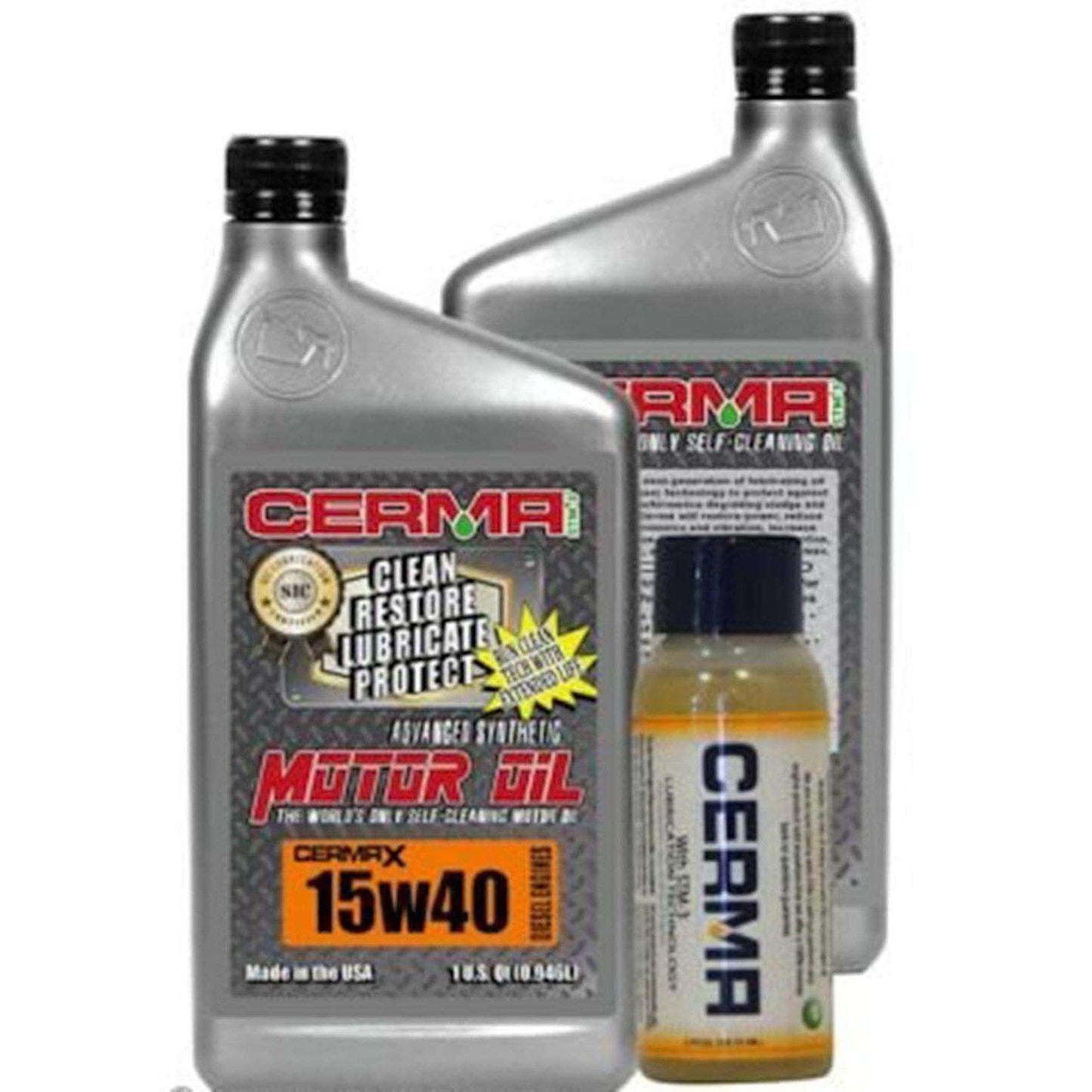
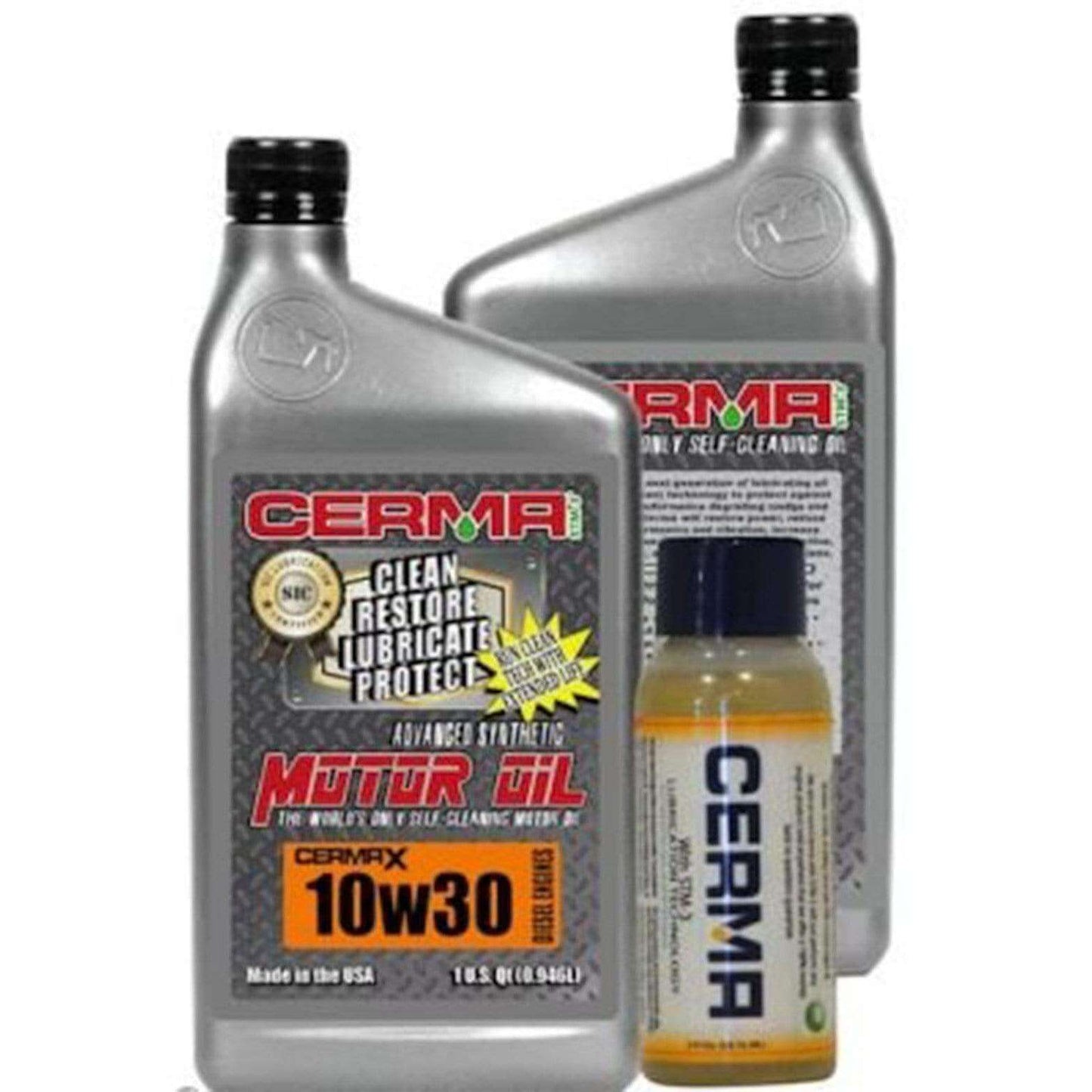
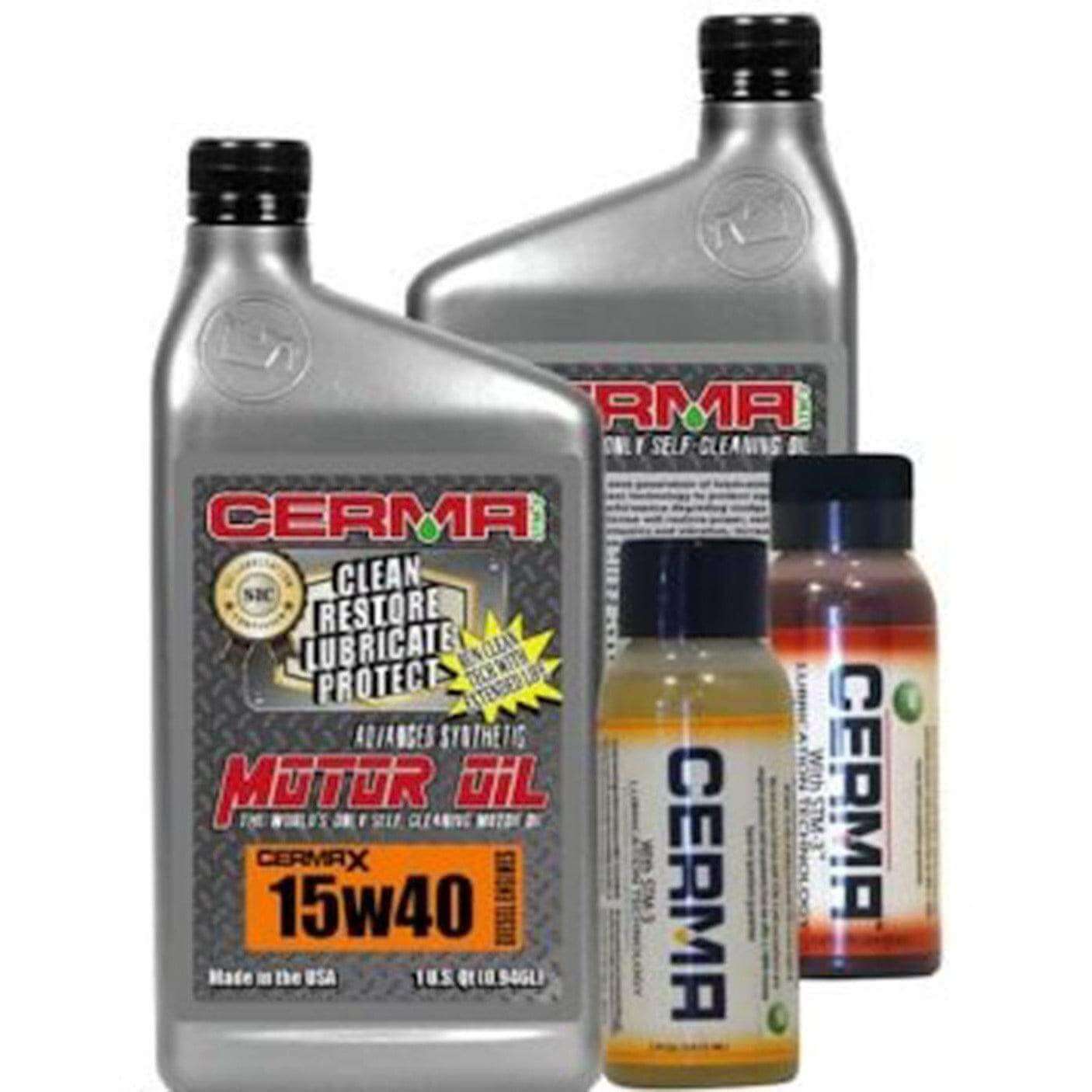
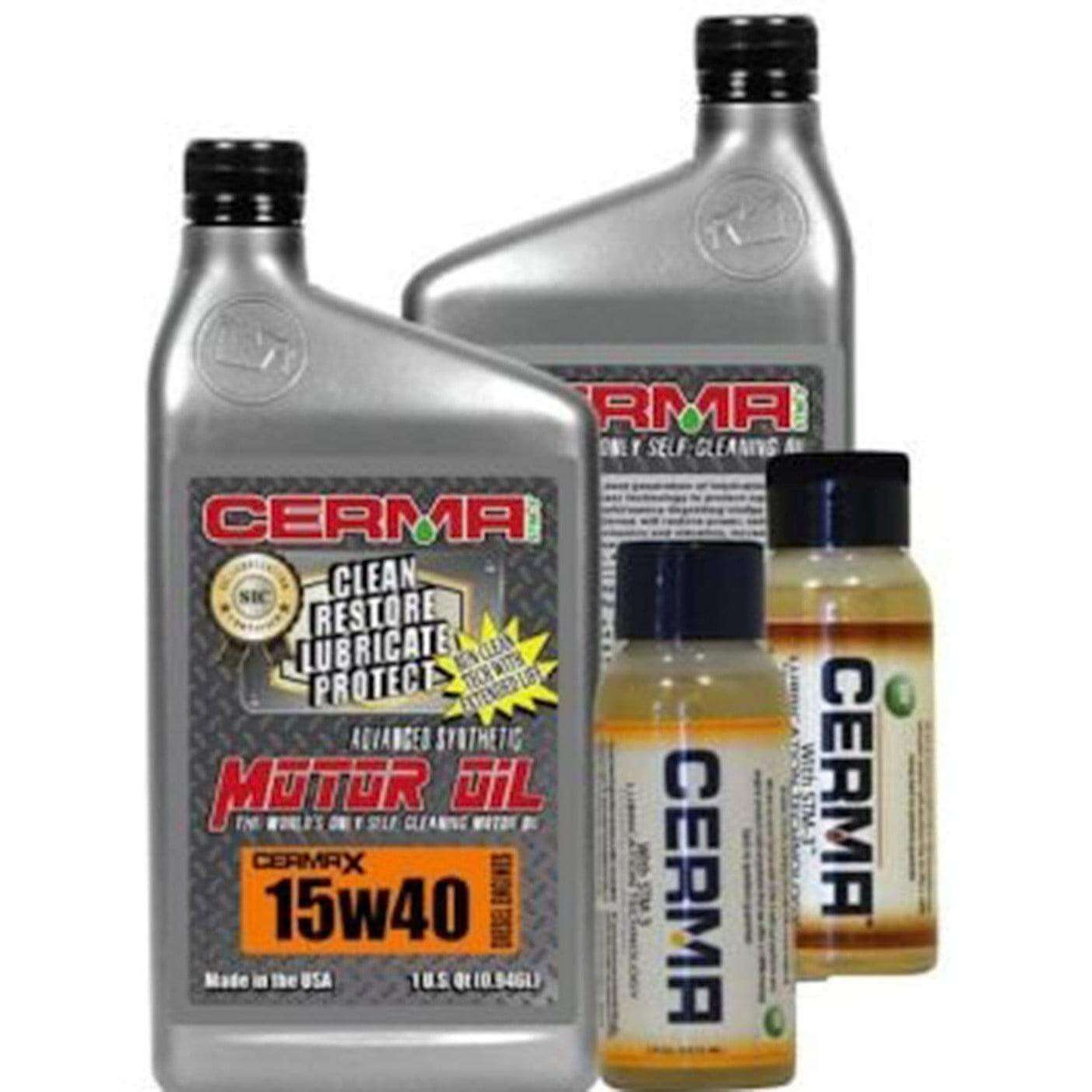
The Cermax Diesel Ceramic Synthetic Oil Value Package for 1.0–2.8L Engines is our smallest-displacement diesel bundle, engineered for the precision-built compact diesels that dominate the European and Asian diesel car market and the light-commercial van segment — Volkswagen and Audi TDI, BMW 2.0d, Mercedes-Benz 2.1 CDI, Chevrolet Cruze 1.6 diesel, Mazda CX-5 SkyActiv-D 2.2, and Jeep Liberty 2.8 CRD. Includes Cerma STM-3® Diesel Engine Treatment (2 oz, correctly sized for 1.0–2.8L displacement) and 5–10 quarts of Cermax Ceramic Synthetic Motor Oil in your choice of diesel viscosity. Optional 2 oz Automatic or Manual Transmission Treatment available for full powertrain coverage.
Pre-sized so you don't overshoot the treatment dose, bundled for single-purchase convenience. Made in the USA by Bijou Inc. in Fort Myers, FL.
What's Included
| Product | Size | Purpose |
|---|---|---|
| Cerma STM-3® Diesel Engine Treatment | 2 oz (single bottle) | One-time ceramic bonding, sized for 1.0–2.8L compact diesel displacement. Nano Silicon Carbide permanently bonds to cylinder walls, pistons, rings, bearings, cam lobes. Mohs 9.5 hardness, 2,730°C melting point, survives oil changes. |
| Cermax Ceramic Synthetic Motor Oil | 5–10 quarts | SiC-enhanced synthetic diesel oil. Formulated to meet API CK-4 specifications. Delivers fresh ceramic particles with every oil change. Built-in non-ferrous turbo protection. Supports up to 30,000-mile oil change intervals on a treated engine. |
| Automatic or Manual Transmission Treatment (optional — Trans variants) | 2 oz | One-time ceramic protection for the transmission. Select Automatic for conventional torque-converter automatics (ZF 6HP/8HP, Aisin). Select Manual for conventional manual gearboxes. Not for DSG/DCT or CVT — see transmission warning below. |
Choose Your Configuration
| Package Variant | What You Get |
|---|---|
| 15W-40 Diesel Value Package | 2 oz Engine Treatment + Cermax 15W-40 Oil (5–10 qt) |
| 10W-30 Diesel Value Package | 2 oz Engine Treatment + Cermax 10W-30 Oil (5–10 qt) |
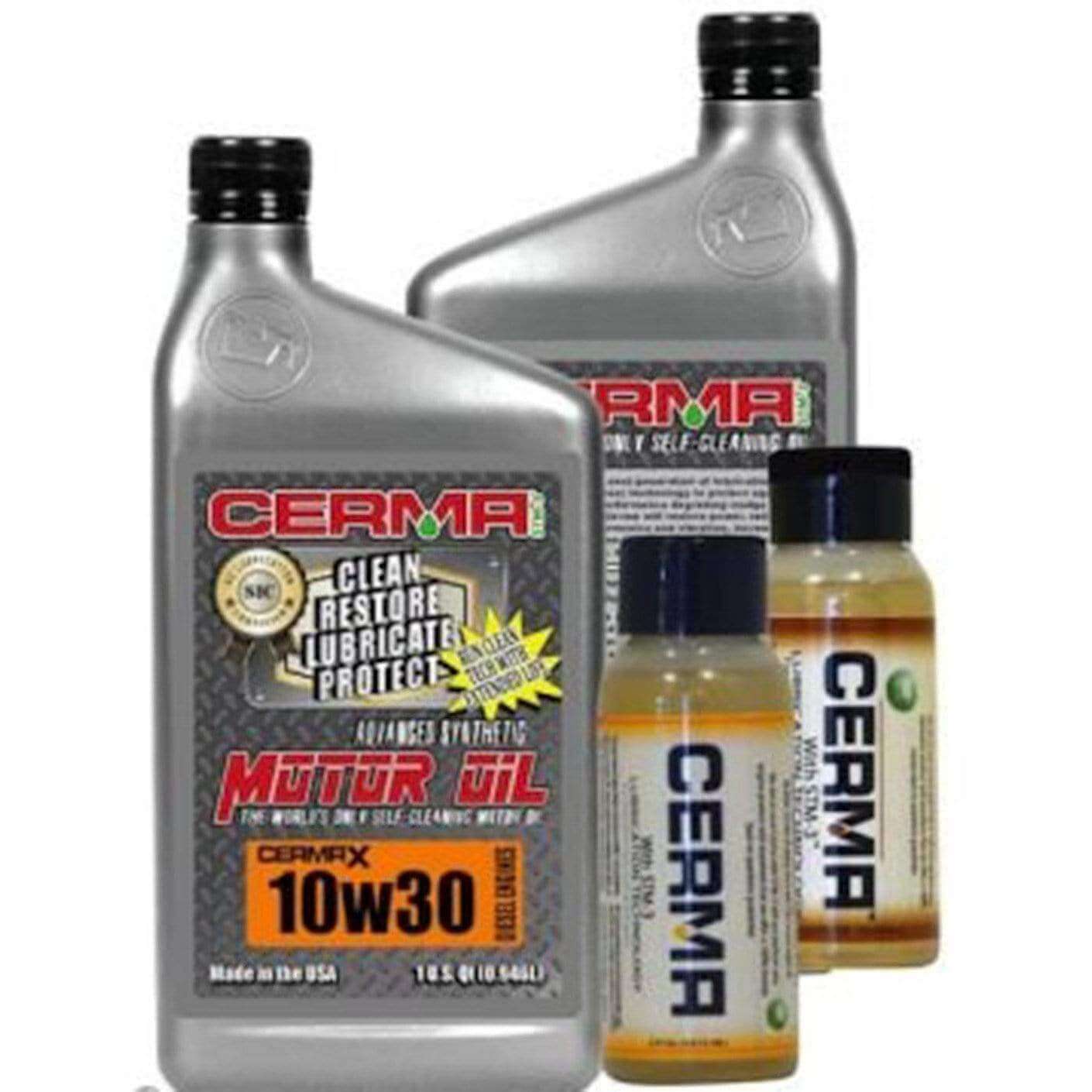
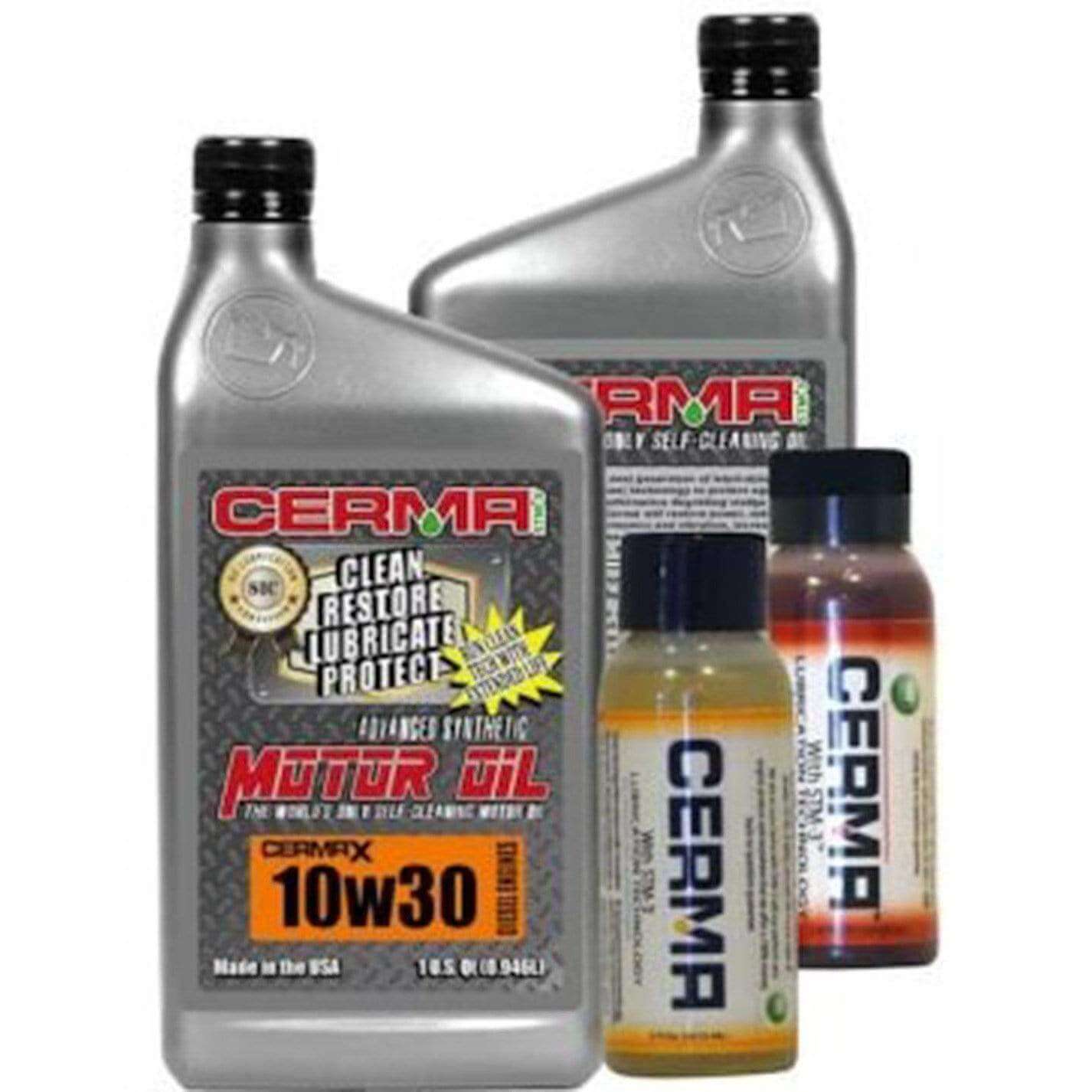
| 15W-40 Value + Automatic Trans | 2 oz Engine Treatment + Cermax 15W-40 Oil + 2 oz Automatic Transmission Treatment |
| 10W-30 Value + Automatic Trans | 2 oz Engine Treatment + Cermax 10W-30 Oil + 2 oz Automatic Transmission Treatment |
| 15W-40 Value + Manual Trans | 2 oz Engine Treatment + Cermax 15W-40 Oil + 2 oz Manual Transmission Treatment |
| 10W-30 Value + Manual Trans | 2 oz Engine Treatment + Cermax 10W-30 Oil + 2 oz Manual Transmission Treatment |
Do NOT order a Trans variant if your vehicle has:
- DSG / DCT (dual-clutch): VW/Audi TDI with DSG, Mercedes 7G-DCT, BMW DCT — these require dual-clutch-specific fluids and are not compatible with our treatment.
- CVT: not common in this segment but if present, needs CVT-specific fluid and is not compatible.
Two (or Three) Layers of Ceramic Protection
Layer 1 — Cerma STM-3® Diesel Engine Treatment (one-time)
A catalyst, not an additive. STM-3's Nano Silicon Carbide undergoes a thermo-chemical bonding reaction with ferrous engine metal during normal operation. The 2 oz dose is sized specifically for 1.0–2.8L compact diesel displacement. The resulting bond is permanent — chemically sealed to the metal substrate and does not wash out with oil changes. Mohs 9.5 hardness (harder than the cast-iron and steel surfaces it protects). EPA ETV certified. One-time application for the life of the engine.
Layer 2 — Cermax Ceramic Synthetic Motor Oil (ongoing)
After the engine treatment has cured (1,500-mile break-in), switching to Cermax Ceramic Synthetic Motor Oil ensures every subsequent oil change continues to deliver fresh SiC particles to both treated engine surfaces and non-ferrous turbocharger components. Formulated to meet API CK-4 specifications. Safe for DPF, DOC, SCR, EGR, and DEF systems. Supports oil change intervals up to 30,000 miles on a treated engine.
Layer 3 — Transmission Treatment (one-time, if you selected a compatible Trans variant)
The 2 oz Transmission Treatment deposits SiC ceramic on the internal surfaces of your transmission — clutch drums, pump, valve body, and planetary gears in a torque-converter automatic; or gears, synchros, and shift-fork faces in a manual. Added to your existing transmission fluid; does not replace OEM-spec fluid. See the compatibility warning above before selecting a Trans variant.
📋 The Cerma Protocol — How to Apply
1.0–2.8L Turbo Diesel — Compact Cars, Crossovers & Light Vans
| Step | Action |
|---|---|
| 1 | Bring the engine to full operating temperature (drive normally for 15–20 minutes), then return to idle. |
| 2 | With engine warm and idling, add the 2 oz Cerma STM-3 Diesel Engine Treatment directly to the oil fill port, into your existing engine oil. |
| 3 | Drive for 15–20 minutes immediately after adding, at varied speeds (combination of city and highway is ideal) to ensure full distribution through the engine. |
| 4 | If you selected a compatible Trans variant: add the 2 oz Transmission Treatment to your transmission through the fill port per OEM fill procedure. |
| 5 | Drive for a minimum of 1,500 miles on your existing engine oil to allow full SiC ceramic bonding. Do not change oil during this period. Avoid back-to-back short trips under 10 minutes (not enough operating temperature for the bonding reaction) — if your daily driving is short-trip-heavy, extend the break-in mileage or add a weekly 30-minute highway drive. |
| 6 | At the next oil change (after 1,500+ miles), drain old oil and refill with Cermax Ceramic Synthetic Motor Oil in the specified viscosity and capacity (see Oil Capacity Quick Reference below). |
| 7 | Expect approximately 90 days of driving for the full Cerma process to complete, with the ceramic layer continuing to refine during that window. |
| 8 | Ongoing: Continue Cermax oil changes at up to 30,000-mile intervals (or per your manufacturer's recommendation for your specific vehicle and climate). Engine and transmission treatments are one-time applications. |
Oil Capacity Quick Reference
| Engine | Typical Factory Oil Capacity |
|---|---|
| VW / Audi 2.0L TDI (EA189, EA288) | 5–6 quarts |
| VW / Audi 1.6L TDI / 1.9L TDI (older PD, ALH) | 4–5 quarts |
| BMW 2.0L Diesel (N47, B47) | 5–6 quarts |
| Mercedes-Benz 2.1L CDI (OM651) | 6–7 quarts |
| Mercedes-Benz 1.6L CDI (OM607) | 5 quarts |
| Chevrolet Cruze 1.6L Diesel (LH7) | 5 quarts |
| Mazda CX-5 SkyActiv-D 2.2L (SH-VPTS) | 5 quarts |
| Jeep Liberty 2.8L CRD (VM Motori R428) | 6 quarts |
Always verify against your owner's manual or oil fill cap marking. Round up rather than down, and consider ordering 1–2 extra quarts for between-change top-offs (especially relevant at 30K-mile drain intervals).
Compatible 1.0–2.8L Diesel Vehicles
| Make | Engine & Vehicle Examples |
|---|---|
| Volkswagen | 1.6L / 1.9L / 2.0L TDI (Golf TDI, Jetta TDI, Passat TDI, Beetle TDI, Tiguan TDI, Sportwagen TDI) |
| Audi | 2.0L TDI (A3 TDI, A4 TDI, A6 TDI, Q3 TDI, Q5 TDI) |
| BMW | 2.0L diesel (328d, 320d, X1 xDrive28d, X3 xDrive28d) |
| Mercedes-Benz | 2.1L BlueTEC / CDI (C250d, E250 BlueTEC, GLC250d, GLA220d, Sprinter 2.1 / 2.2 light commercial) |
| Chevrolet | 1.6L turbodiesel (Cruze Diesel, 2014–2015 and 2017–2019) |
| Mazda | 2.2L SkyActiv-D (CX-5 Diesel) |
| Jeep | 2.8L CRD VM Motori (Liberty CRD, 2005–2006) |
| Compact Commercial / Van | Ford Transit Connect 1.5/1.6/2.0 TDCi, VW Caddy TDI, Mercedes Vito 2.1 CDI, Renault/Nissan Master 2.3 dCi (as applicable in US-market imports) |
| Marine & Equipment | Any 1.0–2.8L turbo diesel — sailboat auxiliary, small generator, compact tractor, RV generator |
Not seeing your vehicle? If your diesel engine displaces 1.0–2.8L and runs on ULSD, the Cerma technology works the same way. Call 239-344-9861 with your year, make, model, and engine to confirm before ordering.
Need a Different Displacement?
Add More Protection (Optional)
- Cerma Diesel Fuel Treatment — continuous 6-in-1 ceramic fuel-system protection. Particularly relevant for TDI and CRD engines with known injector deposits / HPFP sensitivity.
- Cerma Gear Box & Axle Treatment — ceramic protection for final drives and transfer cases on AWD/4WD compact diesel crossovers
- Cerma Power Steering Treatment — for hydraulic power steering systems (on older TDI vehicles with hydraulic assist; EPS-equipped vehicles do not need this product)
- Cerma Blue Ice A/C Treatment — ceramic compressor protection
Frequently Asked Questions
Important distinction: Cermax Ceramic Synthetic Motor Oil is formulated to meet API CK-4 heavy-duty diesel performance specifications. Many European diesels — especially VW/Audi TDI with DPF, newer BMW diesels, and Mercedes BlueTEC — require specific OEM low-SAPS specifications such as VW 504.00/507.00, MB 229.51/229.52, BMW Longlife-04, or ACEA C3. API CK-4 and ACEA C3 / VW 507.00 are not identical specifications — CK-4 is engineered primarily for heavy-duty diesel applications with broader ash tolerance, while the European specs target specific drain intervals and aftertreatment compatibility profiles on European emissions hardware. If your vehicle's owner's manual specifically requires VW 507.00 / MB 229.51 / BMW Longlife-04 or an ACEA C3 rating, call us at 239-344-9861 before ordering to discuss whether Cermax is appropriate for your specific drain strategy. Conservative approach for European TDI/diesel owners under warranty: run your OEM-spec low-SAPS oil on your manufacturer's intervals, and apply just the Cerma STM-3 Engine Treatment (the 2 oz bottle is compatible with your existing OEM-spec oil during the 1,500-mile break-in). You get the ceramic wear protection without disrupting your OEM oil specification compliance.
Yes — Cerma STM-3 Engine Treatment and Cermax oil are both compatible with all TDI engines regardless of emissions modification history. Whether your TDI was fixed under the emissions settlement (SCR system retrofit, software update), purchased pre-fix, or remains in its original configuration, the Cerma ceramic bonding reaction works the same way on the engine's internal ferrous surfaces. Cerma products are emissions-safe (DPF/DOC/SCR/EGR/DEF compatible), so they will not interfere with your SCR or DPF system in post-fix trucks. Two practical notes for TDI owners: (1) the 1,500-mile break-in period is especially important for short-trip TDI drivers — make sure you include some highway driving to reach full operating temperature and let the DPF regen complete naturally during the bonding period; (2) if your TDI had known issues before the fix (HPFP concerns, injector deposits), consider adding Cerma Diesel Fuel Treatment for fuel-side support alongside the engine treatment.
Cerma is a wear-protection and friction-reduction technology — it will not directly address DPF regeneration frequency, which is caused by duty cycle (short trips where exhaust temperature doesn't reach the 600°C+ needed for passive soot burn-off) and fuel quality more than by anything inside the engine oil system. That said, two indirect benefits can help: (1) a Cerma-treated engine runs modestly cooler internally under sustained load, which can slightly extend time between active regen cycles on freeway driving; (2) the 30,000-mile drain interval means less frequent oil-change-related soot disturbance in the DPF flow. If your primary issue is DPF clogging from chronic short-trip driving, the most effective fix is a weekly 30+ minute highway drive to let the DPF complete an active regen. Cerma is a complement to that habit, not a substitute.
Order the base Diesel Value Package (15W-40 or 10W-30, no Trans variant). The DSG is a dual-clutch transmission and uses specialized dual-clutch-specific fluid — it's not compatible with our Automatic Transmission Treatment (which is formulated for torque-converter automatics). Your engine and turbo still get full ceramic protection from the engine treatment and Cermax oil; only the DSG itself is outside scope. For DSG-specific care, stick to your factory-specified DSG fluid and service interval. This same guidance applies to any other dual-clutch-equipped 1.0–2.8L diesel (Mercedes 7G-DCT in some CDI variants, BMW DCT in some 2.0d performance variants).
Quick visual check inside the cabin: if there's a clutch pedal (3 pedals total), you have a manual — select Manual Trans variant. If there's no clutch pedal (2 pedals) and the shifter has typical P-R-N-D positions for a conventional automatic, you most likely have a torque-converter automatic — select Automatic Trans variant. If the shifter is a smaller "stumpy" paddle-style or electronic toggle, or if the vehicle is branded as having "DSG," "S-Tronic," "PDK," "7G-DCT," or similar — you have a dual-clutch (DCT) transmission, which is NOT compatible with our treatment. Check your window sticker or VIN decoder to confirm. VW/Audi TDI can come with either a 6-speed manual, a torque-converter automatic (Tiptronic on older models), or a DSG — pay attention to which one your car has before ordering. When in doubt, call 239-344-9861 with your year/make/model before selecting a Trans variant.
Yes. The 2014–2015 and 2017–2019 Chevrolet Cruze Diesel uses the 1.6L LH7 turbo-diesel engine, which takes approximately 5 quarts of oil. Select the Diesel Value Package with 5 quarts of Cermax in the viscosity your owner's manual specifies (typically a low-viscosity formulation for cold-start protection and fuel economy — check your manual). The Cruze Diesel pairs its engine with a 9-speed automatic (2017–2019) or 6-speed automatic (2014–2015) on the automatic variant, or a 6-speed manual. For the automatic — torque-converter, not dual-clutch — select one of the Automatic Trans variants. For the manual, select one of the Manual Trans variants. The Cruze Diesel is fully emissions-controlled (DPF/SCR/DEF) and Cerma products are compatible with all of that hardware.
Match your owner's manual specification exactly — this matters more on compact diesels than on heavy-duty applications because European OEMs engineer around specific viscosities with narrow tolerance. 10W-30 is typically the better choice for modern 1.0–2.8L European diesels with emphasis on fuel economy and cold-start behavior — VW/Audi 2.0 TDI (common TDI manuals may specify lower-viscosity grades depending on model year), BMW 2.0d, and Mercedes 2.1 CDI in moderate climates often call for equivalent low-viscosity grades. 15W-40 suits older diesels (2.8L Jeep CRD, 1.9L TDI PD-era), warmer-climate operation, and engines with higher mileage where slightly heavier film strength is preferred. Critical: if your owner's manual specifies a viscosity we don't offer (e.g., 0W-30, 5W-30 low-SAPS), or requires a strict European OEM approval (VW 507.00, MB 229.51), contact us at 239-344-9861 before ordering to confirm Cermax is appropriate for your specific vehicle.
Yes, with Cermax oil. Every modern 1.0–2.8L diesel is turbocharged — many with VGT (variable-geometry) turbos on European diesels — and Cermax Ceramic Synthetic Motor Oil carries built-in SiC protection for non-ferrous turbo components: aluminum housings, bronze bushings, compressor wheels, VGT vanes. The moment you switch to Cermax after the 1,500-mile break-in, your turbo begins receiving continuous non-ferrous ceramic protection with every oil change. This is why this package doesn't include a separate Turbo Nano Treatment the way our gas-engine racing packages do — the turbo protection is already present in the oil. If you have a higher-mileage compact diesel (150K+ miles) and want an extra layer of targeted turbo-bearing protection, you can add the standalone Cerma Turbo Nano Treatment (1 oz) to your order — apply at the same time as the engine treatment during break-in.
Made in the USA by Cerma Treatment (Bijou Inc.), 15880 Summerlin Road #300 Box #301, Fort Myers, FL 33908. 30-day return policy. Free shipping on orders over $150. Ships to US & Canada. Questions? Call 239-344-9861 or email info@cermatreatment.com. Use discount code C10 for 10% off.
Cerma STM-3® is a registered trademark of Bijou Inc. SiC (Silicon Carbide) technology is EPA ETV certified. Cermax Ceramic Synthetic Motor Oil 15W-40 and 10W-30 diesel viscosities are formulated to meet applicable API CK-4 specifications. Cermax is not formulated to meet European OEM approvals such as VW 507.00, MB 229.51, BMW Longlife-04, or ACEA C3 low-SAPS specifications — owners of European diesel vehicles requiring these specific OEM approvals should consult Cerma Treatment before ordering, or use Cerma STM-3 Engine Treatment with their OEM-approved oil. Cermax is designed for use on engines treated per the Cerma protocol; use in untreated engines does not provide the full benefit of the system. Automatic Transmission Treatment is formulated for conventional torque-converter automatic transmissions using manufacturer-specified ATF; not for use in dual-clutch (DSG/DCT) or CVT transmissions. Manual Transmission Treatment is for conventional manual gearboxes using manufacturer-specified gear oil or MTF. Oil change intervals up to 30,000 miles apply to engines treated per the Cerma protocol under typical operating conditions. Cerma products are not repair compounds and cannot correct pre-existing mechanical failures. Individual results vary based on vehicle condition, duty cycle, driver behavior, and operating environment.
Frequently Asked Questions
The package includes Cerma STM-3 Diesel Engine Treatment (2 oz single bottle), sized for 1.0–2.8L compact diesel displacement, plus 5 to 10 quarts of Cermax Ceramic Synthetic Motor Oil in your choice of 15W-40 or 10W-30 diesel viscosity (API CK-4). Three variant families are offered: the base Diesel Value Package (engine treatment + oil only — the correct choice for DSG/DCT-equipped vehicles), Diesel Value + Automatic Trans (adds 2 oz Automatic Transmission Treatment for conventional torque-converter automatics such as ZF 6HP/8HP or Aisin 6-speed — not for DSG/DCT), and Diesel Value + Manual Trans (adds 2 oz Manual Transmission Treatment for conventional manual gearboxes). Made in the USA by Bijou Inc. in Fort Myers, FL.
This package is sized for compact diesel cars, crossovers, and light commercial vehicles with 1.0–2.8 liter turbo diesel engines. Primary applications include: Volkswagen / Audi TDI (1.6L, 1.9L, 2.0L — Golf, Jetta, Passat, Beetle, Tiguan, Sportwagen, A3, A4, A6, Q3, Q5); BMW 2.0L diesel (320d, 328d, X1 xDrive28d, X3 xDrive28d); Mercedes-Benz 2.1L BlueTEC/CDI (C250d, E250 BlueTEC, GLC250d, GLA220d, Sprinter 2.1/2.2); Chevrolet Cruze 1.6L diesel (2014–2019); Mazda CX-5 SkyActiv-D 2.2L; Jeep Liberty 2.8L CRD (2005–2006, VM Motori R428); and most 1.0–2.8L compact marine auxiliary, generator, and equipment diesel engines. For 3.0L+ diesel pickups, luxury SUVs, and larger applications, see the appropriate larger-displacement Cerma package linked on the product page.
Step 1: Bring the engine to full operating temperature (drive normally 15–20 minutes), then return to idle. Step 2: Add the 2 oz Diesel Engine Treatment to your existing engine oil through the oil fill port while idling. Step 3: Drive 15–20 minutes immediately at varied speeds (highway + city ideal) to distribute the SiC technology through the engine. Step 4: If you selected a compatible Trans variant (non-DSG/non-CVT), add the 2 oz Transmission Treatment to your transmission through the fill port. Step 5: Drive a minimum of 1,500 miles on your existing engine oil to allow full SiC ceramic bonding — if your daily use is primarily short trips under 10 minutes, add some highway driving during this period to reach full operating temperature for bonding. Step 6: At the next oil change after 1,500+ miles, refill with Cermax Ceramic Synthetic Motor Oil in the correct viscosity and capacity. Step 7: Continue Cermax drains at up to 30,000-mile intervals — the engine and transmission treatments are one-time applications.
The protocol has two timing milestones. The 1,500-mile break-in period is the minimum required for the SiC ceramic to bond permanently to engine metal — for a daily-driven compact diesel, this typically takes 4–8 weeks depending on miles driven per week. The 90-day full-cure window is the broader period during which the ceramic layer continues to refine and optimize — by the end of 90 days of typical driving, you've reached the peak-performance state of the Cerma-treated engine. Across both milestones, you should keep driving the vehicle normally: normal duty cycle, normal warm-ups, varied speeds. Two accelerators: (1) include highway driving — the higher sustained operating temperature helps the bonding reaction; (2) avoid exclusively short-trip driving for the break-in period, since engines that don't reach full operating temperature don't bond efficiently. Two things to NOT do: don't change oil before 1,500 miles, and don't add any other aftermarket additives during the bonding period.
Two heavy-duty diesel viscosities are offered: 15W-40 (traditional diesel viscosity, broader temperature tolerance, suits older compact diesels and warmer climates) and 10W-30 (lower viscosity with improved cold-start behavior and modest fuel-economy gains, called for by many modern European compact diesels). Both viscosities in this package are formulated to meet API CK-4 specifications and carry the same SiC ceramic technology. Important for European diesel owners: Cermax CK-4 does not carry European OEM approvals like VW 504.00/507.00, MB 229.51/229.52, BMW Longlife-04, or ACEA C3. If your vehicle's owner's manual specifically requires one of those European specifications — common on TDI, BMW diesel, and Mercedes BlueTEC platforms under active warranty — contact us at 239-344-9861 before ordering. A conservative alternative for Euro-spec vehicles under warranty is to use the Cerma STM-3 Engine Treatment with your existing OEM-approved oil, keeping the oil specification question out of the equation.
Share